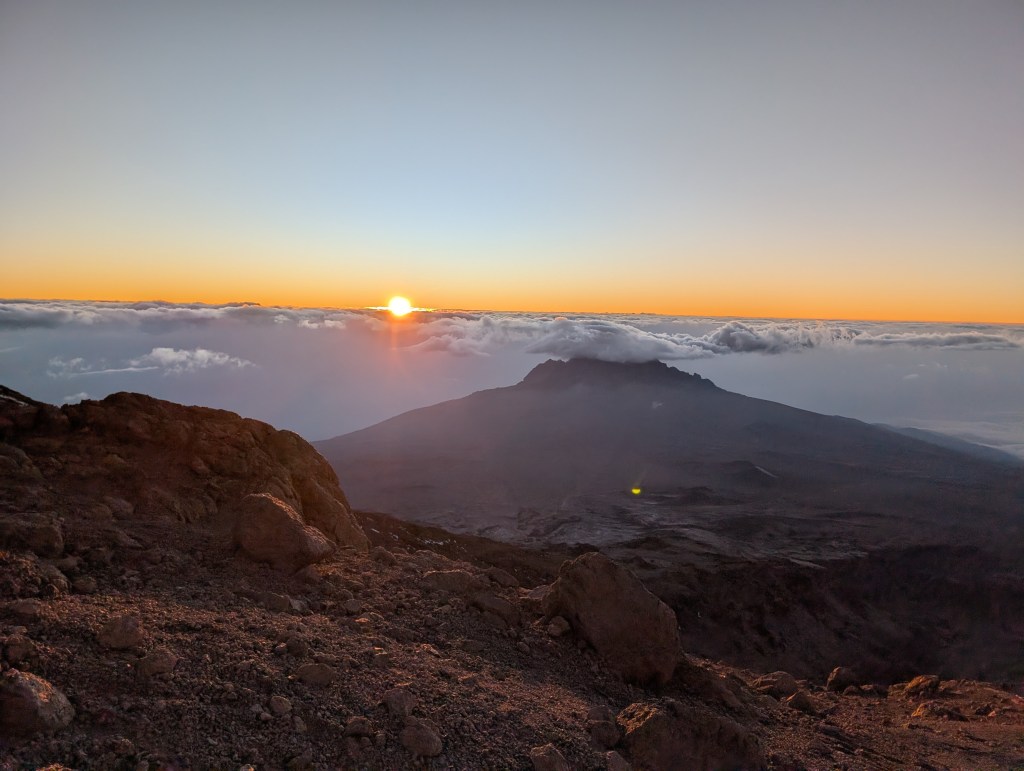
The dust of Tanzania has barely settled on my boots, but the view from the summit is already etched into my memory. A few weeks ago, a dozen of us set out with a singular, colossal goal: to stand on the roof of Africa. And in early September, we did it. We successfully summited Mount Kilimanjaro.
For anyone dreaming of this adventure, it’s a journey unlike any other. Kilimanjaro isn’t just Africa’s highest peak; it’s the tallest free-standing mountain in the world, rising majestically from the plains. Our path to the top was the 7-day Lemosho Route, a trek designed to give us the best possible chance to acclimatize.
And that’s the key word: acclimatization. People often ask if you need technical climbing skills for Kili, and the answer is no. There are no ropes, no harnesses, no sheer ice walls to scale. The mountain’s challenge is more elemental, a battle fought against the thinning air with every upward step. The real test is how your body adapts to the high altitude, coupled with long, grueling days of hiking. It’s a test of pure endurance and mental fortitude.
Our journey didn’t start at the trailhead in Tanzania. It began months earlier, with a solid 6 months of preparation, careful planning, and the crucial decision of choosing the right adventure company to guide us safely. Every training hike, every piece of gear, every bit of research was a step toward that final, breathtaking summit. I’m incredibly proud to say we stood on that iconic sign at Uhuru Peak together.
This was the trip of a lifetime, and I can’t wait to share the day-by-day story of how we got there.
Day 0: The Calm Before the Climb – Arriving in Tanzania
Our Kilimanjaro adventure didn’t start at the trailhead, but at the moment we stepped off the plane at Kilimanjaro International Airport (JRO). The warm Tanzanian air hits you, and suddenly, the months of planning and training become incredibly real. The journey has begun.
Right off the bat, I have to share my most crucial piece of advice for anyone planning this trip: arrive at least two nights before your hike begins. I can’t recommend this enough. That extra day is your secret weapon against jet lag. It gives your body a chance to rest and start adjusting to the local food and climate before the real work starts.
The best part about arriving early was the buzz at our hotel. We immediately started meeting other hikers—some, like us, filled with nervous excitement for the journey ahead, and others who were just returning from the summit. Getting to hear their fresh experiences, seeing their tired but triumphant smiles, and getting last-minute tips was absolutely priceless. It made the whole challenge feel that much more tangible.
You have two main options for where to stay: Moshi or Arusha. The airport is conveniently located right in the middle of them.
- Moshi: This is where we stayed. It’s a smaller town that sits at about 3,000 feet, and it offers incredible views of Kilimanjaro on a clear day. Waking up and seeing the peak you’re about to tackle is an unbelievable motivator.
- Arusha: This is a much larger city and is known as the “safari capital” of Tanzania. If you plan to go on a safari after your climb (which many people do!), Arusha is the perfect base, with more options for accommodations.
We spent our time in Moshi doing final gear checks, hydrating, and trying to soak in the calm before the climb. Knowing that our starting point, the Lemosho Gate, was a 3.5-hour drive away, we went to bed with a mix of nerves and pure excitement. The mountain was waiting.
Day 1: Lemosho Gate (7,825 ft) to Mti Mkubwa Camp (9,121 ft)
Time: 3:10 Hrs Distance: 3.25 Miles Total Elevation of Hike: 1,634 Feet
The day had finally arrived. After months of preparation, the theoretical became very, very real. Our amazing crew from Top Climbers Expeditions picked us up from the hotel around 8:00 AM, their confident smiles doing wonders for our own nervous excitement.
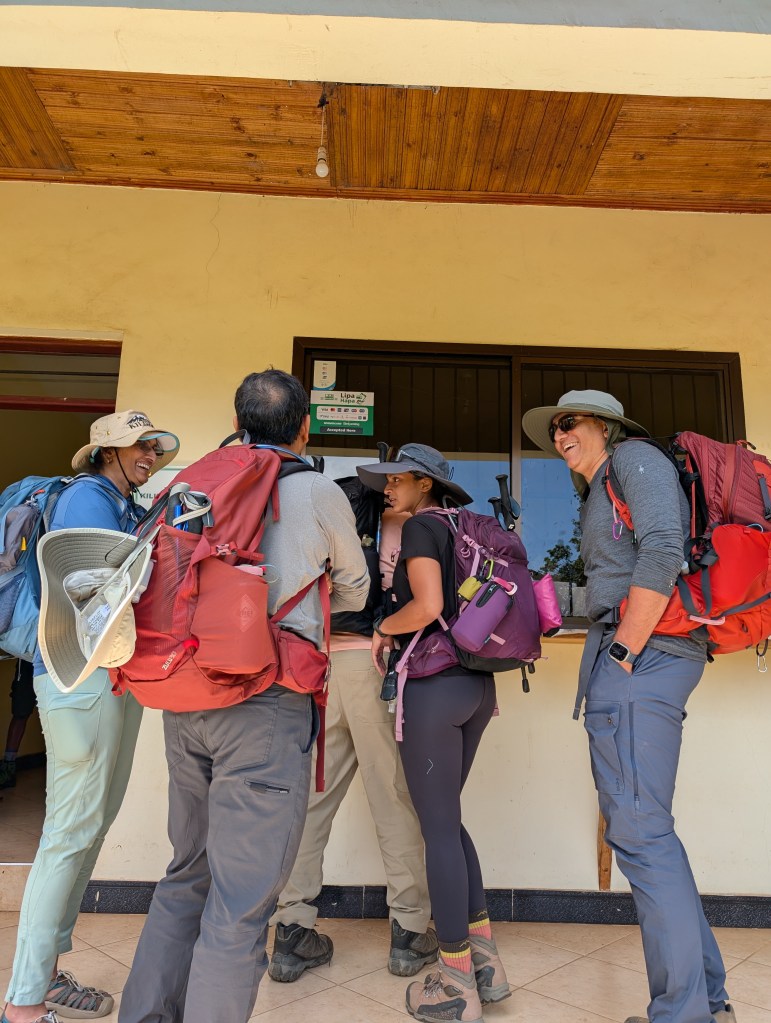
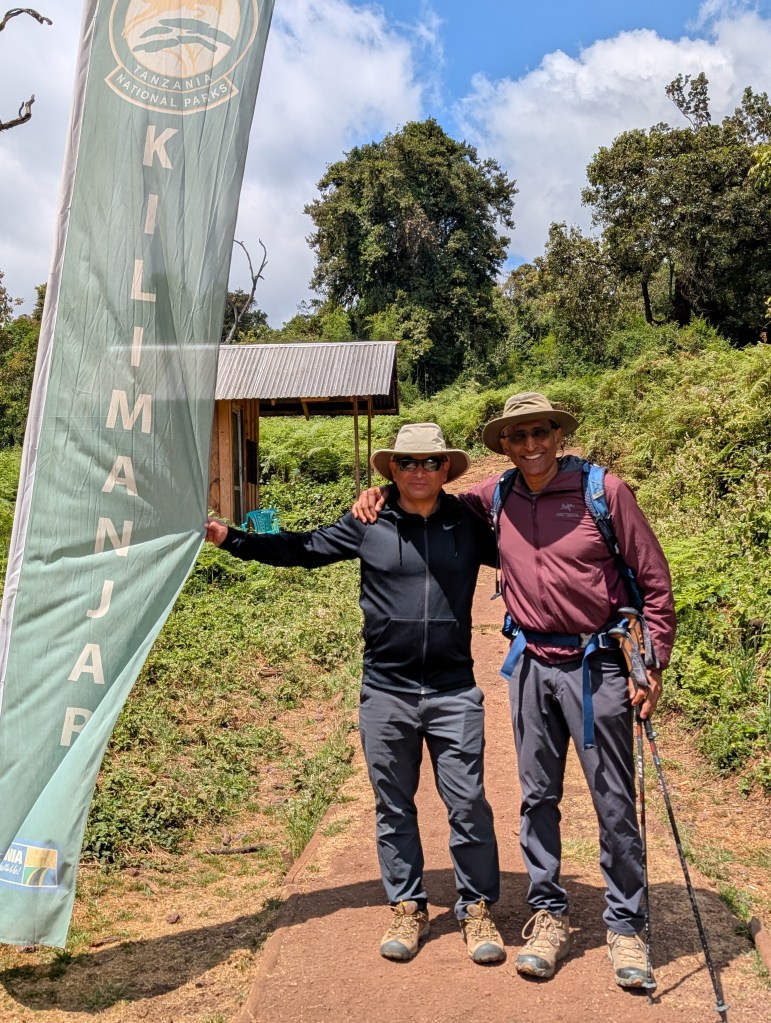
The drive to the Lemosho Gate, located on the quieter western side of the mountain, was buzzing with anticipation. This was it. After completing the registration process and taking the obligatory “before” photos at the iconic gate, there was nothing left to do but start. That first step onto the trail, pack on my back and poles in hand, was a feeling I’ll never forget.
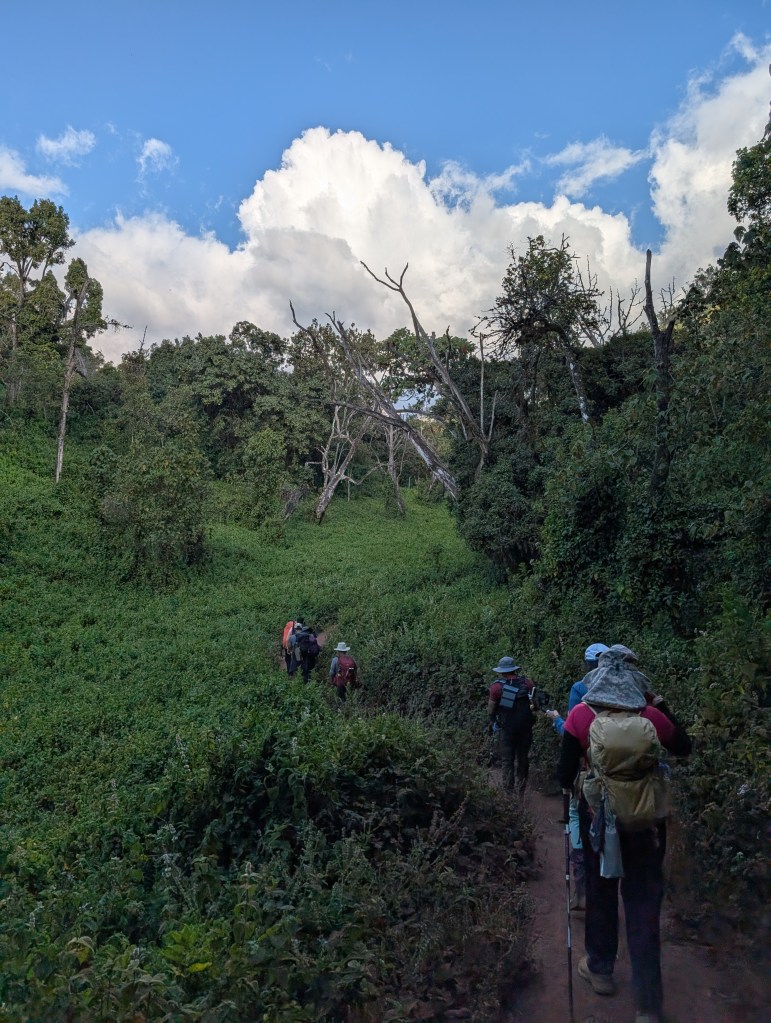
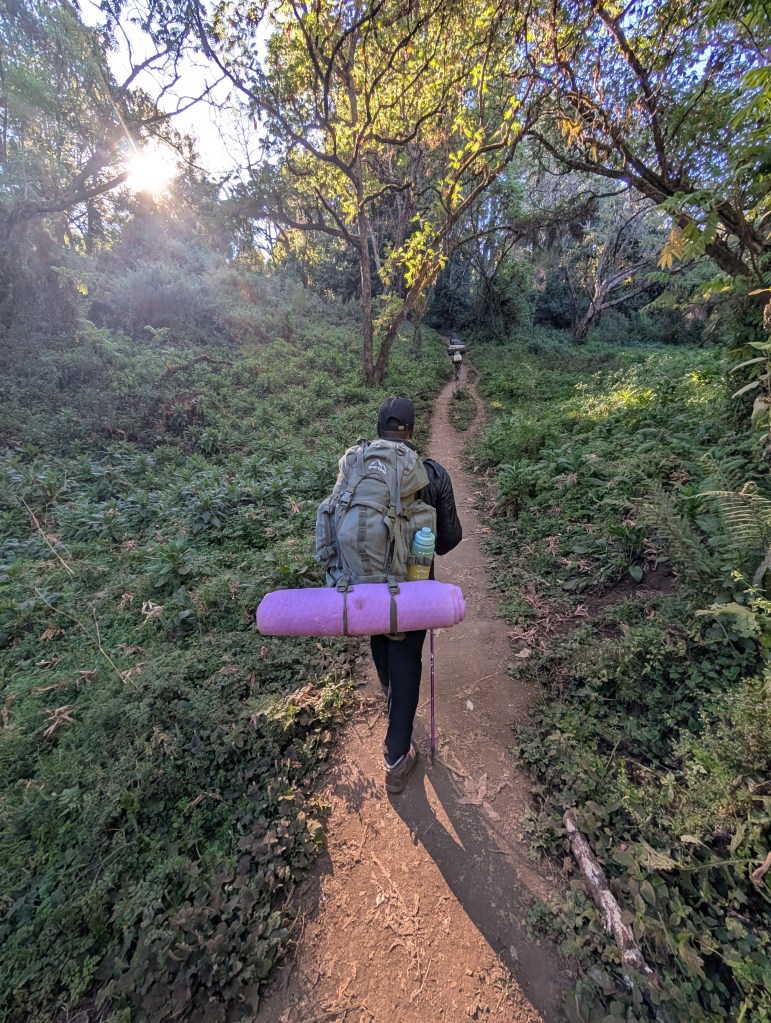
Day 1 is a gentle but steady introduction to the mountain. We immediately plunged into a lush, green world. The trail winds through the beautiful forests and glades of the montane rainforest. The air was cool and humid, filled with the scent of damp earth and the sounds of exotic birds. Our guides constantly reminded us of the most important rule on Kilimanjaro: “Pole, pole” (pronounced po-lay po-lay), which means “slowly, slowly” in Swahili. This isn’t a race; it’s all about letting your body acclimatize.
After a few hours of steady trekking, we arrived at our home for the night: Mti Mkubwa, which fittingly means “Big Tree” Camp. Seeing the sign was a welcome sight and our first victory of the trek!
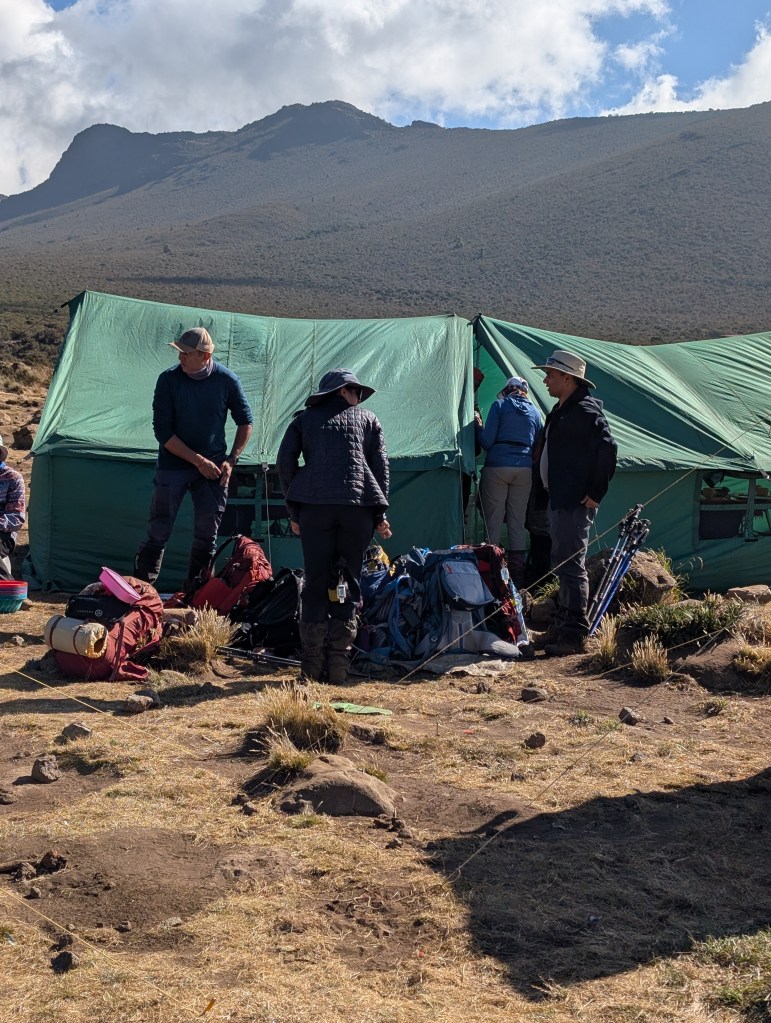
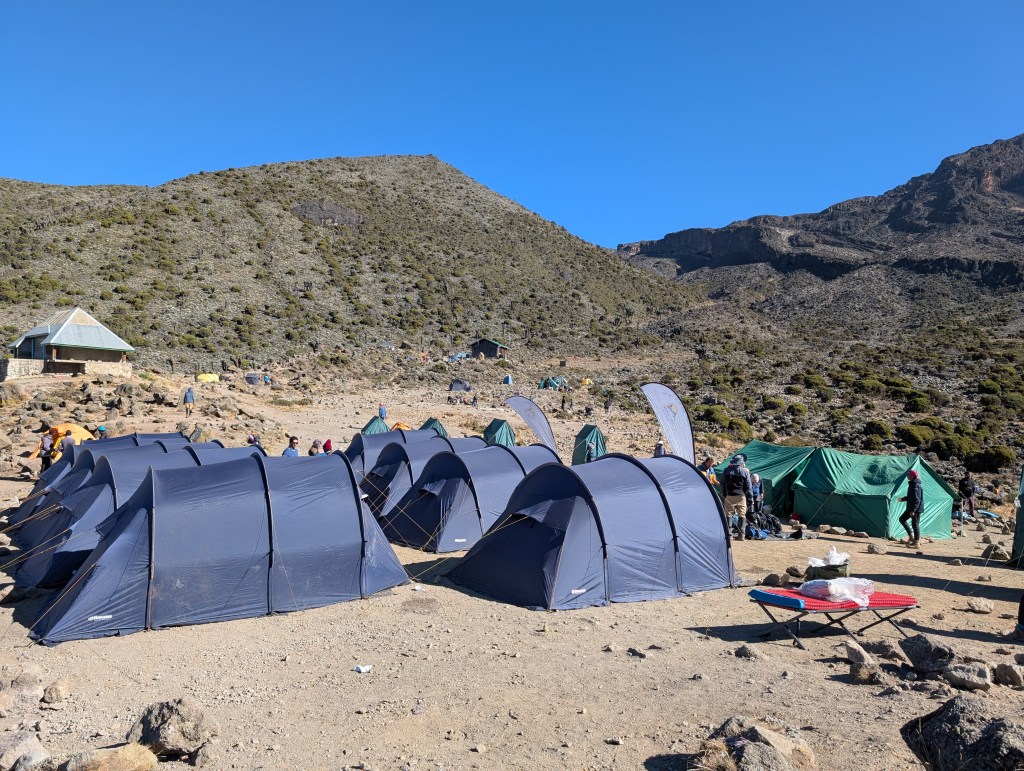
What truly blew my mind was arriving to find our tents already perfectly pitched, creating a small, colorful village in the middle of the forest. The efficiency and strength of the porters and guides are something you have to see to believe. Tucked into my sleeping bag that night, listening to the sounds of the forest around me, I felt an overwhelming sense of gratitude and excitement. One day down, six to go. The summit still felt a world away, but we were on our way.



Day 2: Mti Mkubwa Camp (9,121 ft) to Shira 2 Camp (12,795 ft)
Time: 11 Hrs Distance: 11 Miles Total Elevation of Hike: 4,383 Feet
If Day 1 was a gentle immersion into the rainforest, Day 2 was like stepping into a completely different world. We woke up with the sun filtering through the trees, and after a hearty breakfast, we were back on the trail, leaving the forest canopy behind us for good.
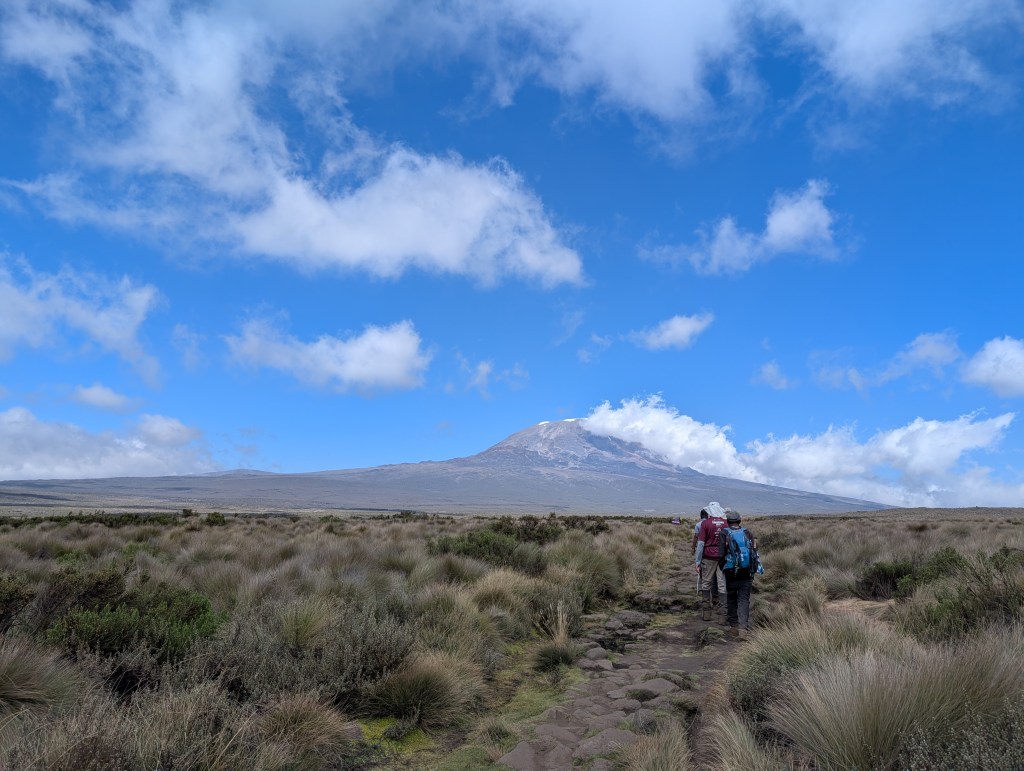
Almost immediately, the landscape opened up dramatically. We had entered the moorland zone. The narrow, winding path gave way to a vast, high-altitude plateau of grassy tussocks, hardy heather, and giant, otherworldly volcanic rock formations. For the first time, we could truly see the scale of where we were.
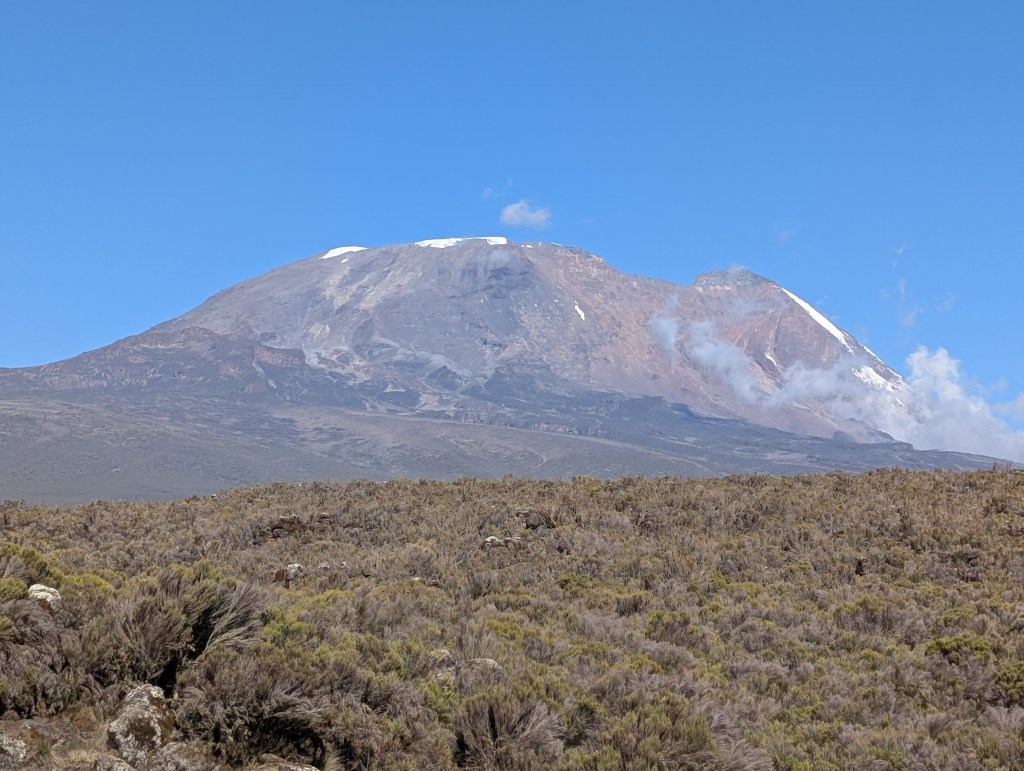
And then we saw it. Our goal, Kibo Peak, made its grand appearance. There are moments on a trip like this that pictures can’t fully capture, and seeing the colossal, snow-capped peak floating on a sea of clouds for the first time is one of them. For the rest of the day, the summit was our constant companion, a silent, majestic beacon pulling us forward.
This was a long and challenging day, covering a lot of ground and gaining a significant amount of altitude. The trail had some fairly steep sections, and you could feel the air getting thinner. But every time we stopped for a break, we were rewarded with the most incredible panoramic views.
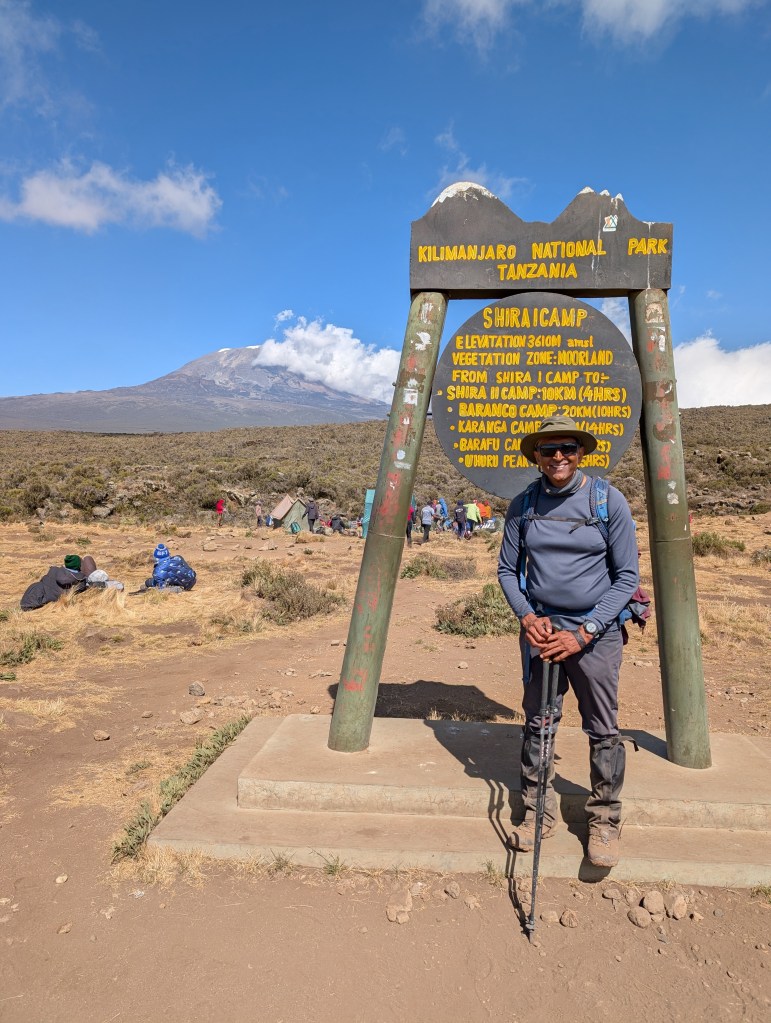
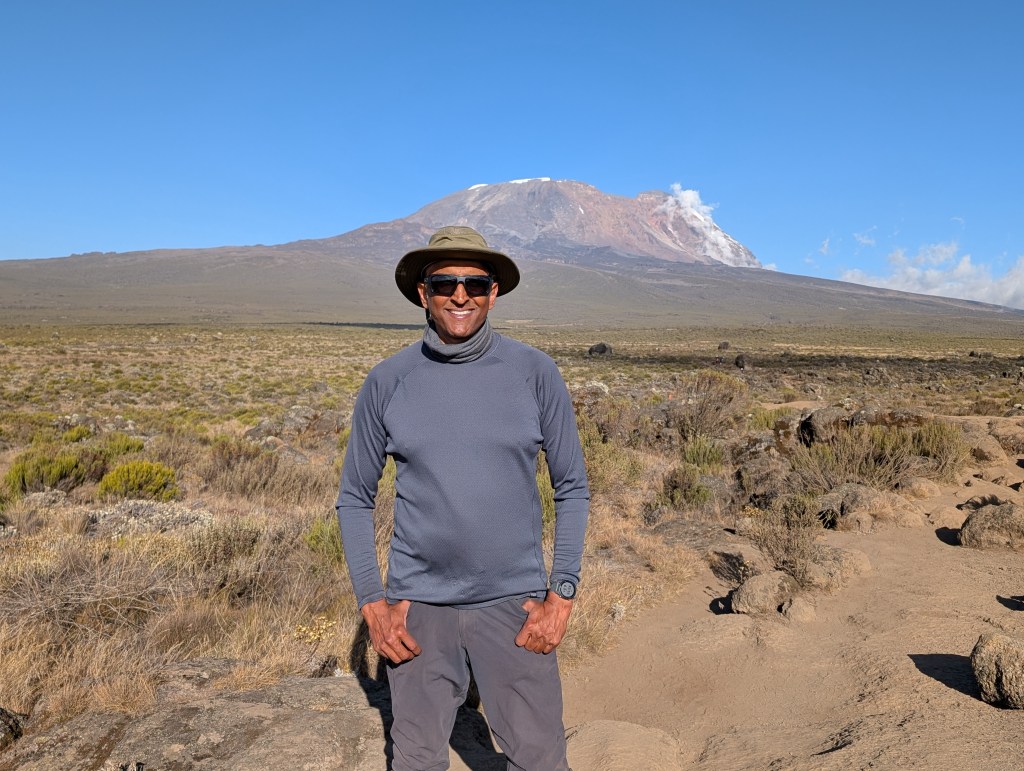
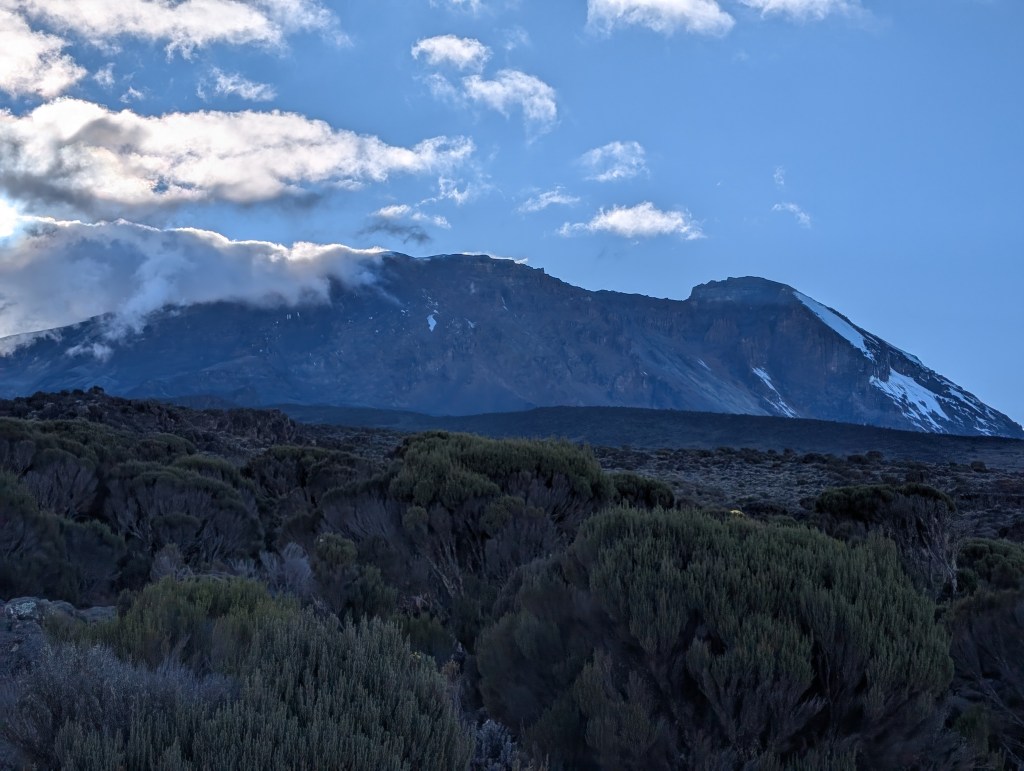
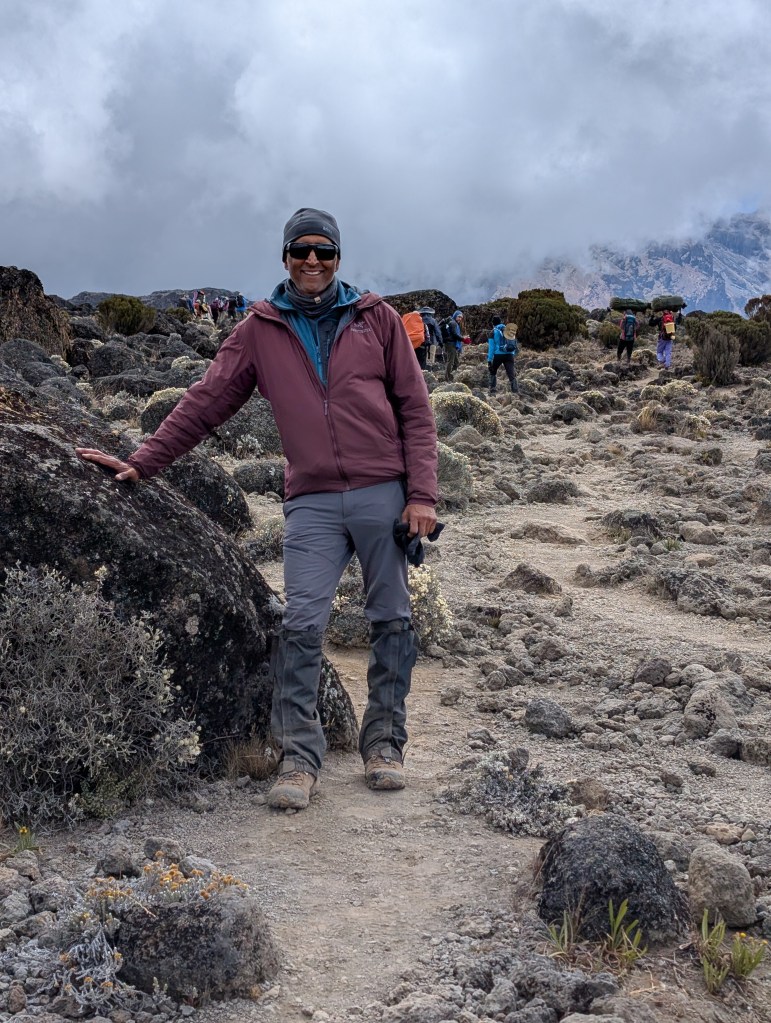
A huge milestone for the day was trekking through Shira 1 Camp. Posing by the sign, with Kibo standing proudly in the background, was a massive morale boost. From there, we continued our steady climb across the incredible Shira Plateau. As we traversed towards our destination at Shira 2, we were treated to unique views of Kibo’s western face and its incredible Northern Ice Fields, which glistened in the afternoon sun.
Arriving at Shira 2 Camp, now at a lofty 12,795 ft, felt like a major accomplishment. The air was crisp and thin, and the temperature was noticeably colder. But as we settled in for the evening, watching the clouds swirl around the summit, we knew that all the effort was worth it. We were sleeping on a vast plateau, seemingly on top of the world, and getting one step closer to our ultimate goal.
Day 3: Shira 2 Camp (12,795 ft) to Barranco Camp (12,992 ft)
Time: 9 Hrs Distance: 7.7 Miles Total Elevation of Hike: 2,736 Feet
Today was all about one of the most important mantras on Kilimanjaro: “Climb high, sleep low.” This is a crucial acclimatization day, designed to push our bodies to a new altitude before descending to a lower elevation for the night. Looking at the stats, you might think it’s an easy day with only 200 feet of net elevation gain, but it was one of the toughest and most spectacular days of the entire trek.
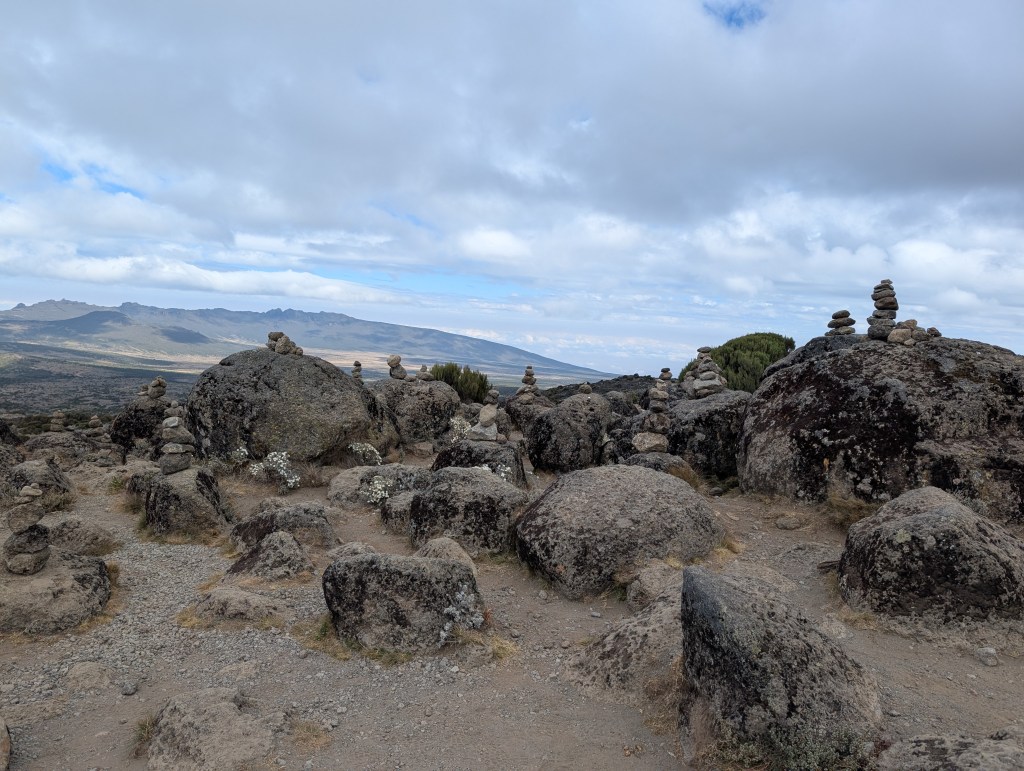
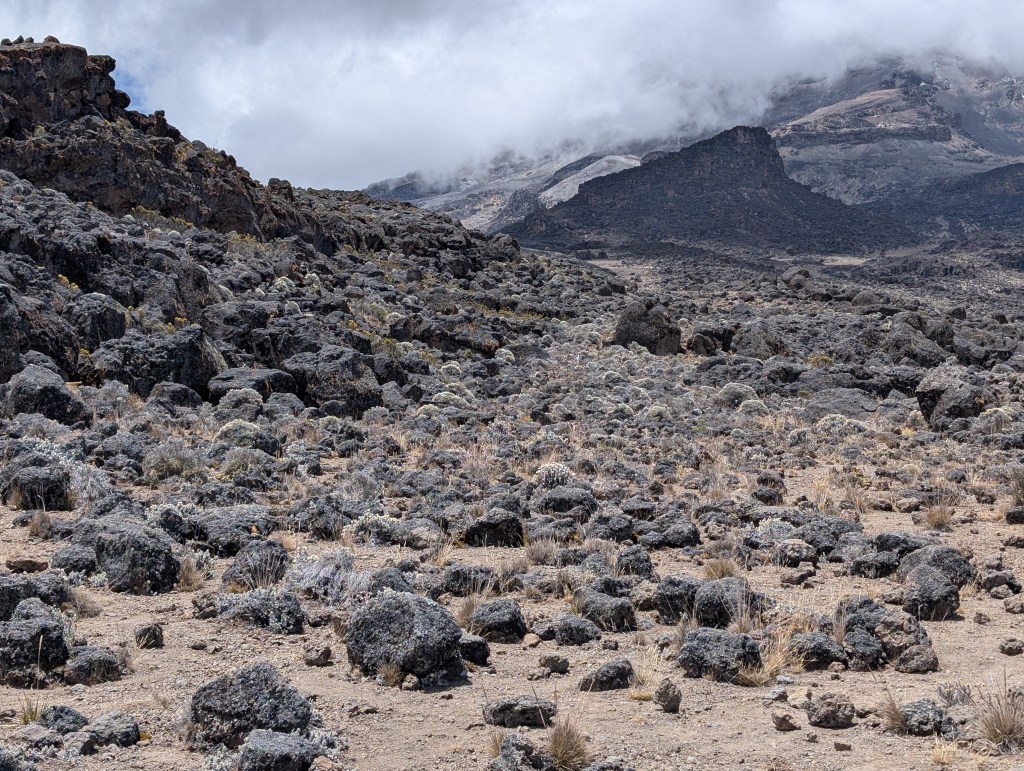
We started the morning with a steady ascent out of Shira 2 Camp, leaving the last of the moorland behind and entering the stark and stunningly beautiful alpine desert. The landscape transformed into a rocky, lunar-like world. We were walking on ancient lava ridges, surrounded by panoramic views that stretched for miles. With every step, we were climbing higher beneath the glaciers of the mighty Western Breach.
Our goal for the morning was the distinct pinnacle of the Lava Tower, looming at a dizzying 15,200 feet! The final push was a slow, deliberate grind, and reaching that rocky tower was a huge psychological victory. We were now higher than the summit of Mount Whitney! We celebrated by having our lunch right there, in the thin, crisp air, feeling completely on top of the world.
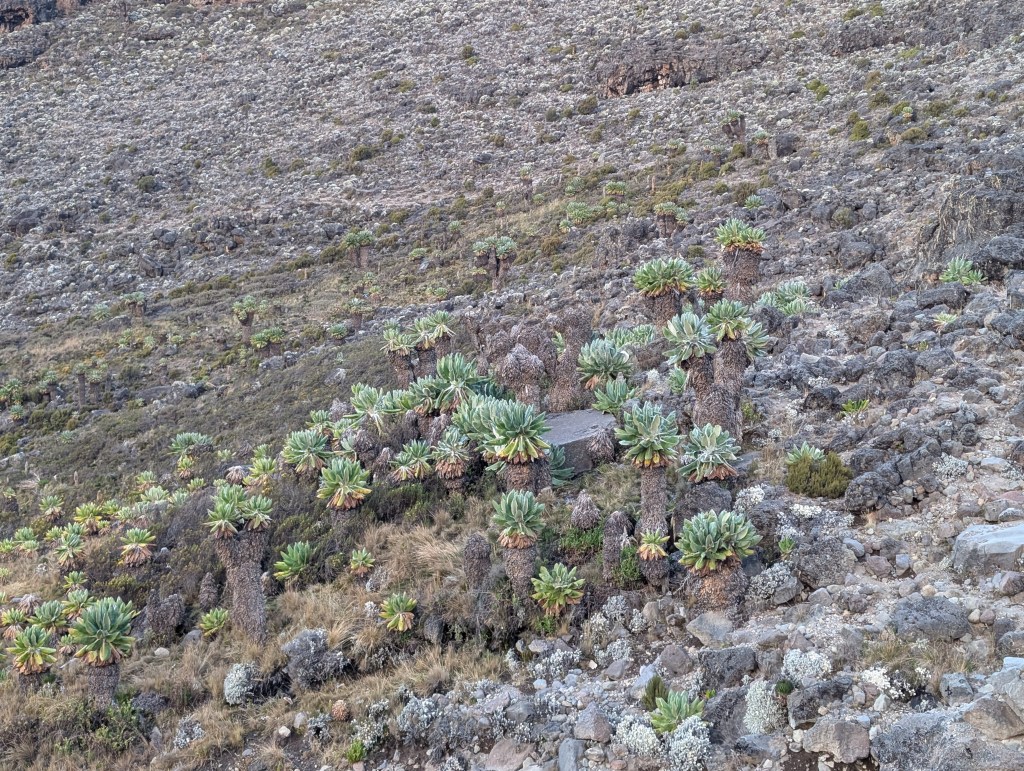
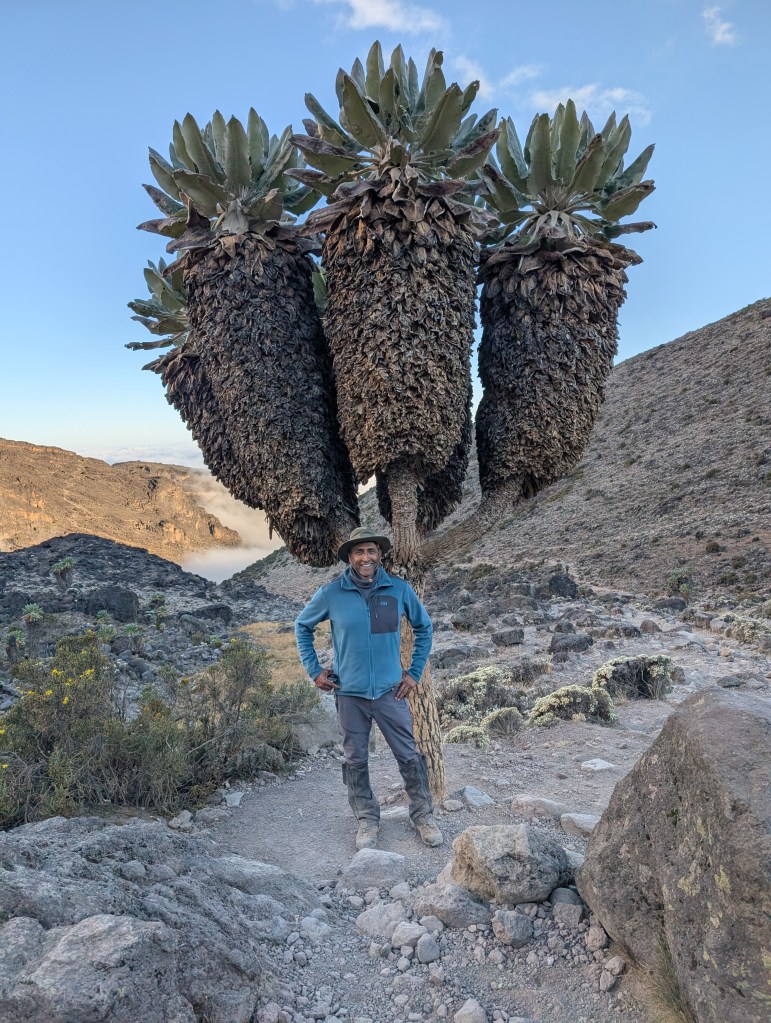
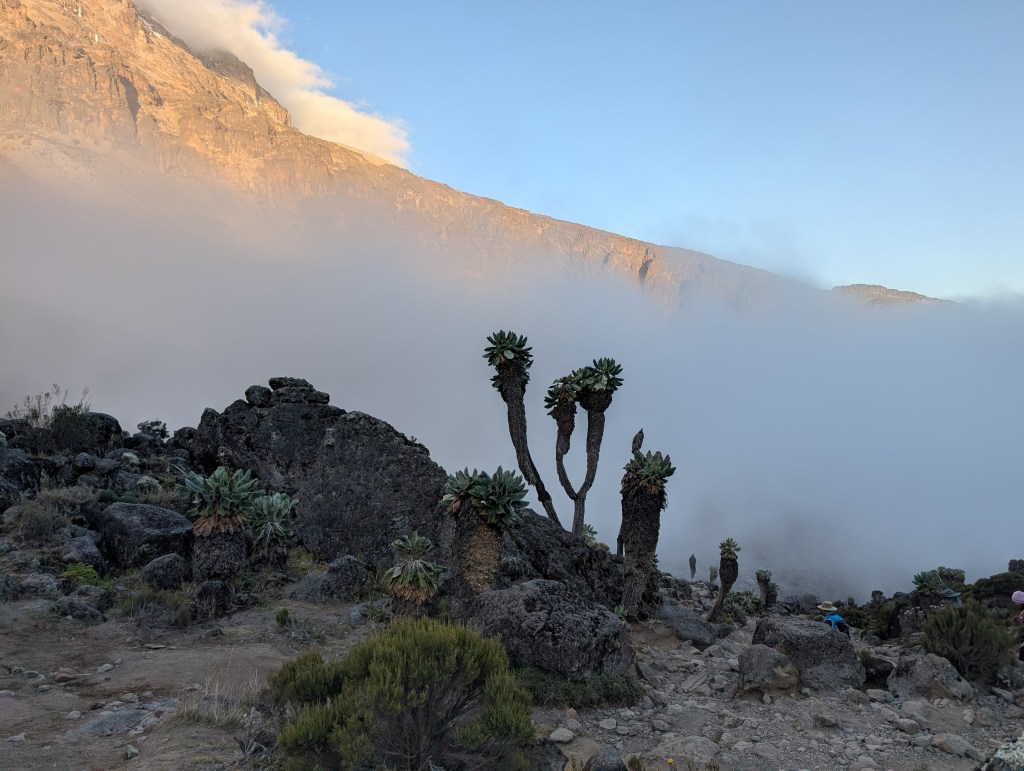
What goes up must come down. The afternoon was a steep descent from the cold, rocky heights of the Lava Tower down into the magnificent Great Barranco Valley. As we descended, the landscape changed again. The air grew thicker, and we were suddenly surrounded by the most bizarre and wonderful flora I have ever seen—the giant groundsels, which look like something straight out of a Dr. Seuss book or a prehistoric landscape.
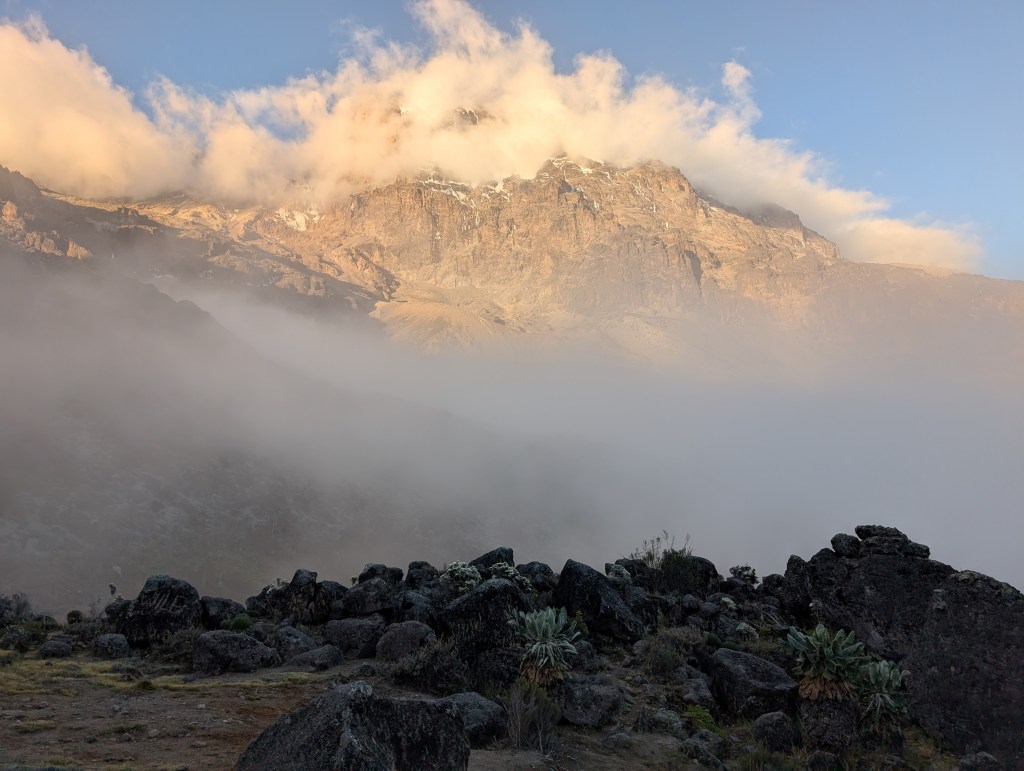
We finally arrived at Barranco Camp, arguably the most beautiful campsite on the entire mountain. It’s nestled at the base of the sheer, intimidating Barranco Wall (which we’d have to tackle tomorrow!), but it opens up to extensive, breathtaking views of the plains far below. Watching the sunset light up the cliffs in golden hues, with a sea of clouds filling the valley beneath us, was a truly magical end to a long and challenging day. We were tired, but our bodies were now better prepared for the altitudes to come.


Day 4: Barranco Camp (12,992 ft) to Karanga Camp (13,000 ft)
Time: 6 Hrs Distance: 4.1 Miles Total Elevation of Hike: 1,483Feet
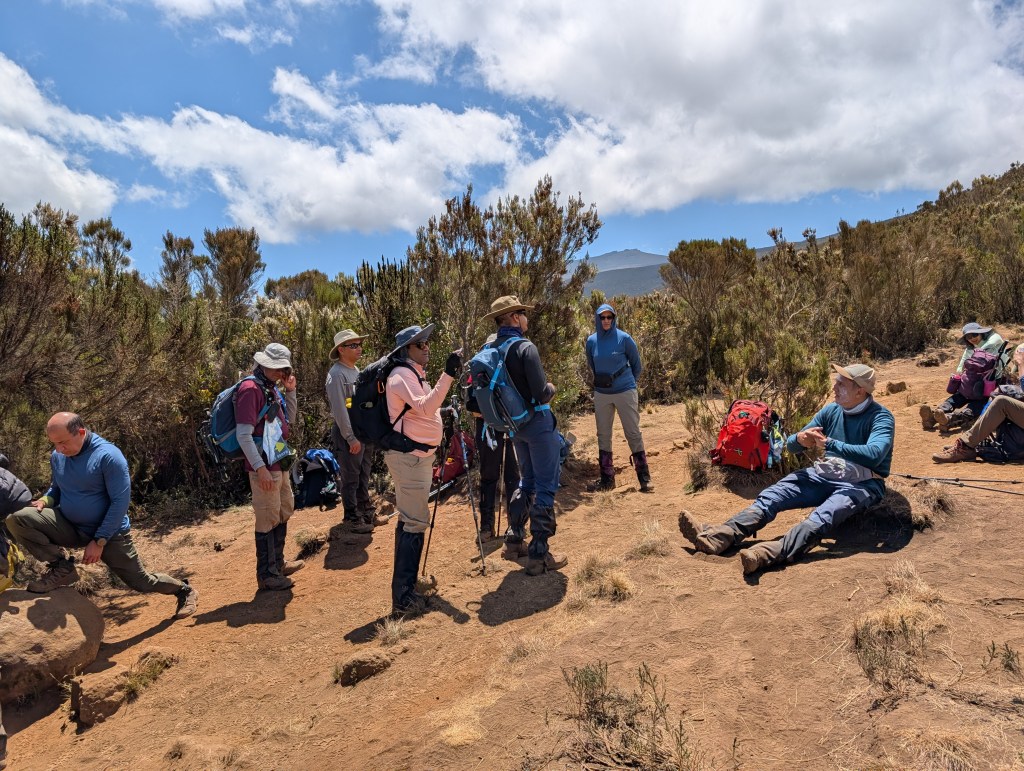
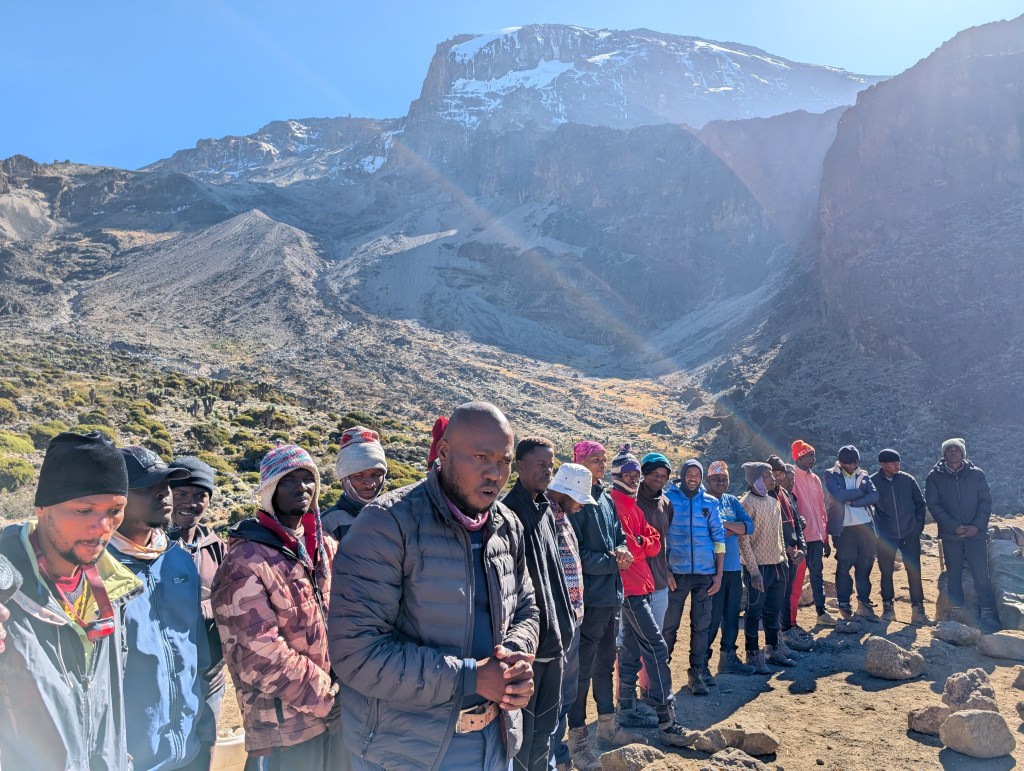
We woke up at Barranco Camp to the sight that had been on all our minds since the day before: the Great Barranco Wall. This near-vertical wall of rock, standing at 843 feet (257m), was our first challenge of the day, and it looked every bit as intimidating as its reputation suggests. After a morning introductions from our incredible guides to the whole crew, whose confidence was infectious, it was time to begin.
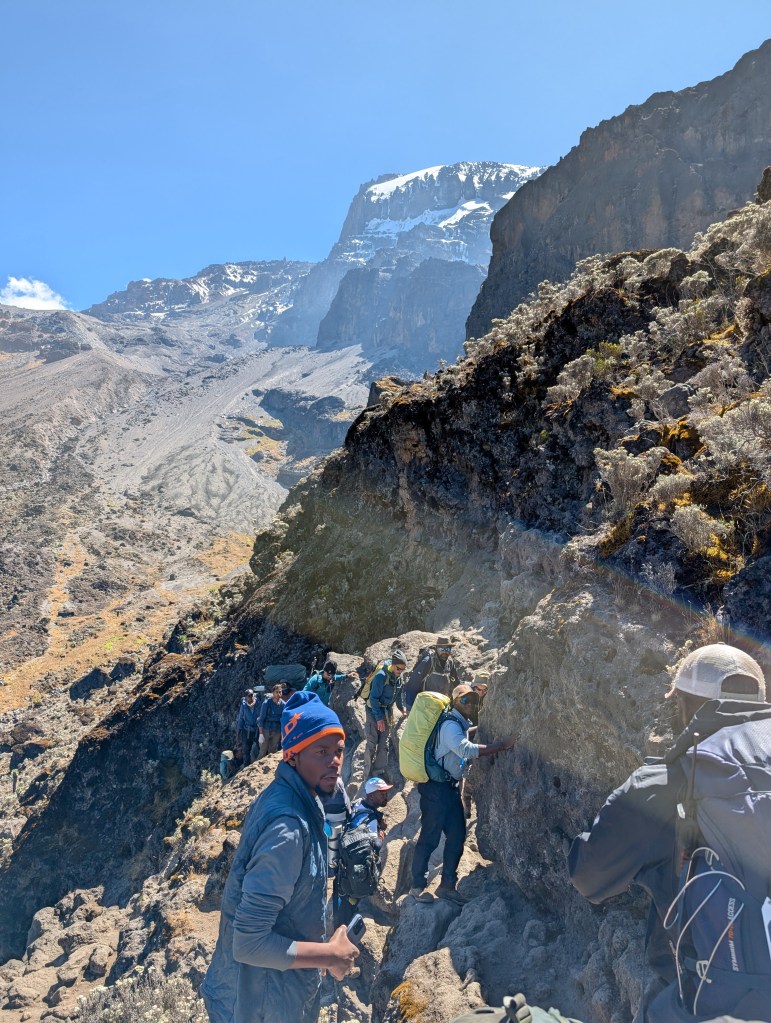
The day starts with a bit of a trick; you first have to descend to the base of the huge ravine before you can start climbing out. Then, the scramble begins. I have to be clear: this is not technical rock climbing. There are no ropes or harnesses. But it is a scramble that requires you to use all four limbs, finding handholds and footholds as you navigate the rock face.
It was exhilarating! The trail is narrow, and the sense of exposure is real, but our guides were phenomenal at showing us the way. With Kibo’s southern glaciers looking on, we moved as a team, encouraging each other up the wall. The feeling of pulling yourself over the final ledge to the top is one of pure triumph. Looking back down, Barranco Camp was just a collection of tiny specks below, a testament to how high we had climbed in such a short time. We were literally above the clouds.
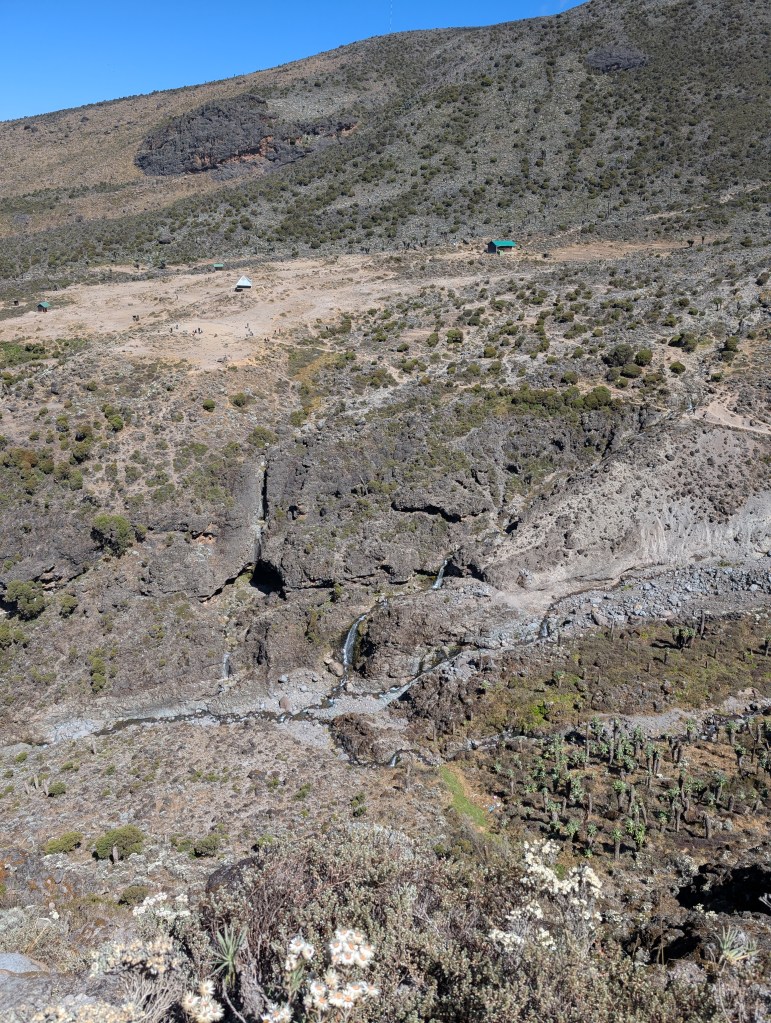
After a well-deserved rest at the top (with ginger tea!), the day continued with a series of ups and downs as we traversed the ridges and valleys on our way to the next camp. This section was tiring, a real rollercoaster for the legs, but it offered stunning views as we passed beneath the Heim and Kersten glaciers.
Finally, after one last steep climb out of the Karanga Valley, we arrived at our destination: Karanga Camp. The camp is perched on a desolate, windy ridge, but it’s a critical milestone. This is the last stop before the high camp from which we would make our summit bid.
As I settled into my tent that evening, I could feel a shift in the atmosphere. The fun and games were over. The summit was now within reach. Tomorrow, we would climb to the final base camp, and the reality of what lay ahead was beginning to sink in.
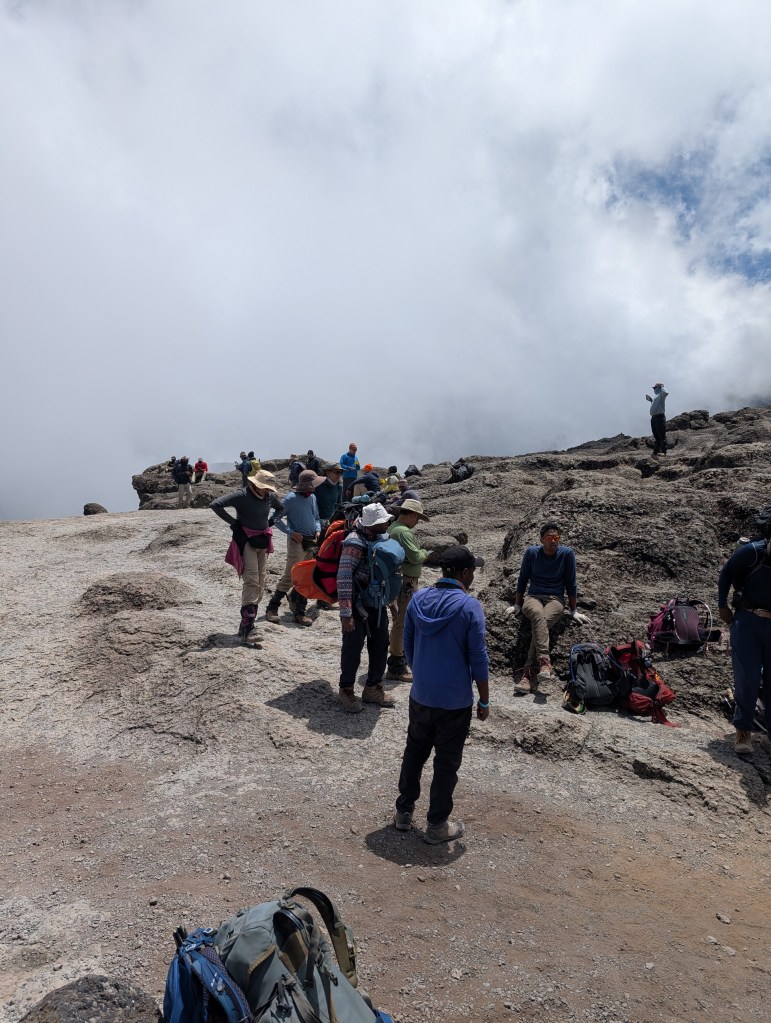
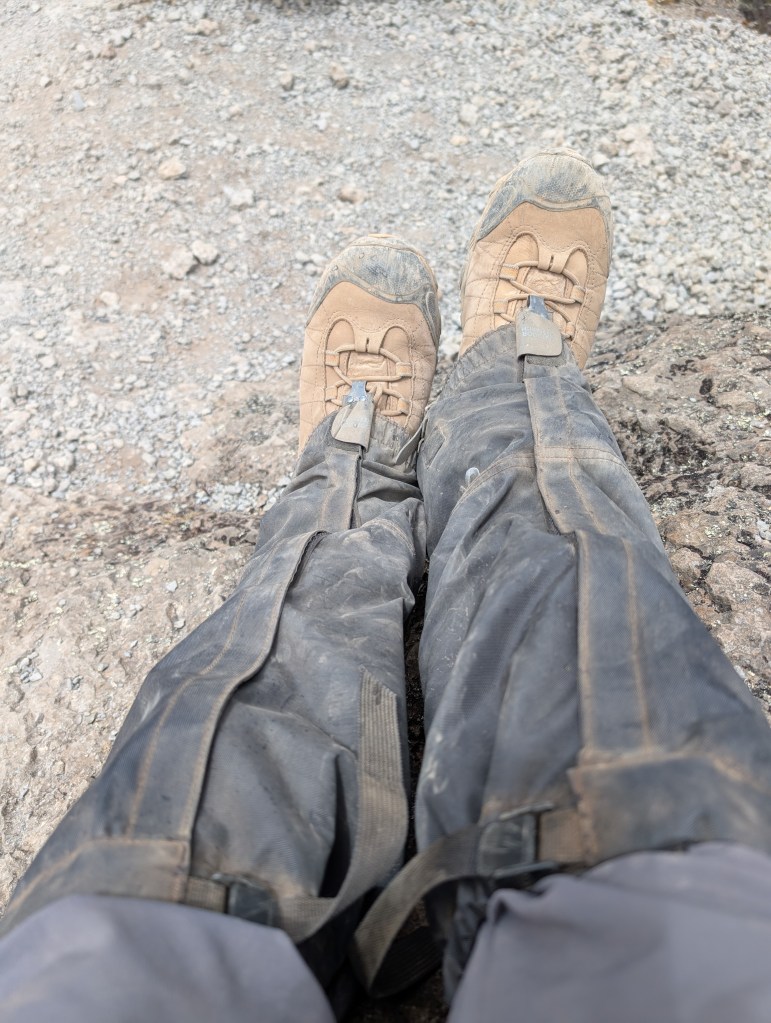


Day 5: Karanga Camp (13,000 ft) to Kosovo Camp (16,076 ft)
Time: 6:50 Hrs Distance: 3.7 Miles Total Elevation of Hike: 2,707 Feet
This is it. The last day of “normal” hiking before the main event. We woke up above a sea of clouds at Karanga, with the summit of Kibo looking impossibly close and clear in the morning sun. The mood was different today—quieter, more focused. Everyone knew what this day was about: positioning ourselves for the summit.
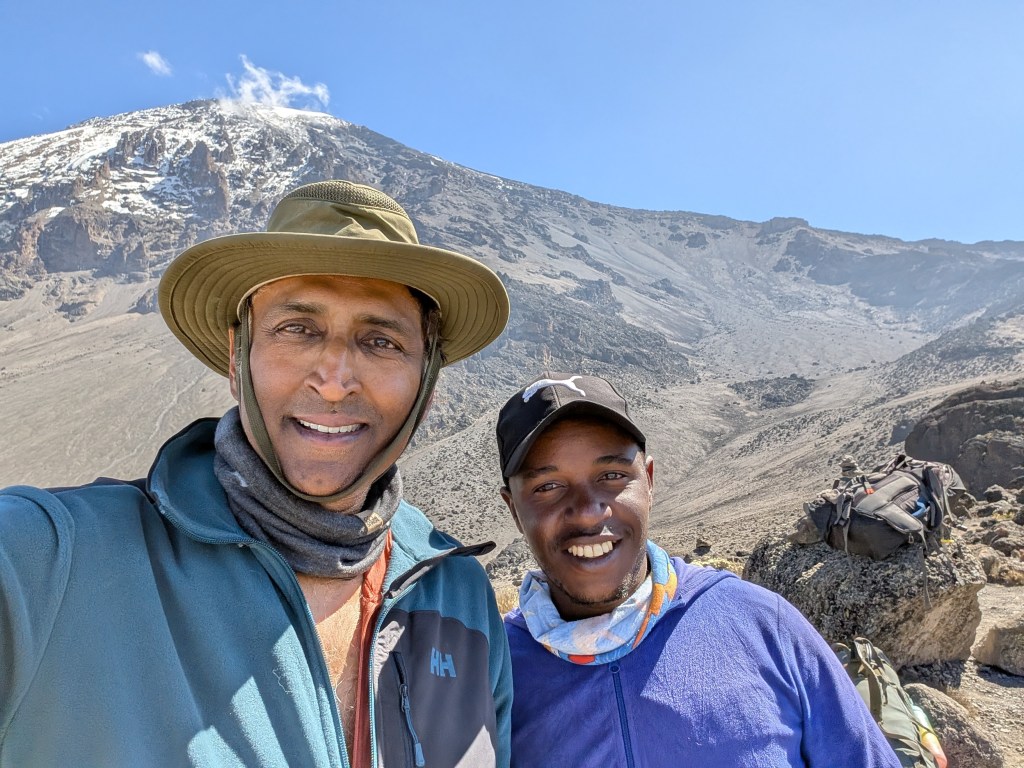
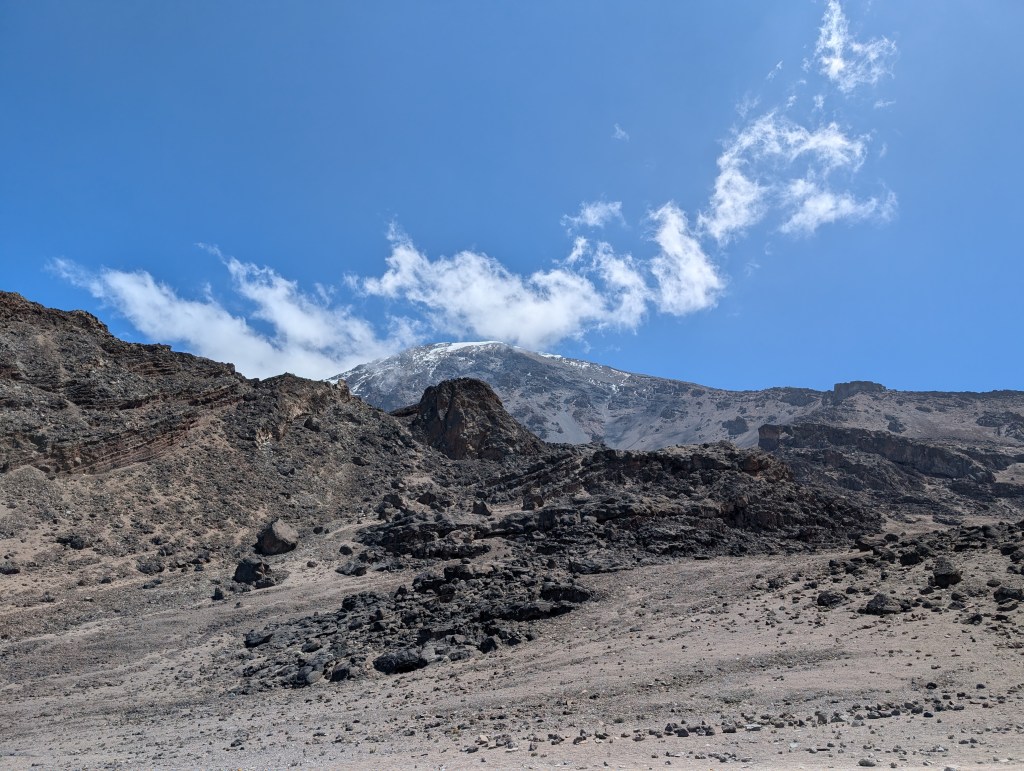
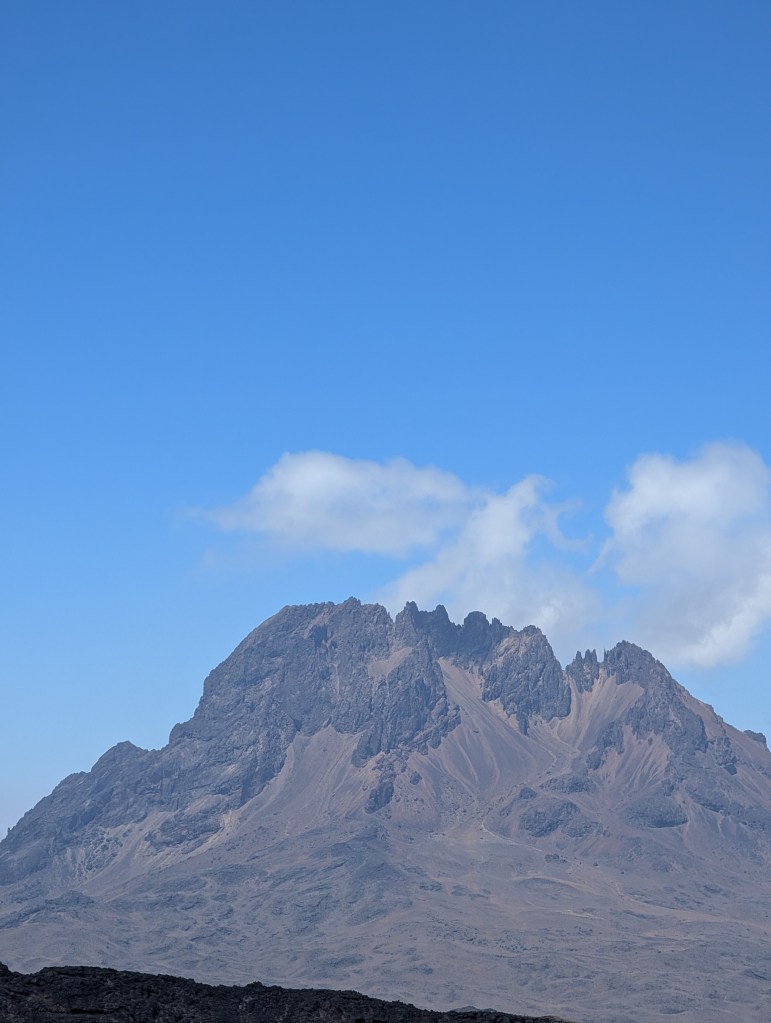
The trek from Karanga is a relatively short but brutally steep walk. We left the last vestiges of the alpine desert and entered the arctic zone. The trail is nothing but desolate scree slopes, a lunar landscape of dust and rock with absolutely no vegetation. Every step at this altitude is a conscious effort, a battle for oxygen in the thin, cold air. Along the way, we had incredible views of Kilimanjaro’s other peak, Mawenzi, looking like a jagged crown of rock.
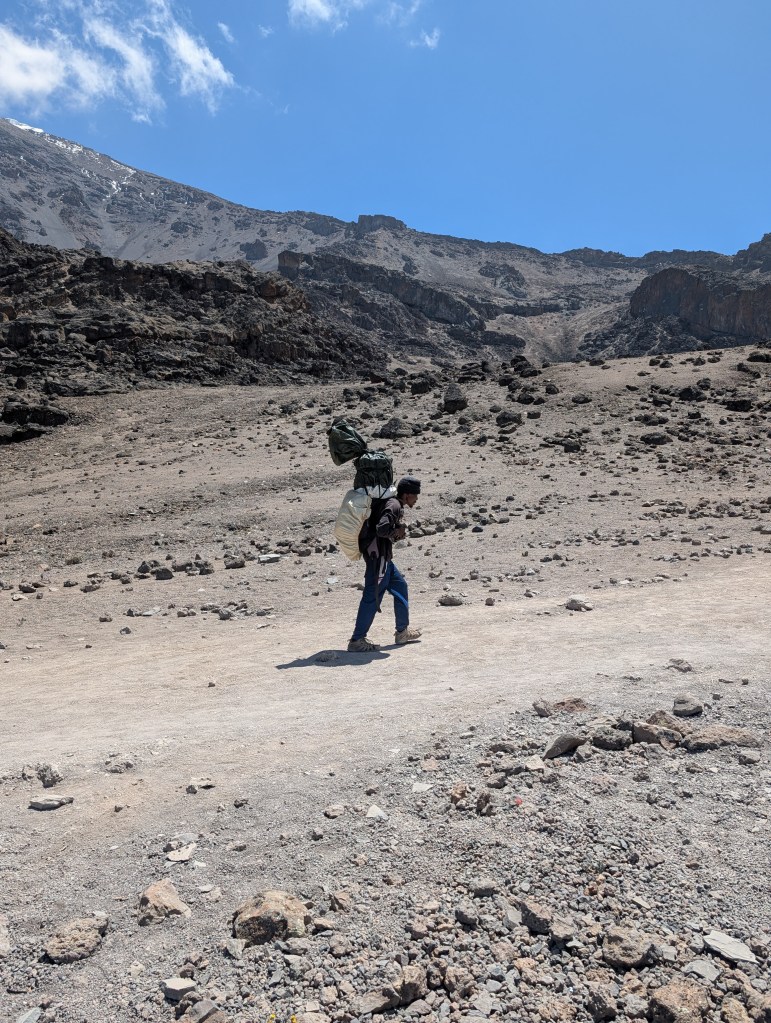
The hike was made both humbling and inspiring by the sight of our porters, who powered past us with heavy loads, their strength and endurance leaving us in complete awe. These men are the true heroes of the mountain.
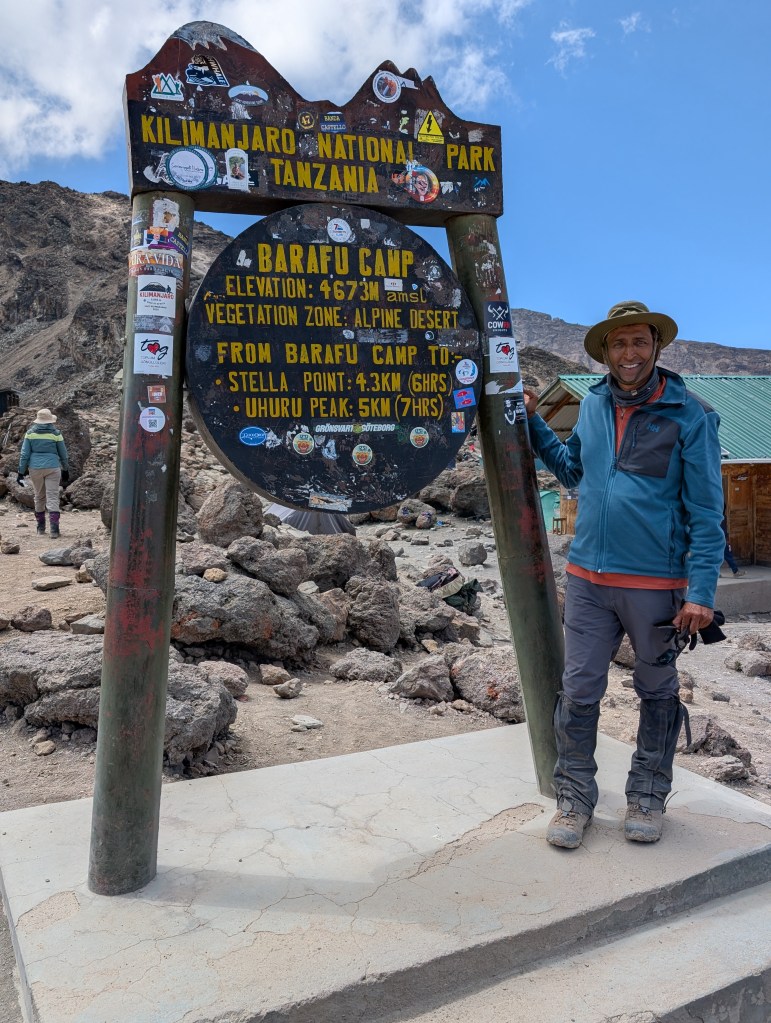
Our first stop was Barafu Camp at 15,223 ft, the main base camp where most climbers begin their summit attempt. The sign there says it all: Uhuru Peak, 5km (7hrs). It sends a shiver down your spine. But our team had a different strategy. Instead of stopping at Barafu, we pushed on for another tough hour or so to the higher Kosovo Camp.
This was a huge strategic advantage. That extra climb during the day meant we would save over an hour of scrambling over giant boulders in the pitch-black darkness of summit night. It was tough, but we knew it would pay dividends later.
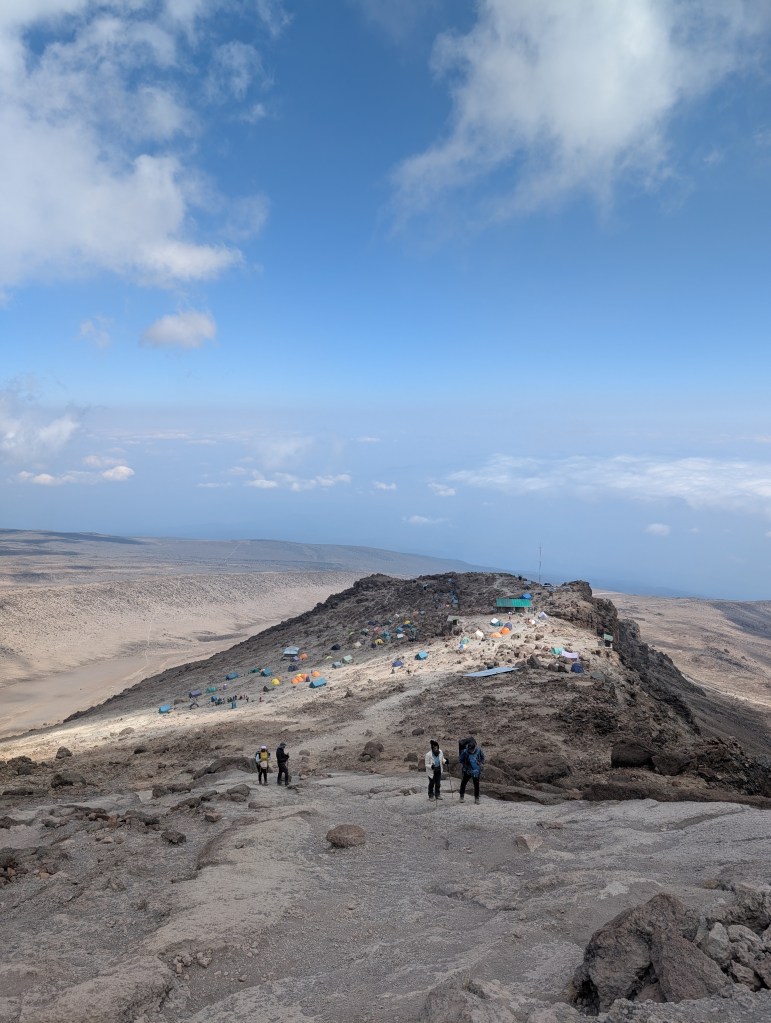
Arriving at Kosovo Camp, now just shy of 16,100 feet, felt like arriving on another planet. We were perched on a steep, rocky ridge, truly at the edge of the world. The afternoon was a strict routine of preparation: eat, drink as much water as possible, check our gear one last time, and rest. The goal was to get a few hours of sleep before the big show.
We had an early dinner as the sun set, and then we crawled into our tents. It’s a strange feeling, trying to sleep when it’s still light outside, knowing that in just a few hours you’ll be woken up to face the biggest physical challenge of your life. The anticipation was electric. The next time we’d be walking, it would be in the dark, heading for the roof of Africa.
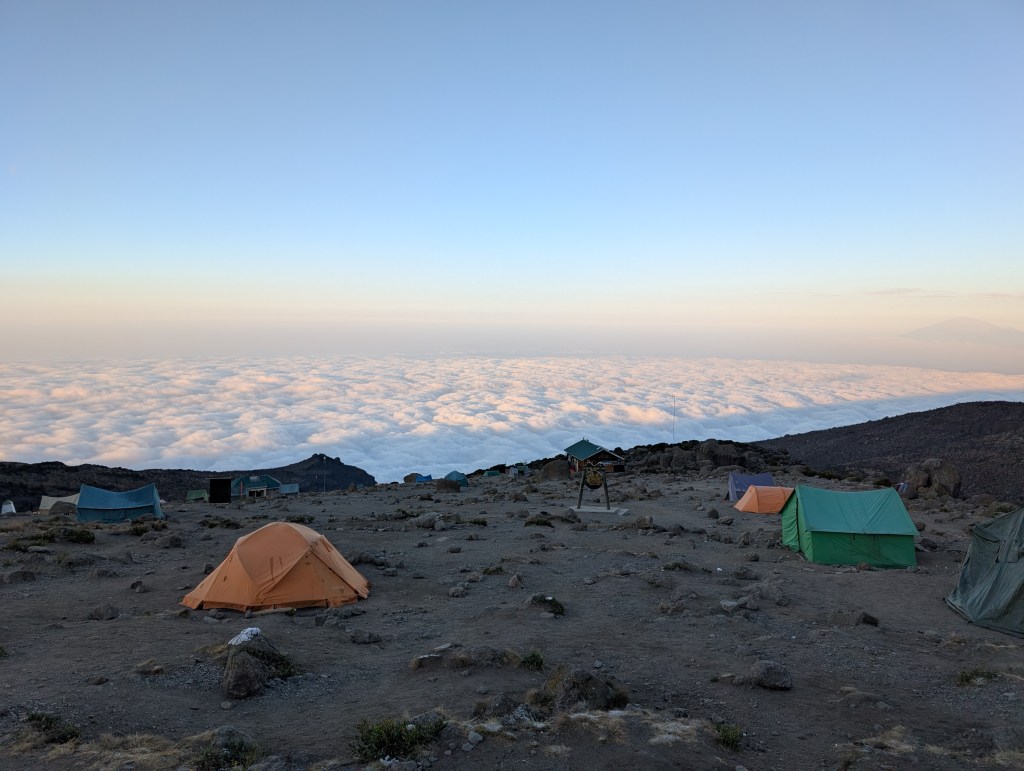
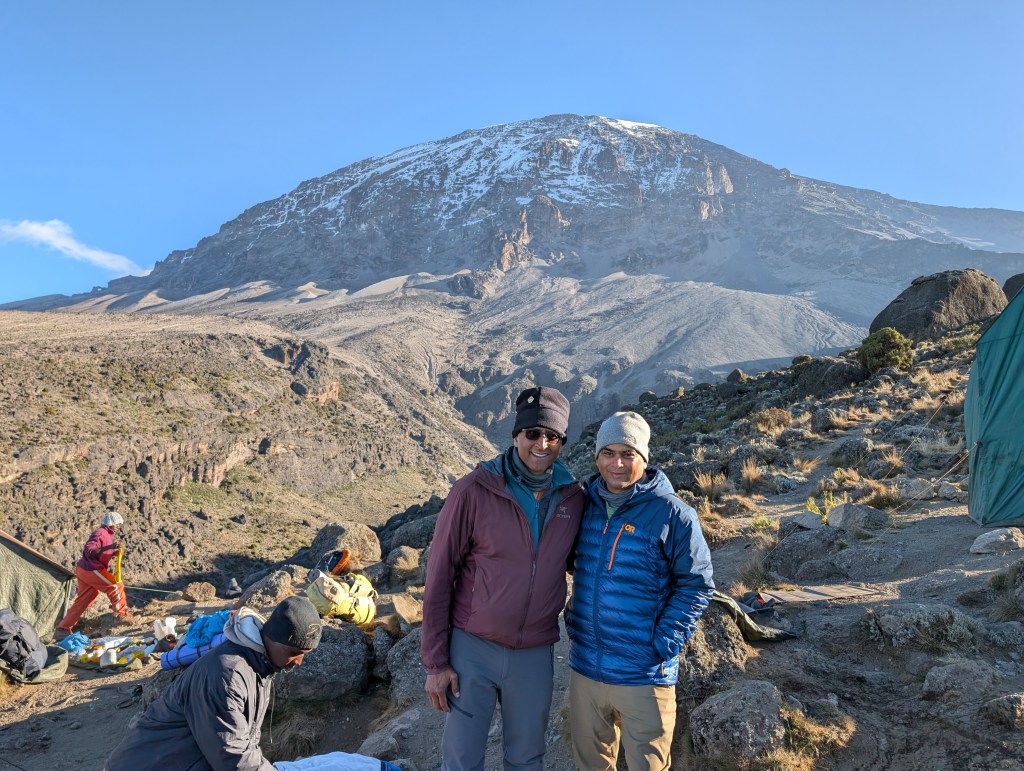
Day 6: Kosovo Camp (16,076 ft) to Uhuru Peak (19,341 ft) to Kosovo Camp
Time: 12:30 Hrs Distance: 6.15 Miles Total Elevation of Hike: 3,386 Feet
There are no words to truly prepare you for summit night. After a few restless hours of sleep, the wake-up call came around 10:30 PM. We stepped out of our tents into the freezing, pitch-black night, layered in every piece of clothing we had. The air was thin and bitingly cold. This was it.
We started our climb just before midnight, a line of headlamps beginning the slow, steep trudge upwards. The mantra “pole, pole” was no longer just advice; it was a survival mechanism. One slow, deliberate step after another. Looking up, I could see a trail of lights snaking far above us. Looking down, a “river of lights” flowed all the way back to camp. We were a silent, determined procession, marching towards the stars. The night sky was the clearest I have ever seen, but there was little time to enjoy it, as every ounce of focus was on breathing and moving.
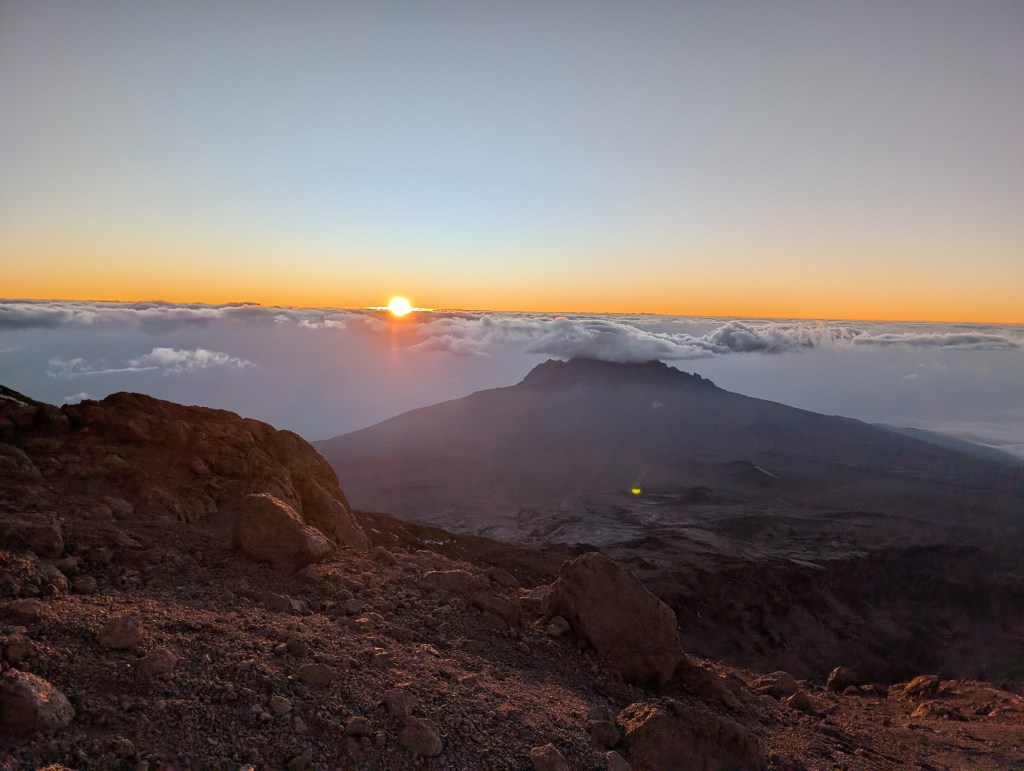
After what felt like an eternity in the cold darkness, the first sign of dawn appeared on the horizon. The moment those first rays of sun hit us was pure magic, breathing warmth and life back into our frozen bodies. The light revealed the stunning landscape around us and gave us the final push we needed to reach the crater rim.
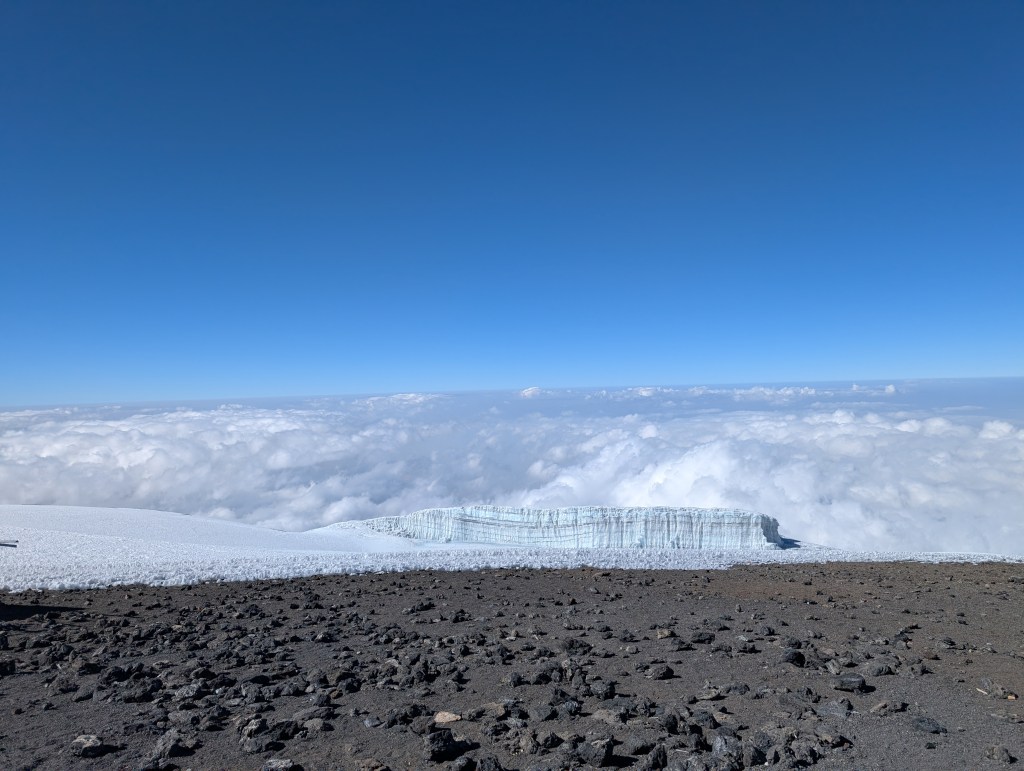
Our first major victory was reaching Stella Point at 18,885 ft. The feeling of seeing that sign, knowing you’ve conquered the steepest part of the climb, is overwhelming. From here, the views are breathtaking. You are surrounded by the crater’s spectacular ice cliffs and the jagged peak of Mawenzi is painted in morning gold. My guide gave me some great advice: take a quick photo, but save your energy and time for the way back. The true summit is waiting.
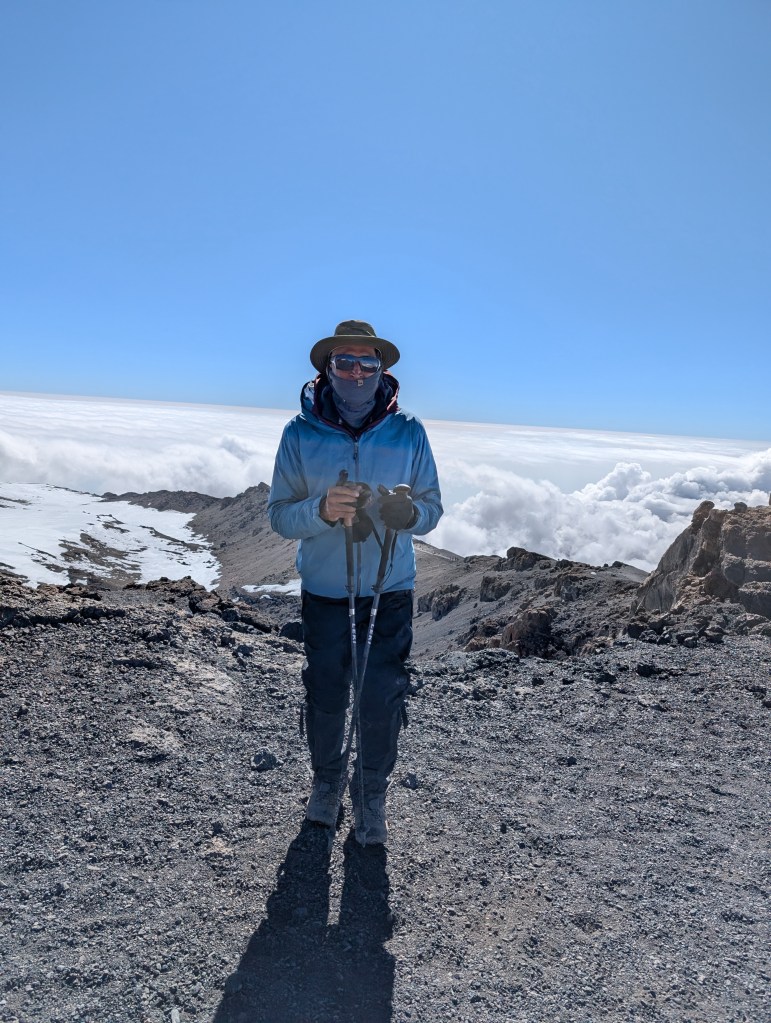
That final hour and fifteen minutes of walking along the crater rim to Uhuru Peak is surreal. You are walking on the roof of Africa, with a sea of clouds on one side and magnificent, ancient glaciers on the other.
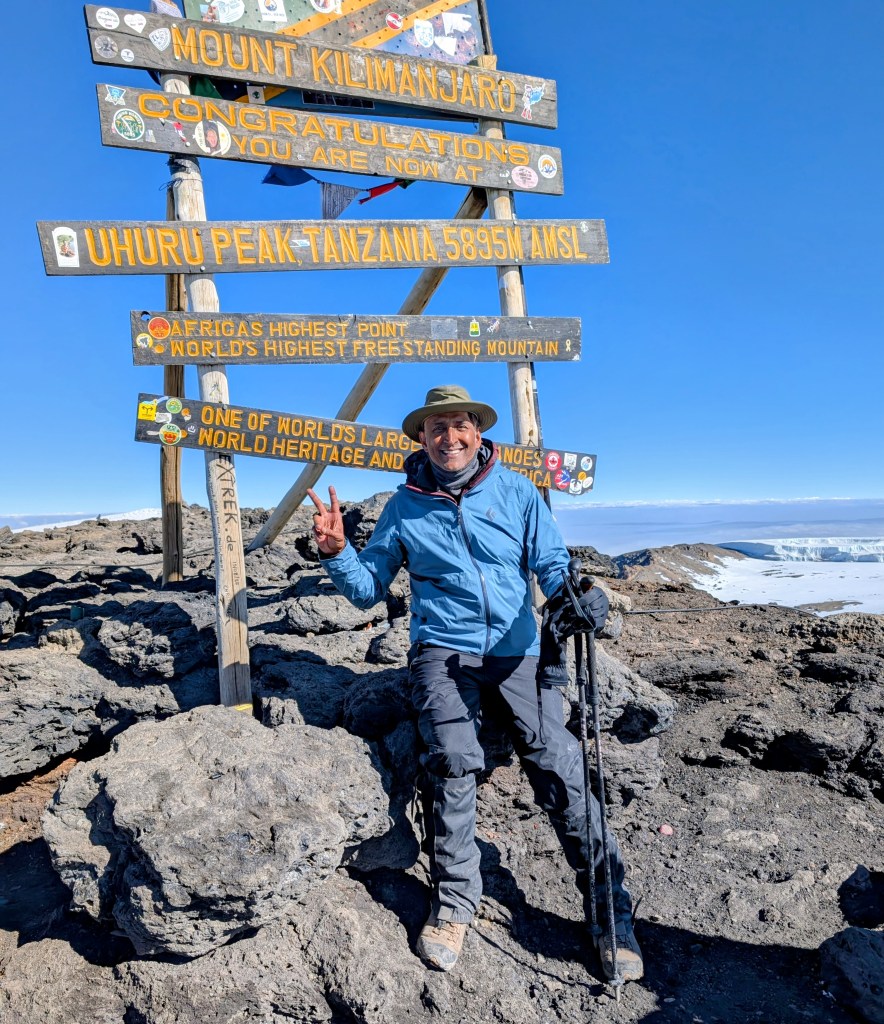
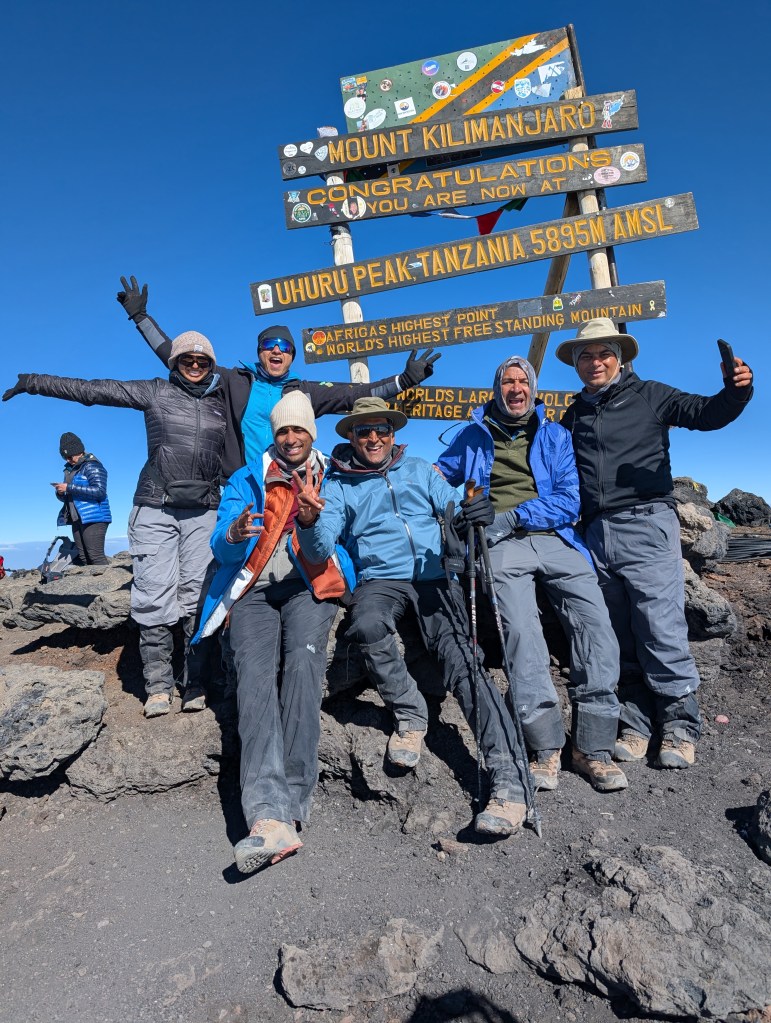
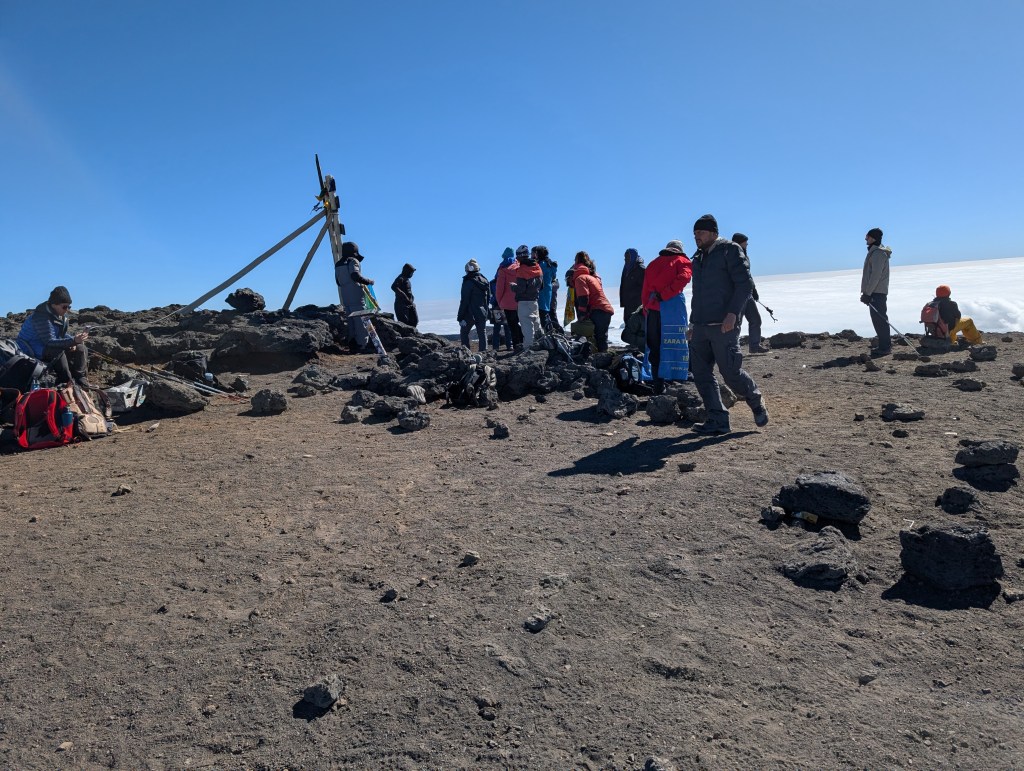
And then, we were there. Standing by the iconic wooden sign at Uhuru Peak, 5,895 meters (19,341 feet) above sea level. I can say without exaggeration it was the single most thrilling moment of my life. We did it. We were on top of Africa. The feeling is an indescribable mix of exhaustion, elation, and pure awe.
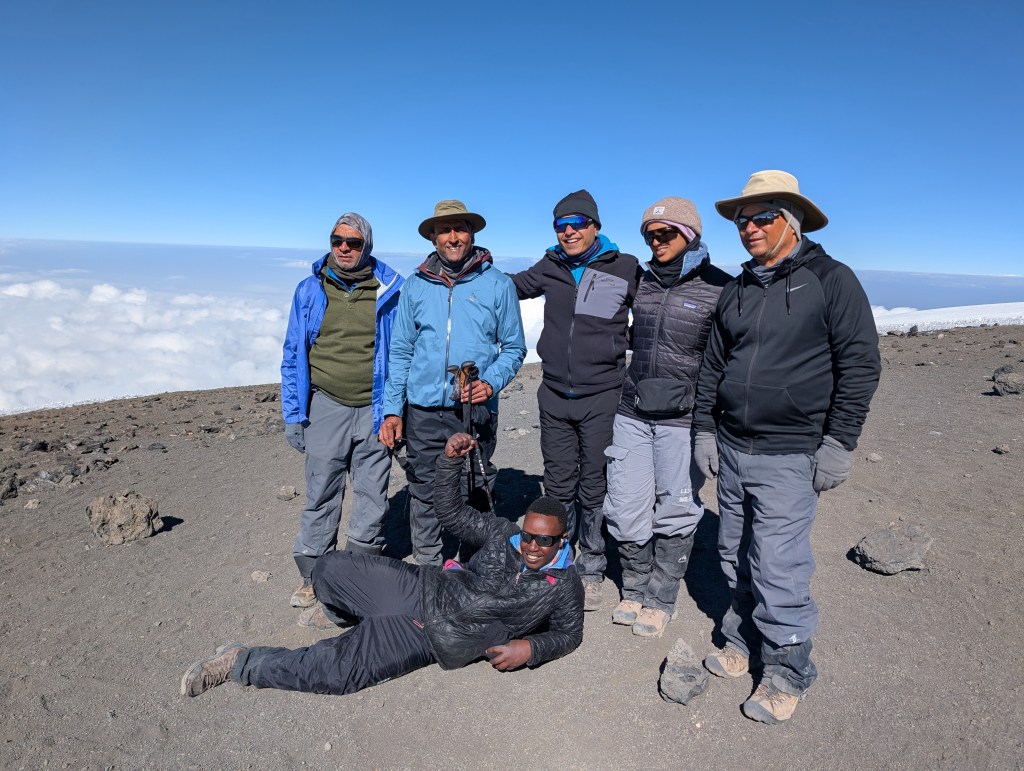
Due to the extreme altitude, you can only spend about 20-25 minutes at the summit. We took our photos, hugged our teammates and guides, and tried to soak in every second of the 360-degree view before beginning the long journey down.
The descent is a grueling affair, a long slog back to Stella Point and then down the loose scree slopes. Arriving back at Kosovo Camp hours later, I collapsed with a sense of utter exhaustion and profound accomplishment. We had been to the summit and back. The hardest part was over.



The Journey’s End: Final Reflections from the Roof of Africa
The trail dust has finally settled, my boots are clean, and the aches in my legs have faded, but my mind is still somewhere on that mountain. It’s hard to capture a journey like this in a few blog posts, to truly convey the feeling of the biting summit wind or the warmth of the first rays of sun after a long, dark night.
Sometimes, the numbers help tell the story of the scale of the challenge. When all was said and done, our trek on the Lemosho route covered 36 miles from the rainforest floor to the arctic summit. But the truly staggering figure is the vertical climb. In total, we had an elevation gain of 16,330 feet. That’s over three vertical miles of ascent, a climb that tested every bit of our physical and mental endurance.
But a journey like this is so much more than miles and feet. It’s about the quiet rhythm of walking, the camaraderie built over shared meals and steep climbs, and the unwavering support of our incredible guides and porters. It’s about stripping life down to its simplest elements: eat, sleep, walk, and repeat.
Kilimanjaro teaches you about humility in the face of nature’s grandeur and about your own hidden reserves of strength. It proves that with patience (“pole, pole”) and perseverance, you can push past limits you never thought possible. You leave a little piece of yourself on that mountain, but you take a much larger part of it home with you.
Thank you for following along on this adventure of a lifetime. If you are even considering this climb, I hope this has inspired you. It’s more than just a hike; it’s a journey that will stay with you forever.


 VaraWorld
Leave a comment