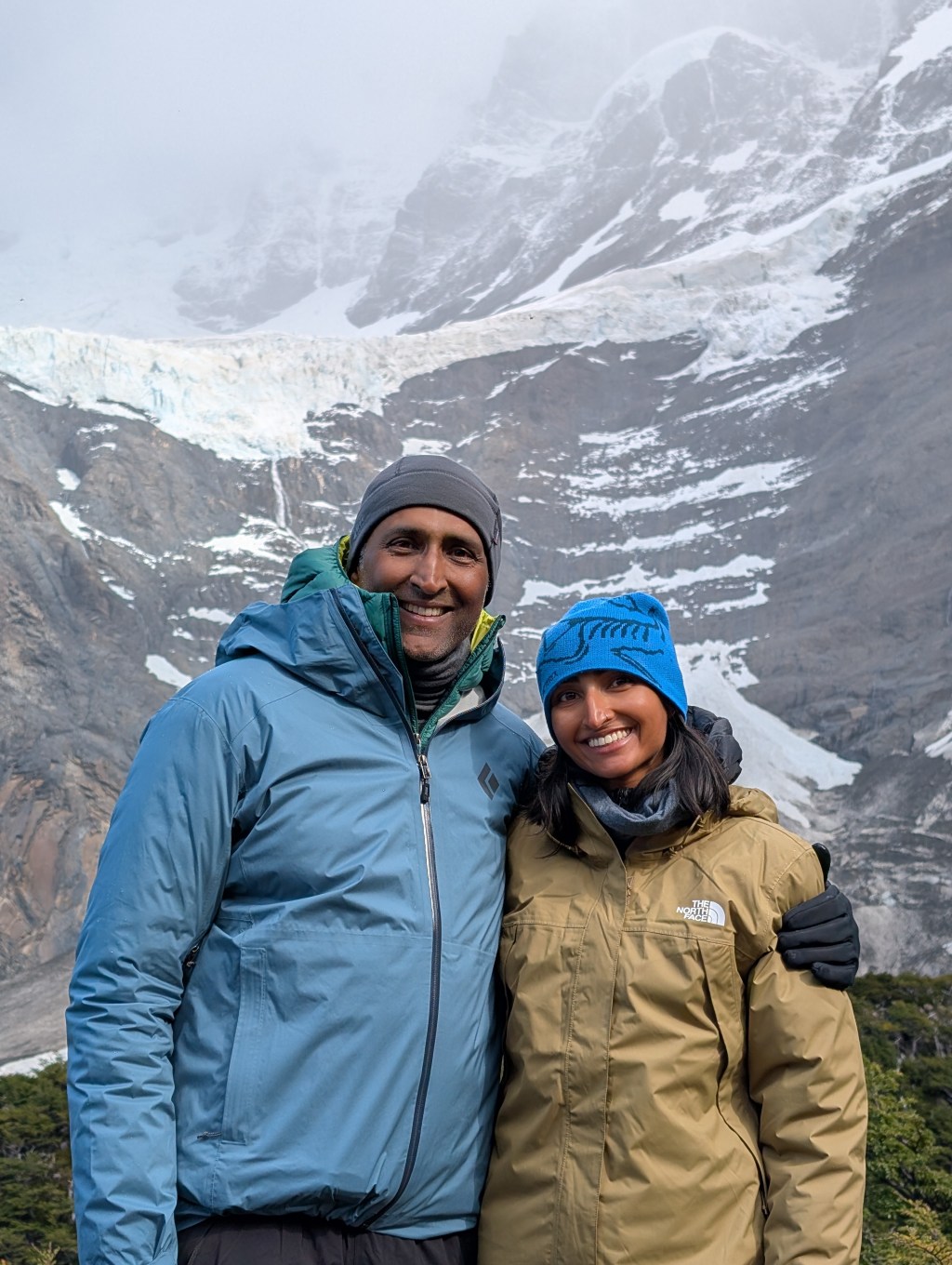
Seven days, 23-pound packs, and a landscape that feels like the very edge of the world. In March 2026, my daughter Anika and I headed to the deep south of Chile to take on the Original Torres del Paine W Trek. Moving from iconic granite spires in the east to the massive ice fields in the west, we immersed ourselves in the raw, “four” reality of Patagonia-seasons-in-a-day
It was a journey of vertical climbs, glacial thunder, and shared father-daughter “trail zen” that has officially claimed the top spot on my list of lifetime hikes.
Day 1 and Day 2: Puerto Natalis
Our journey into the heart of Chilean Patagonia began with a flight from Santiago to Puerto Natales. This small, wind-swept mountain town serves as the primary base for everyone attempting the Torres del Paine, and the trekking energy is palpable the moment you land.
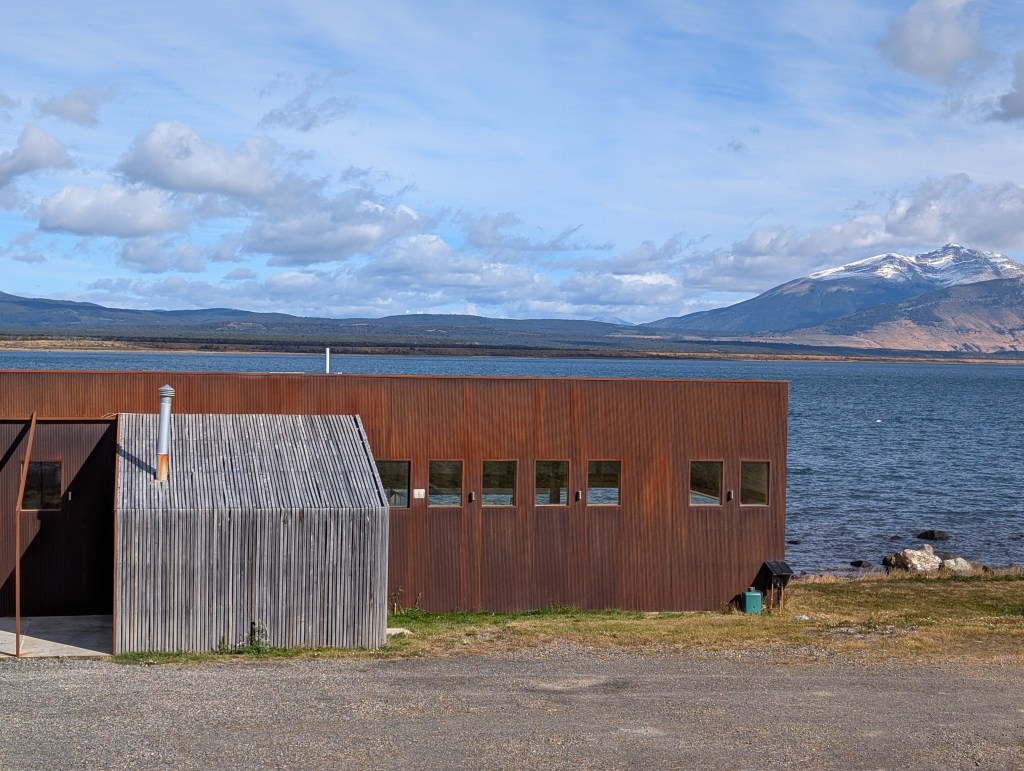
We checked into Hotel Costaustralis, a beautiful spot right on the waterfront. Looking out the window, it’s a humbling reminder of where you are: closer to Antarctica than to Santiago. The weather here is dramatic; the sky shifts constantly, and the wind gives you a very clear, chilly warning of what’s to come on the trail.
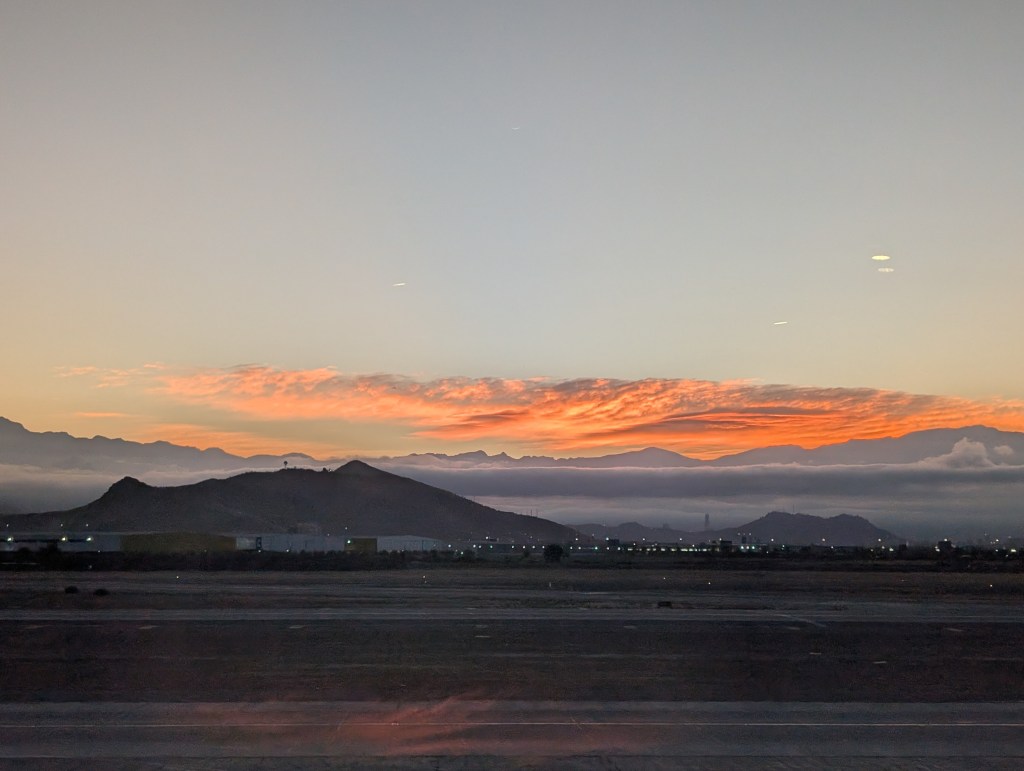
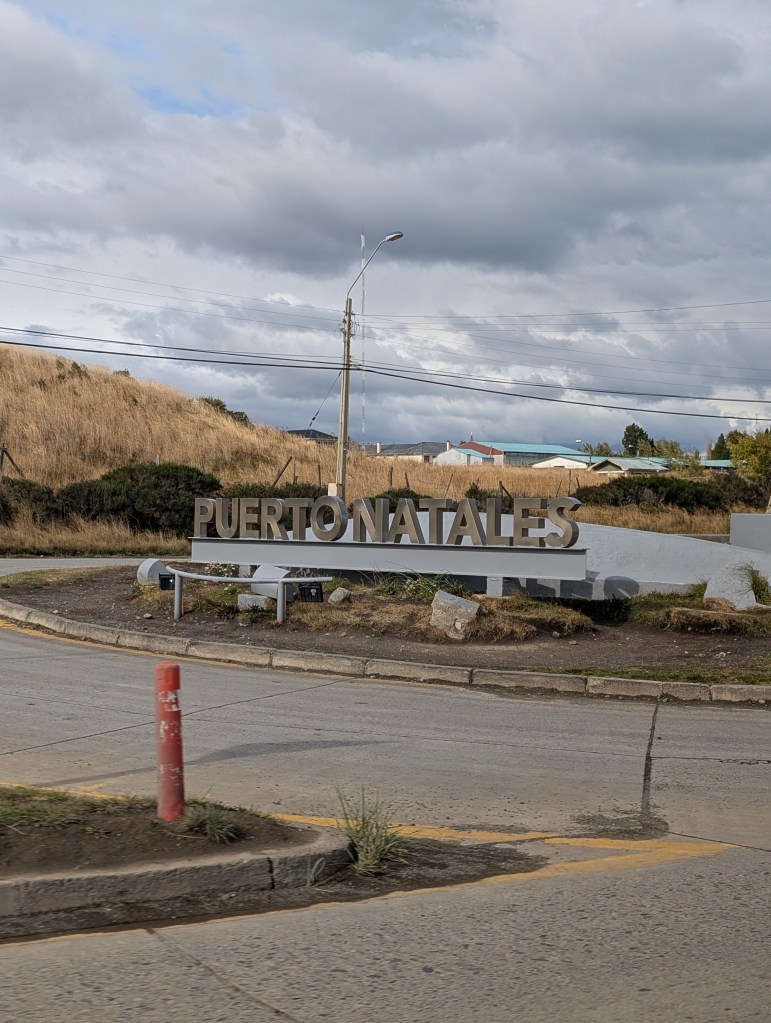
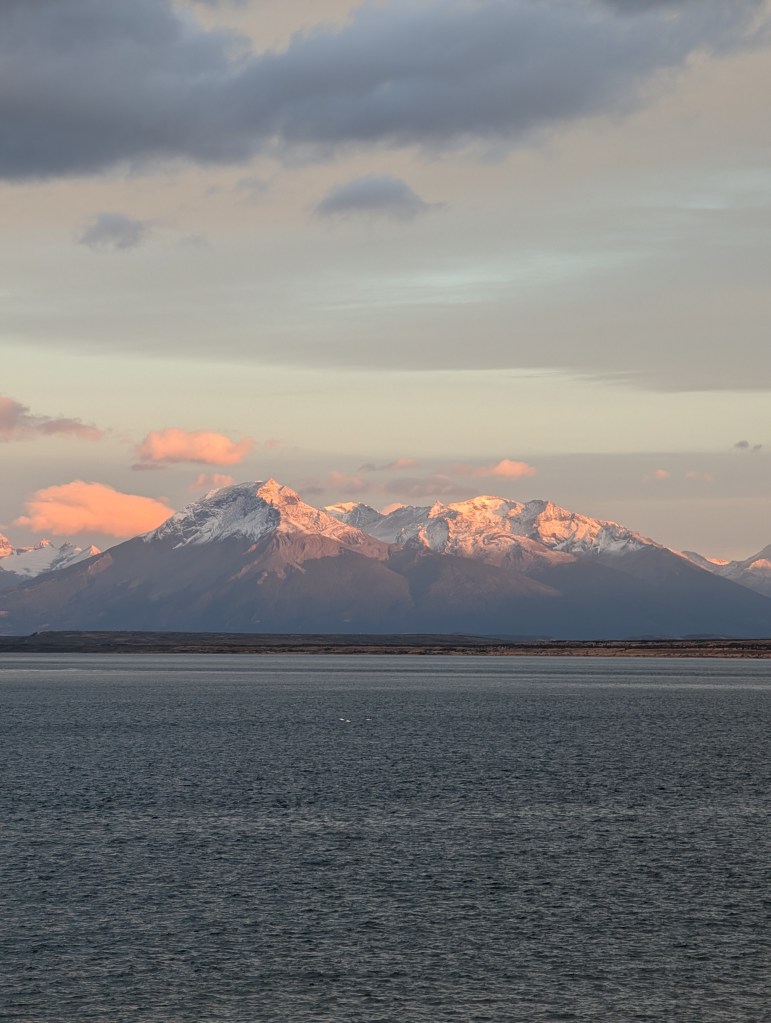
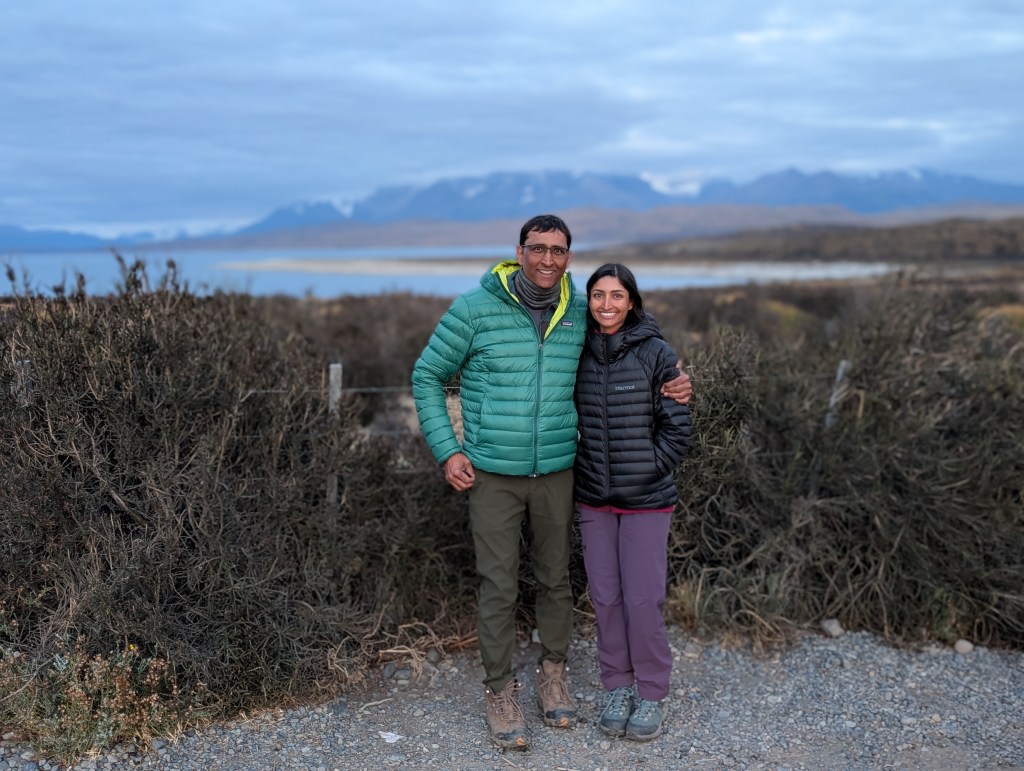
After settling in on Day 1, we spent Day 2 “finding our trail legs” with a long walk along the water. Puerto Natales has a rugged, end-of-the-road charm. We explored the town, marveled at the snow-capped peaks across the sound, and took the obligatory photos at the skeletal remains of the old pier and the famous “Hand” sculpture (La Mano).
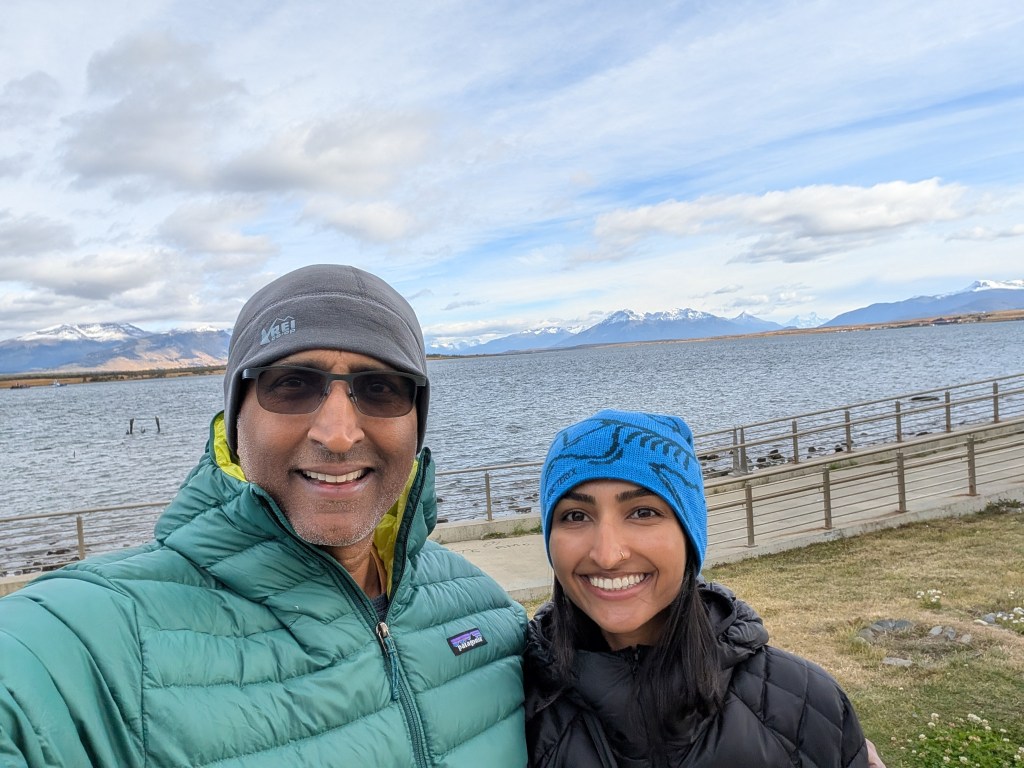
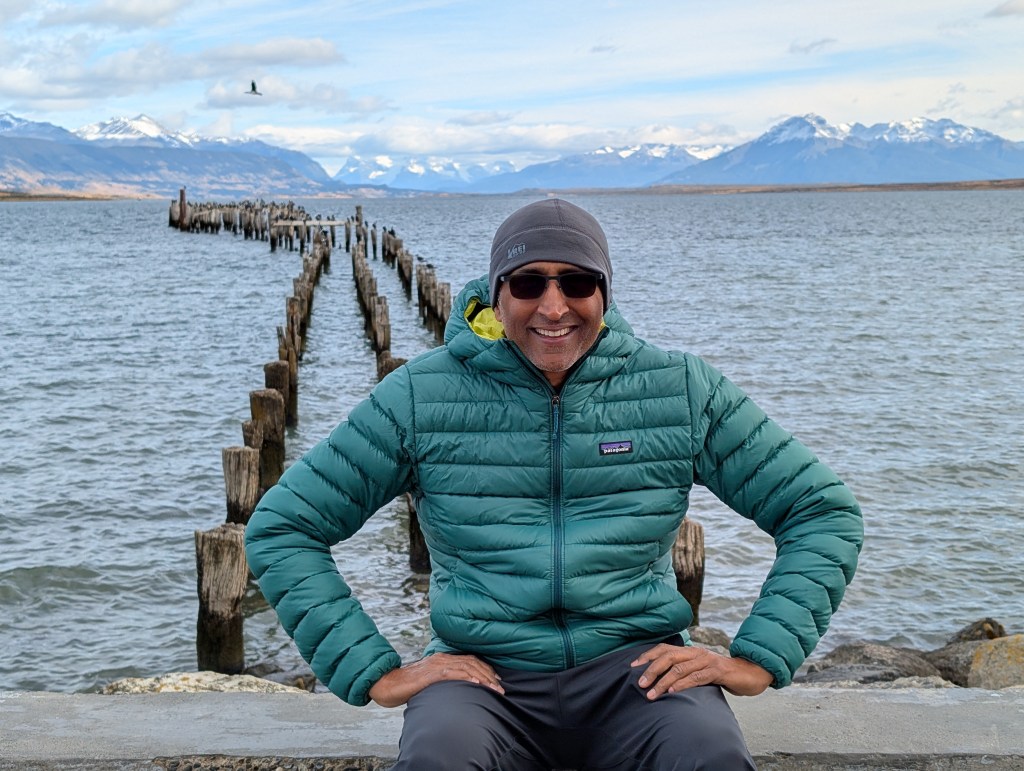
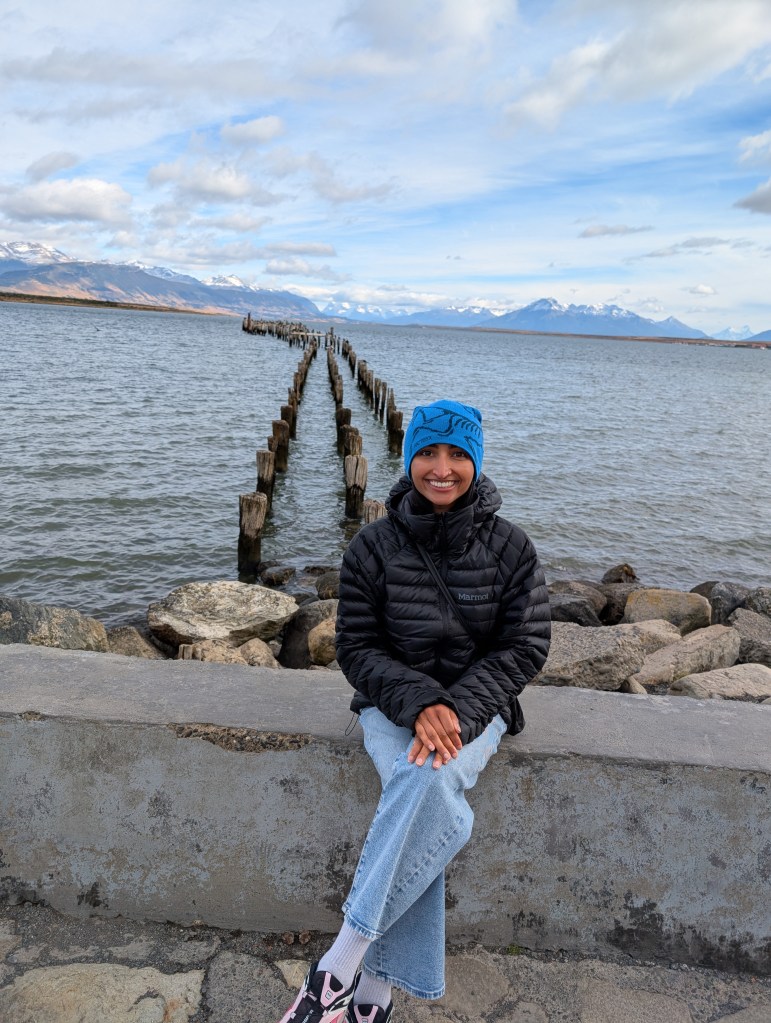
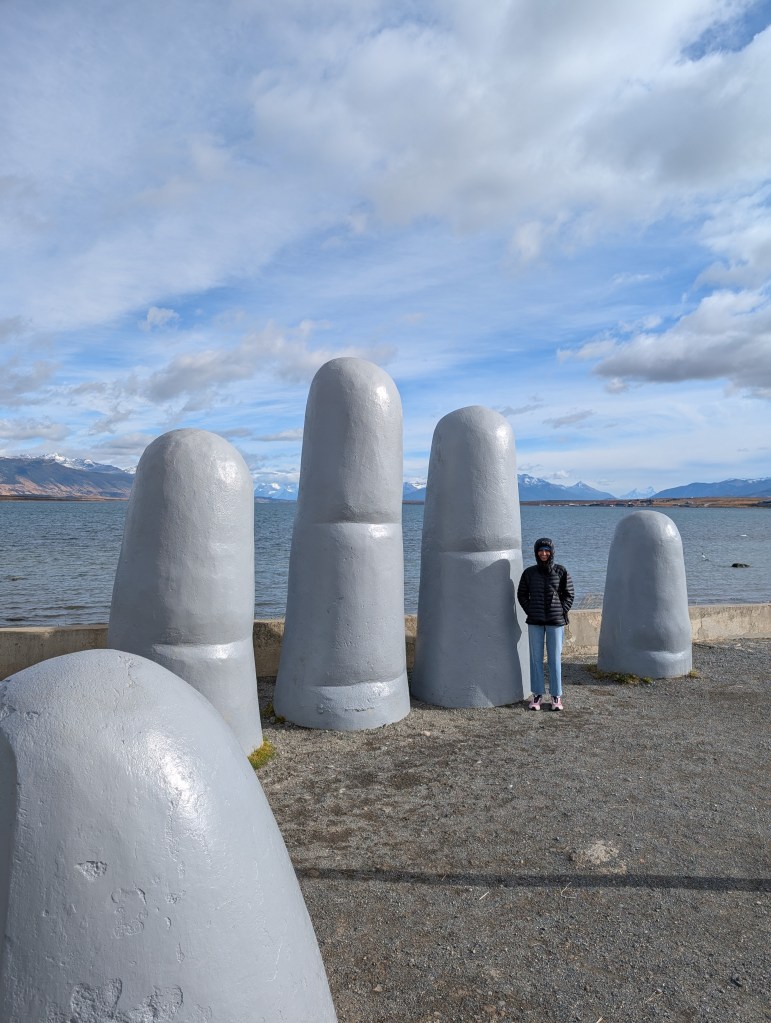
Since we booked our “Original W Trek” through Swoop Patagonia, we headed to a local briefing on the evening of Day 2. Meeting the local team and getting the “boots on the ground” layout of the trek made it all feel very real.
Between the briefing and the sightseeing, we had one final, critical mission: the pack check. We managed to get our backpacks down to 23 pounds each (including two liters of water). While that sounded manageable in the hotel room, we knew those 23 pounds would feel a lot heavier by the time we reached the French Valley!
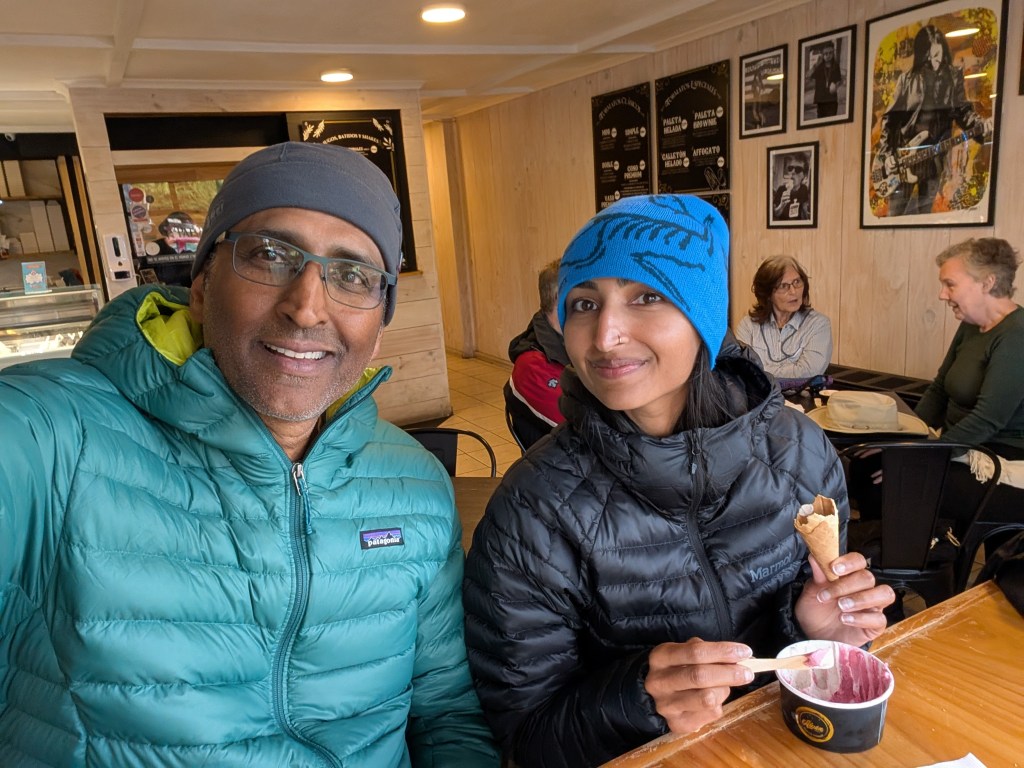
To cap off our last “civilized” day, Anika and I treated ourselves to some local ice cream. You can’t visit this part of the world without trying the Calafate berry gelato!
With our gear prepped and our bellies full, we were officially ready to leave the pavement behind.
Day 3: Ascent to Las Torres lookout
The real work began at 6:30 AM. We were picked up from our hotel, Hotel Costaustralis, for a private transfer into Torres del Paine National Park. The anticipation was high as the massive granite peaks grew larger and more imposing through the windshield.
Upon arriving at Refugio Las Torres, our base for the night, we quickly took advantage of the lockers. Shedding some of our heavier gear was crucial before we began the first major highlight of the W Trek: the hike to the Towers lookout. The trek started under clear skies with the sun just beginning to hit the highest peaks. We passed the initial trailhead sign, full of energy and ready for the climb.
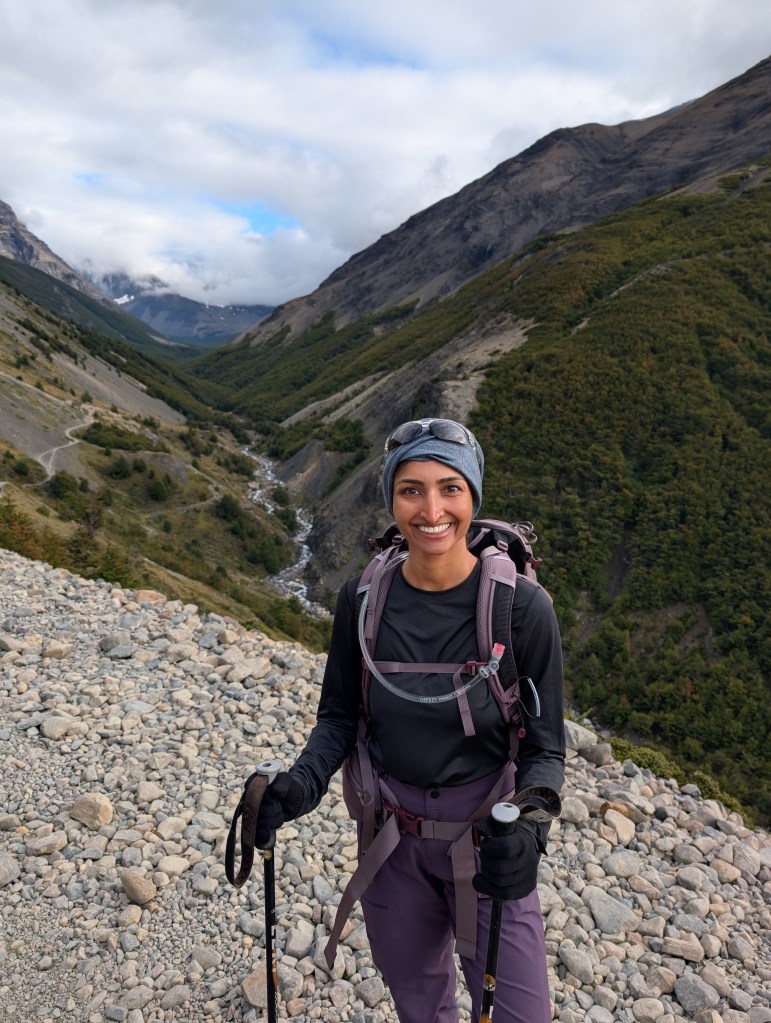
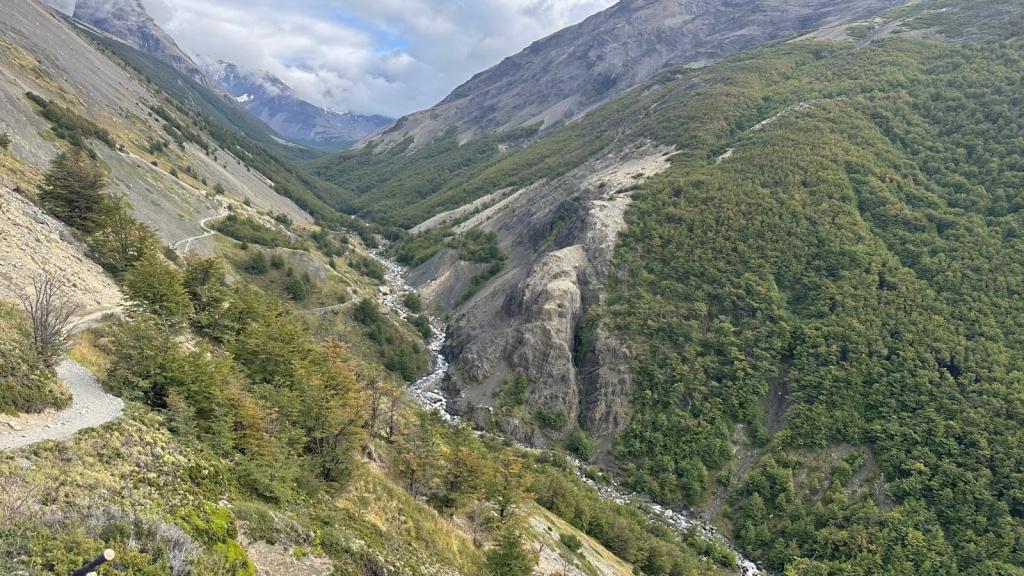
The journey began with a steady ascent, following the turquoise waters of the Ascencio River as it carved its way into the valley. As we gained elevation, we were rewarded with stunning views looking back down the wide valley we had just traversed. The trail was dusty, and the vast Patagonian landscape spread out before us.
We moved into lush, ancient beech forests that offered a brief, shaded respite. But the most significant visual cue of the day was still ahead: the terminal moraine. This ridge of glacial debris marked the final hurdle before our destination. Looking up at the trail winding steeply up that massive, rocky slope was a humbling moment, a clear reminder of the scale of the Andes.
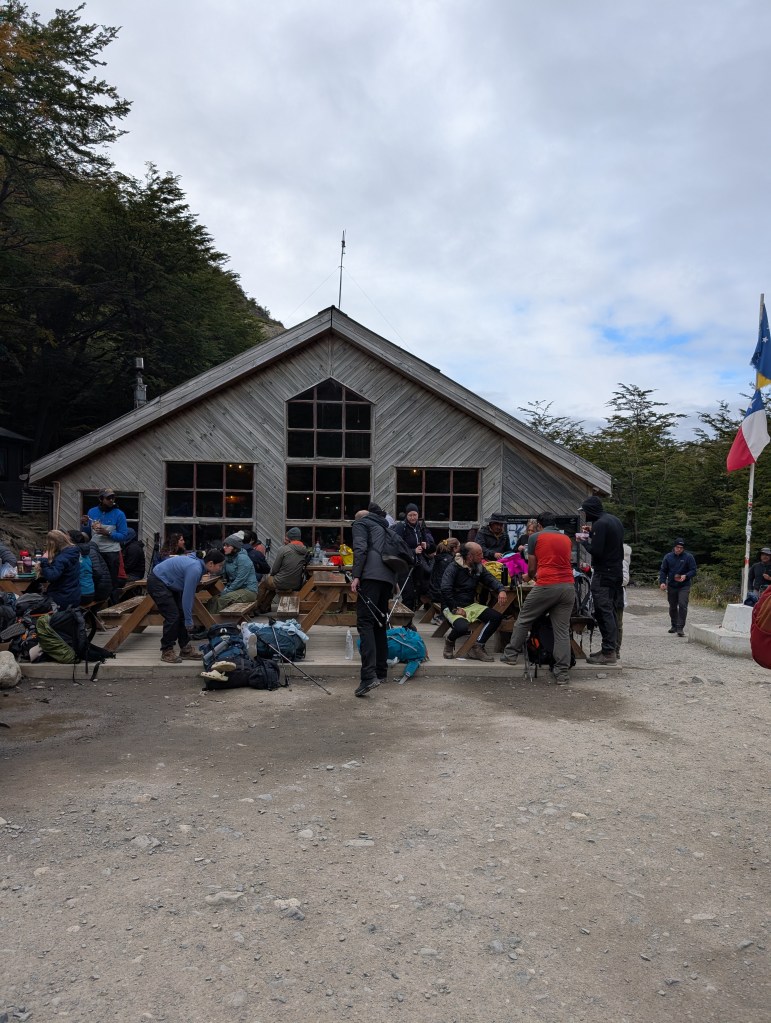
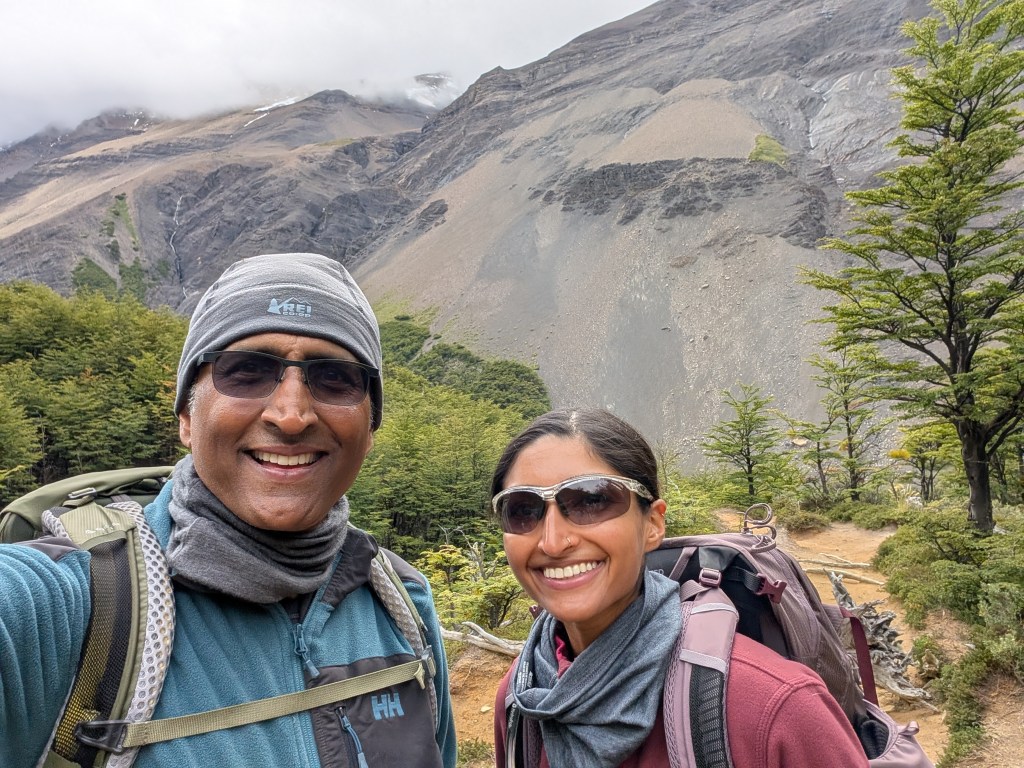
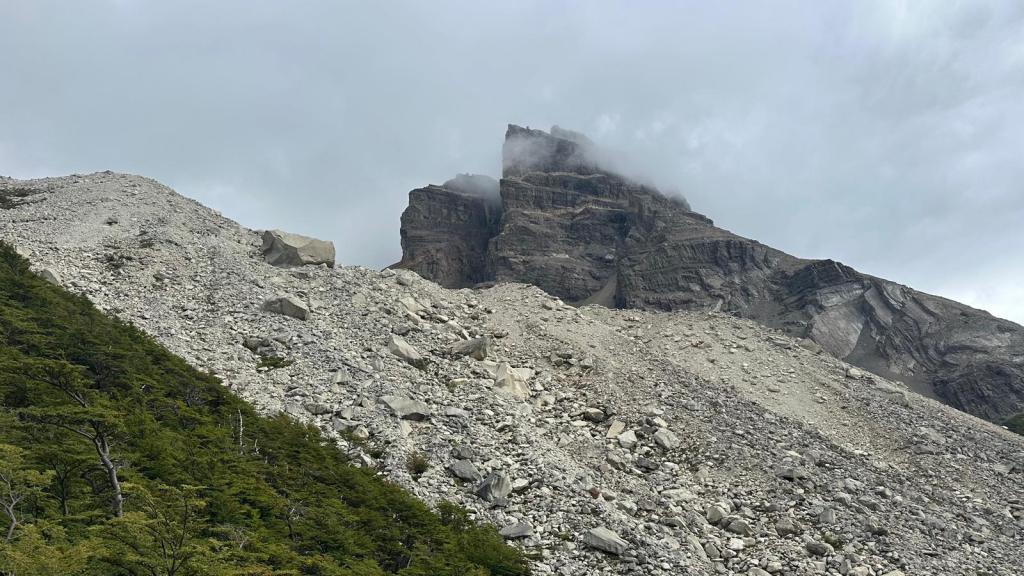
Navigating the moraine was the most demanding part of the hike. It required navigating large boulders and, in some places, negotiating snowy and icy patches of trail. Every step forward felt like a negotiation with the terrain, but we pushed on, eager for that final reward. Finally, we crested the last ridge.
The Reward: Mirador Las Torres Base
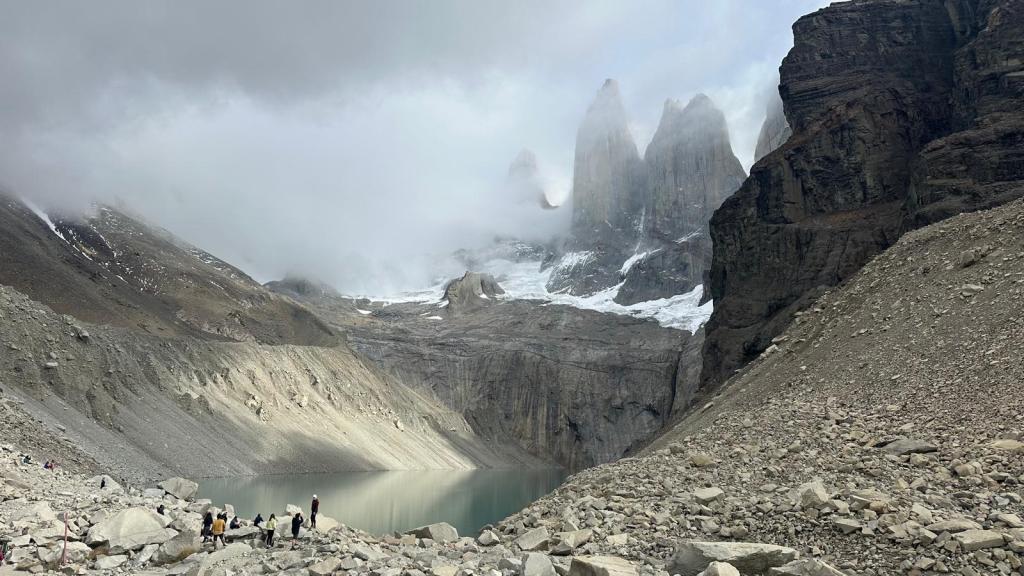
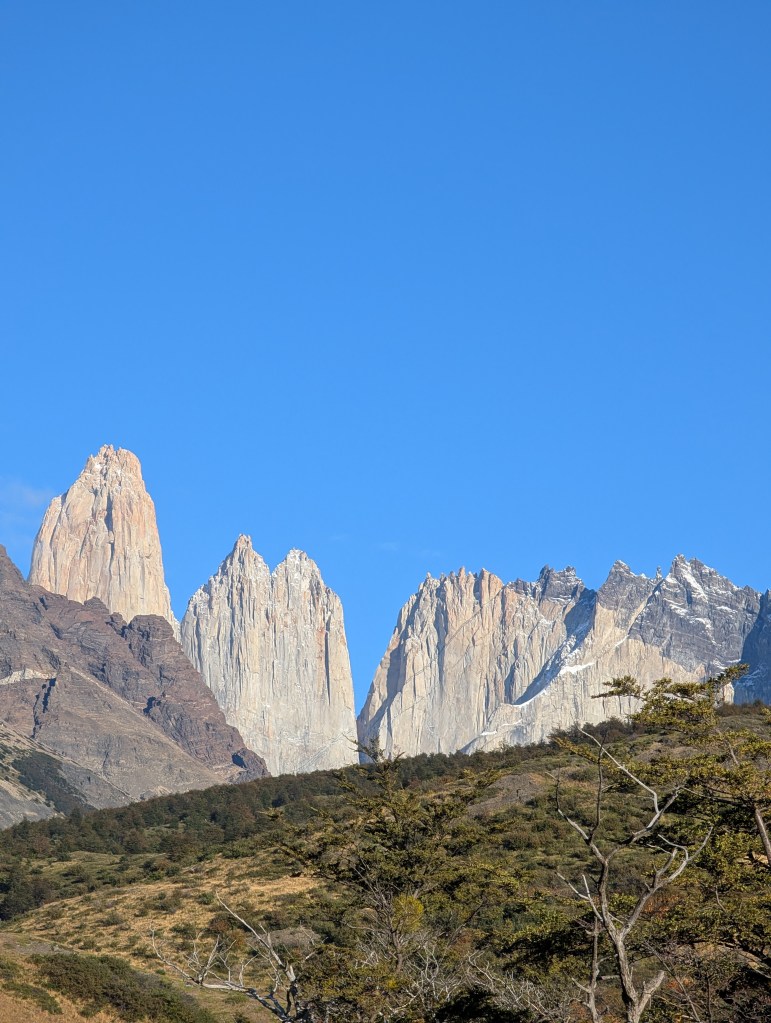
The moment we stepped over that last rise, we were greeted by the arresting sight of the three granite towers reflecting in the turquoise glacial pool at Mirador Las Torres Base. Pictures cannot do this scale justice; the sheer granite spires soaring into the sky left us breathless.
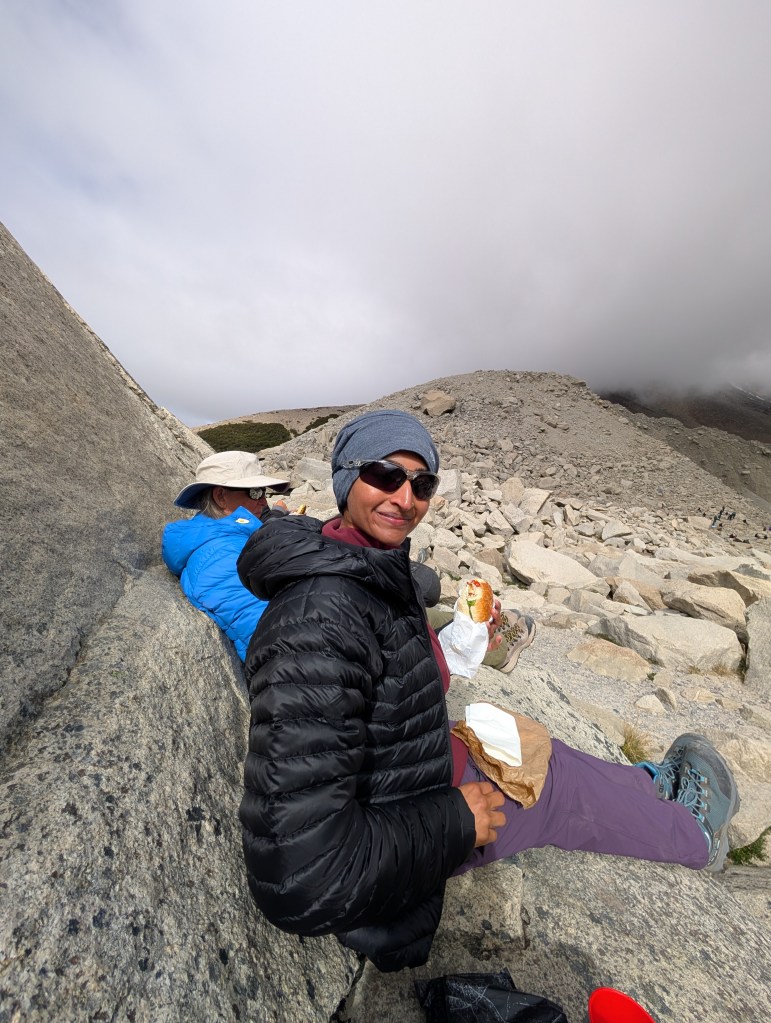
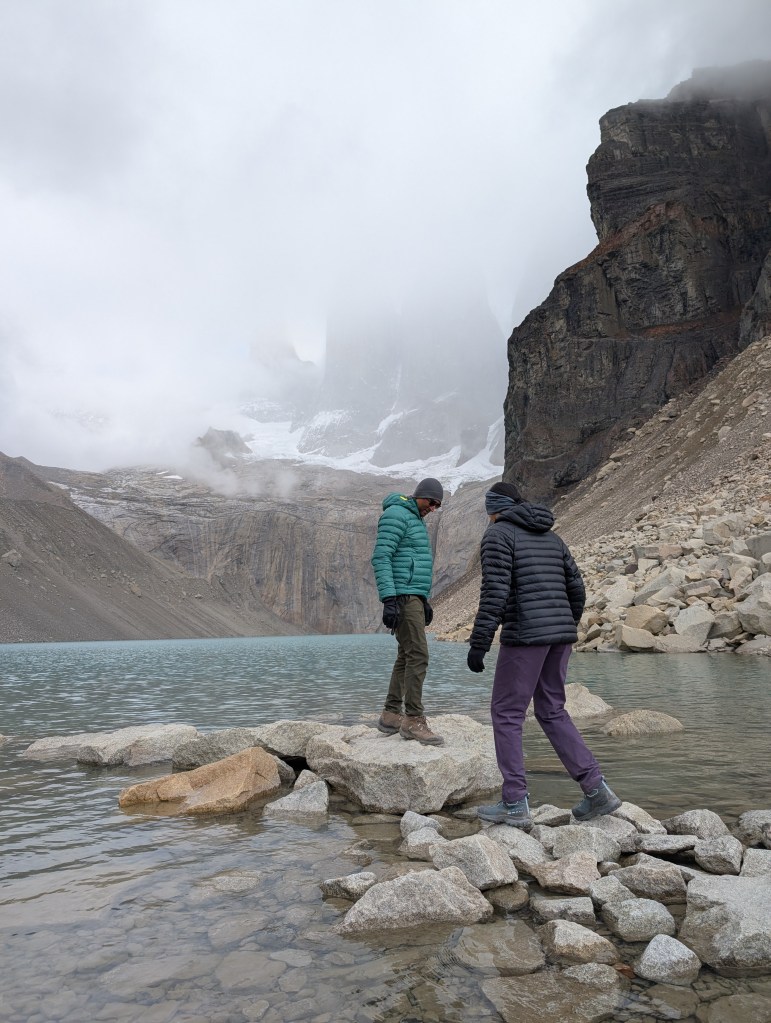
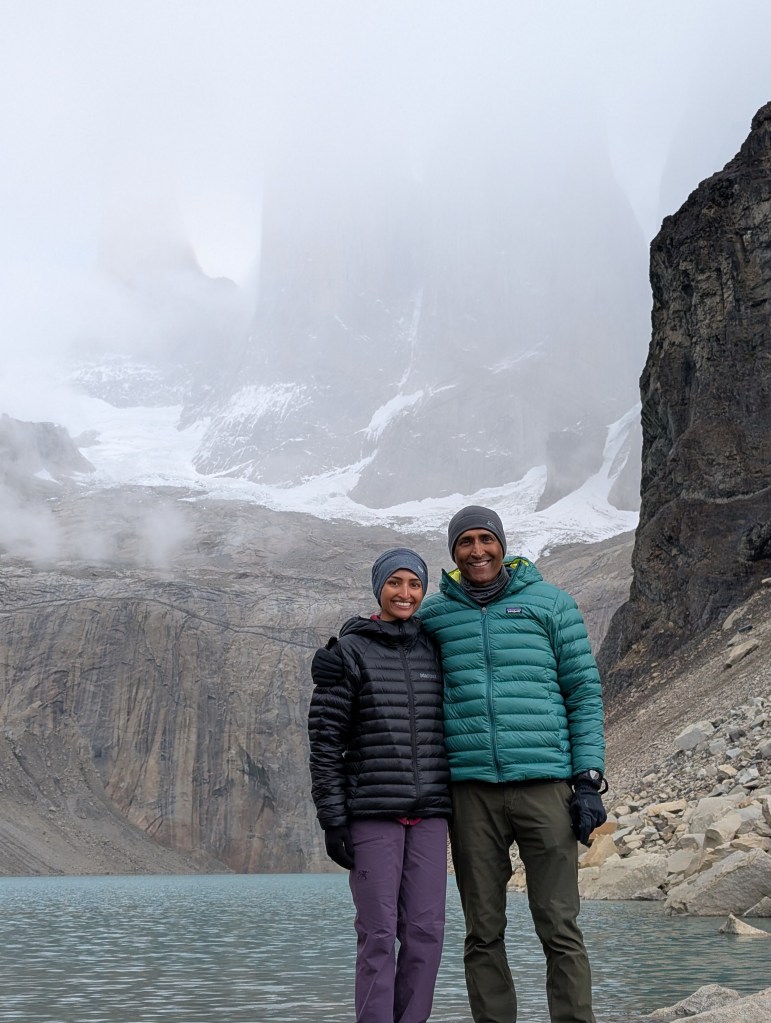
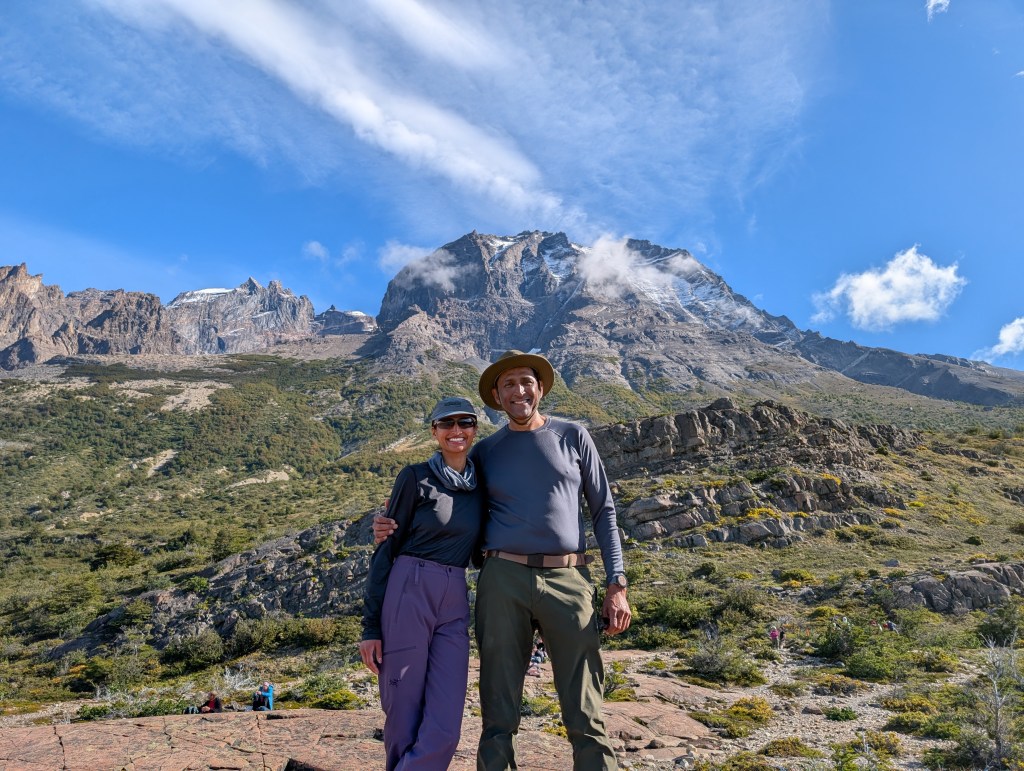
We found a spot to rest and just take it all in. Anika sat at the water’s edge, gazing up at the peaks, completely absorbed by the moment. We spent a good hour at the lookout resting, taking photos, and enjoying our first “trail lunch” with one of the best views on the planet. Of course, we had to capture a father-daughter moment at the top—a shared achievement we will never forget.
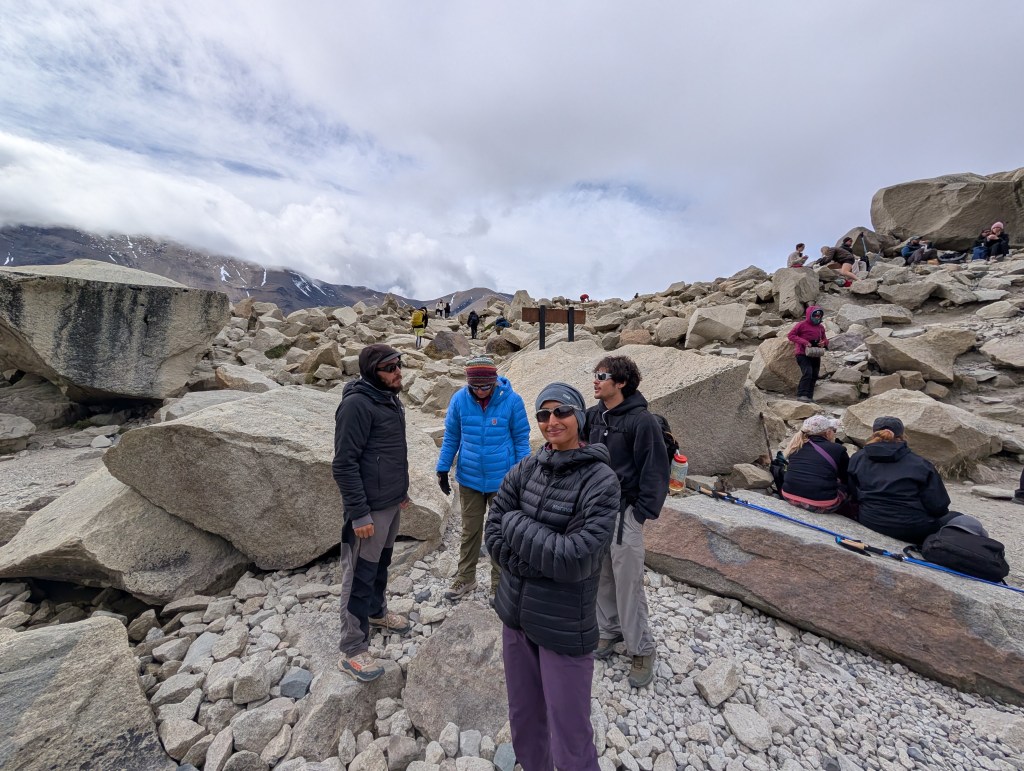
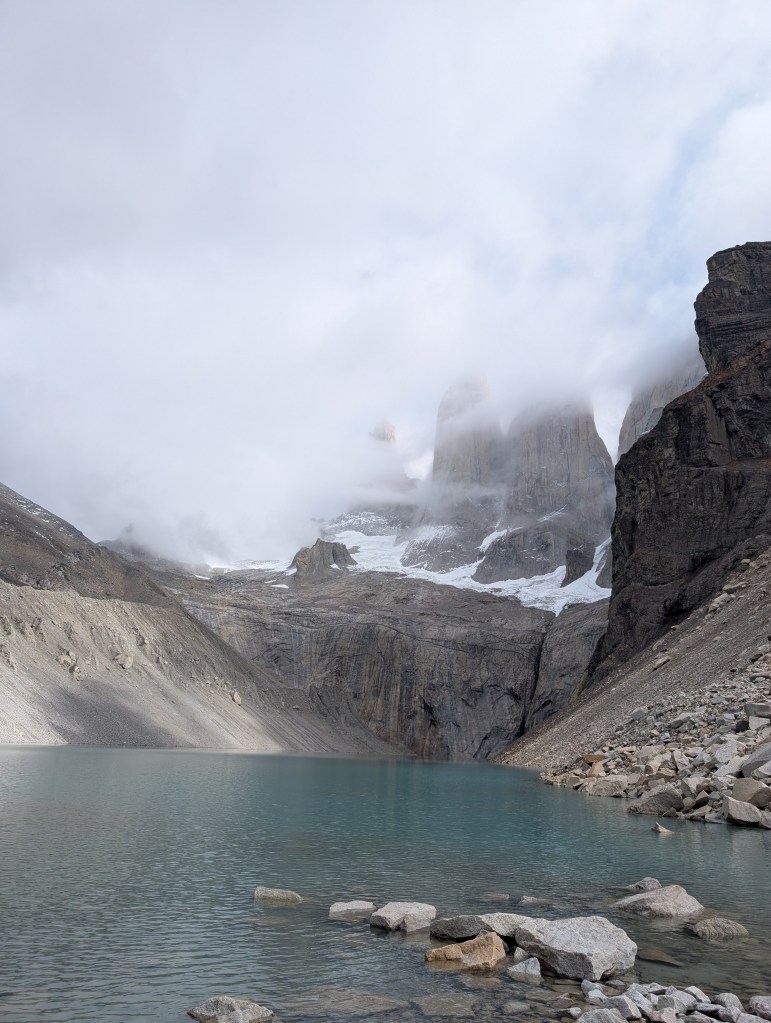
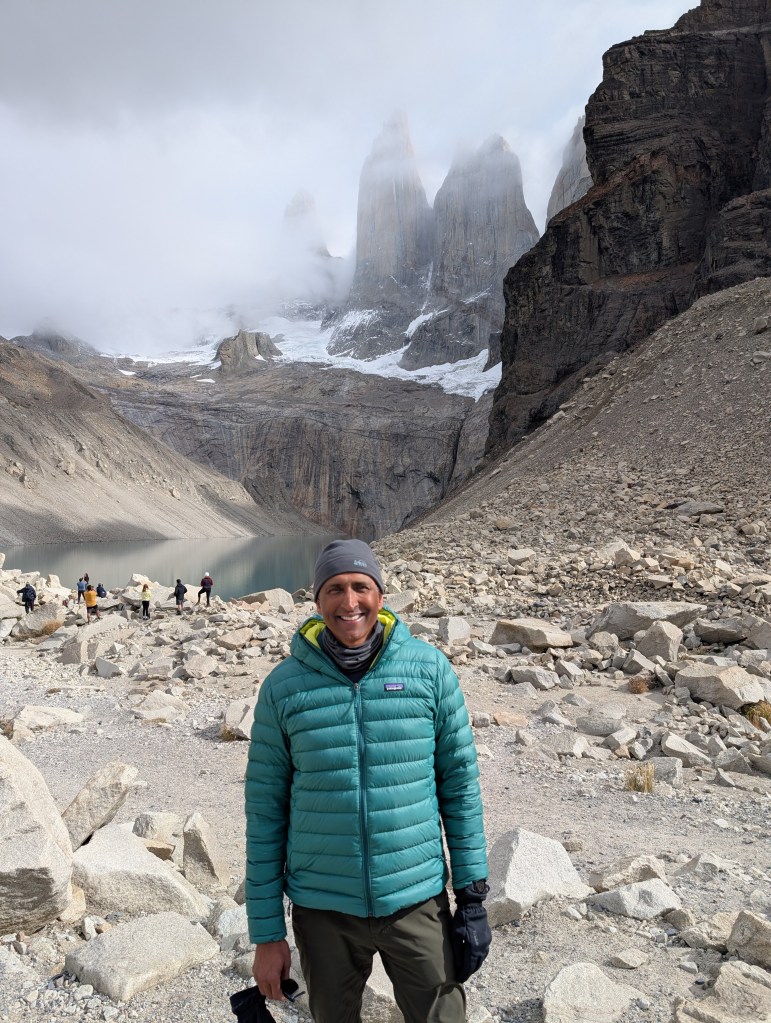
While we rested, the light shifted dramatically on the peaks. The sun moved from high noon to late afternoon, and for a short, magical time, the towers were bathed in a perfect golden glow against the darkening sky. It was a beautiful finale to our time at the base.
The Descent
The descent followed the same path back down the valley. Gravity was on our side, but after a long morning of climbing, our knees were definitely feeling the miles. We made it back to the Refugio just in time for a well-earned dinner and some much-needed rest.
Day Stats:
- Total Time: 9 hours and 45 minutes
- Distance: 13.3 miles
- Total Ascent: 3,829 feet
Day 4: The Traverse of Lake Nordenskjöld
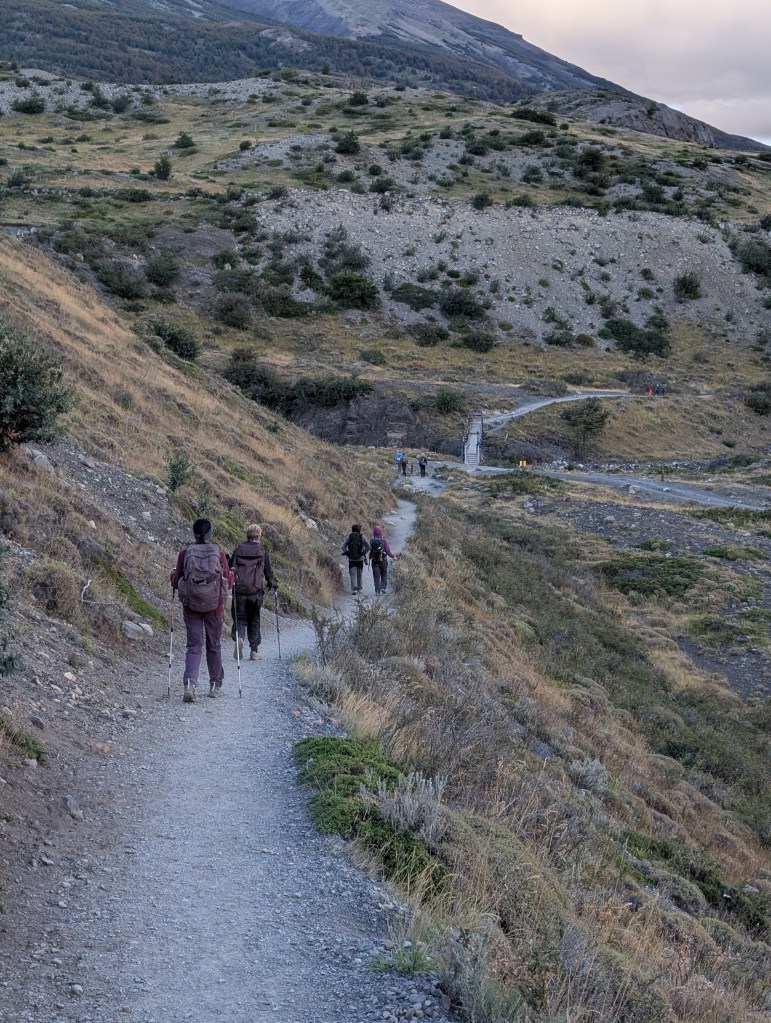
After the adrenaline of reaching the Towers, Day 4 felt like a deep breath of fresh Patagonian air. Our mission was to hike toward the Los Cuernos lookout, where the monumental, horn-shaped black twin granite peaks shoot skyward.
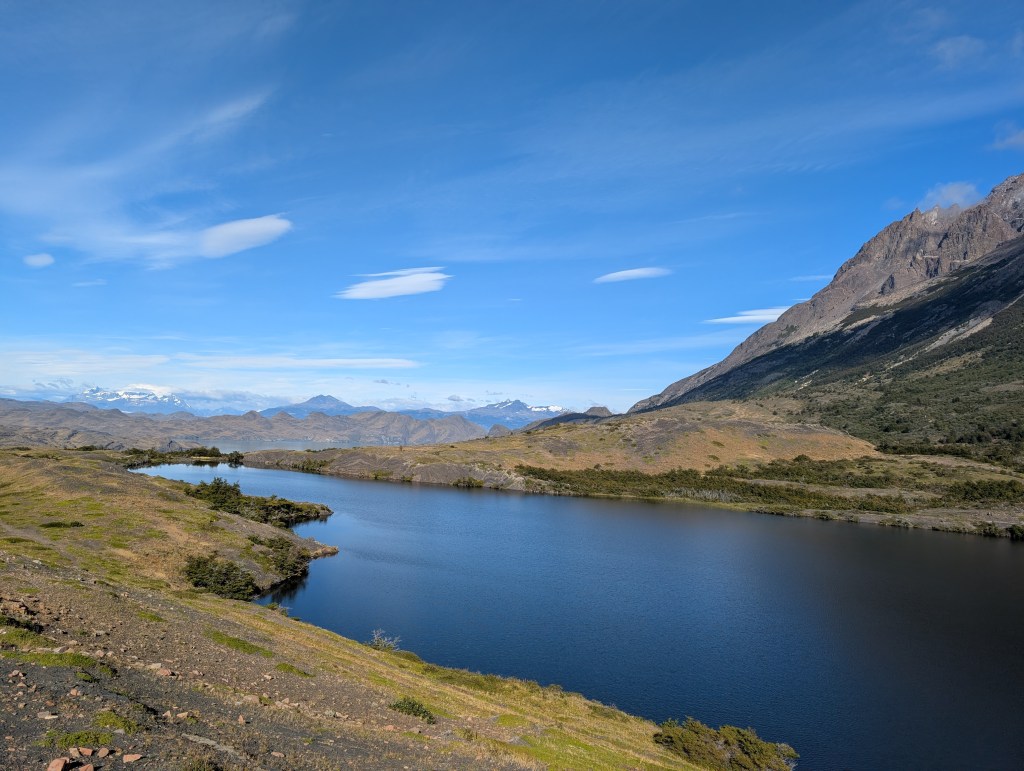
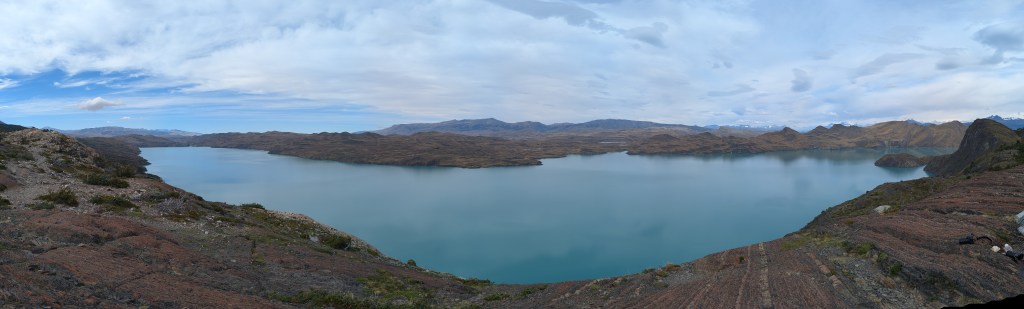
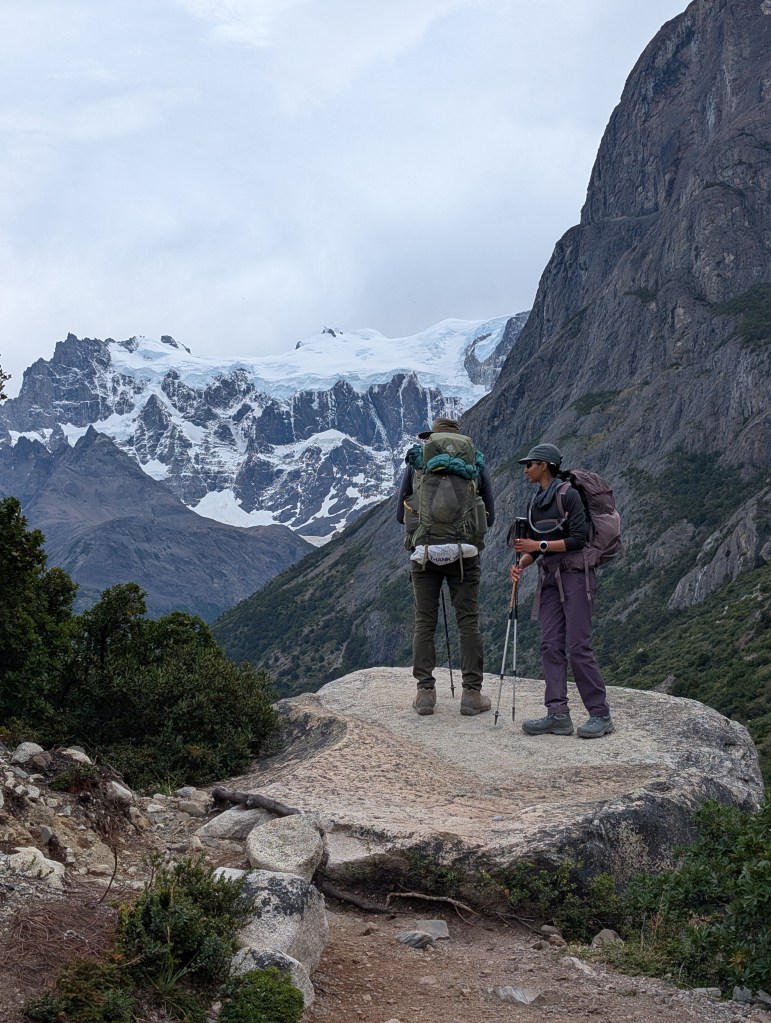
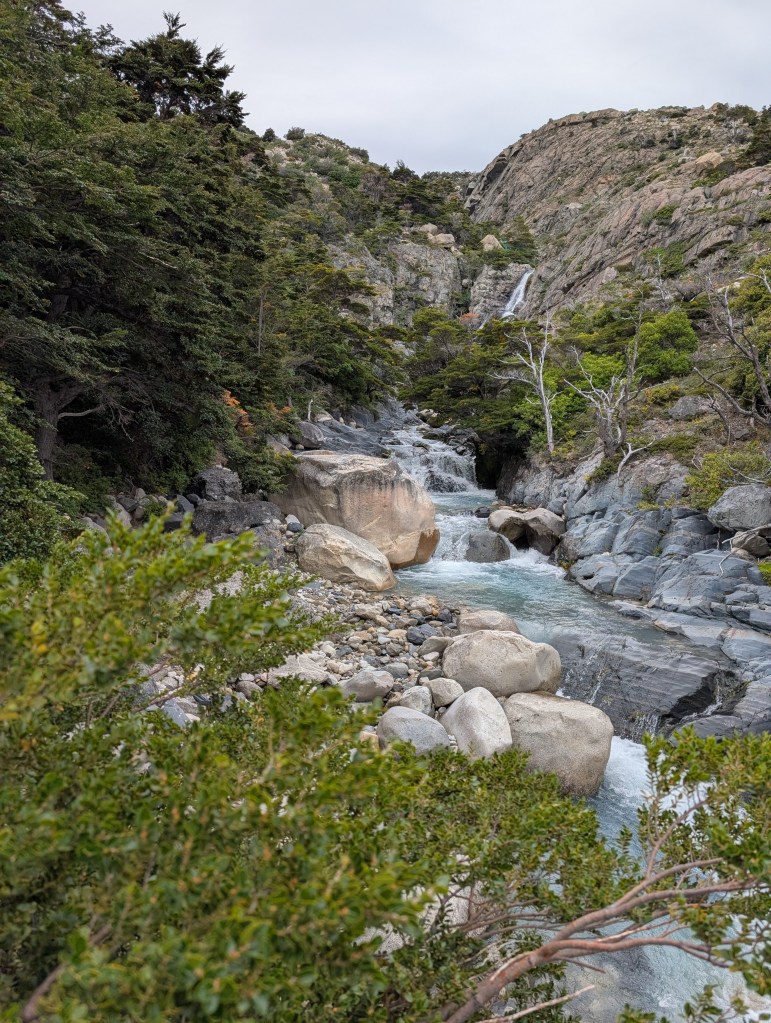
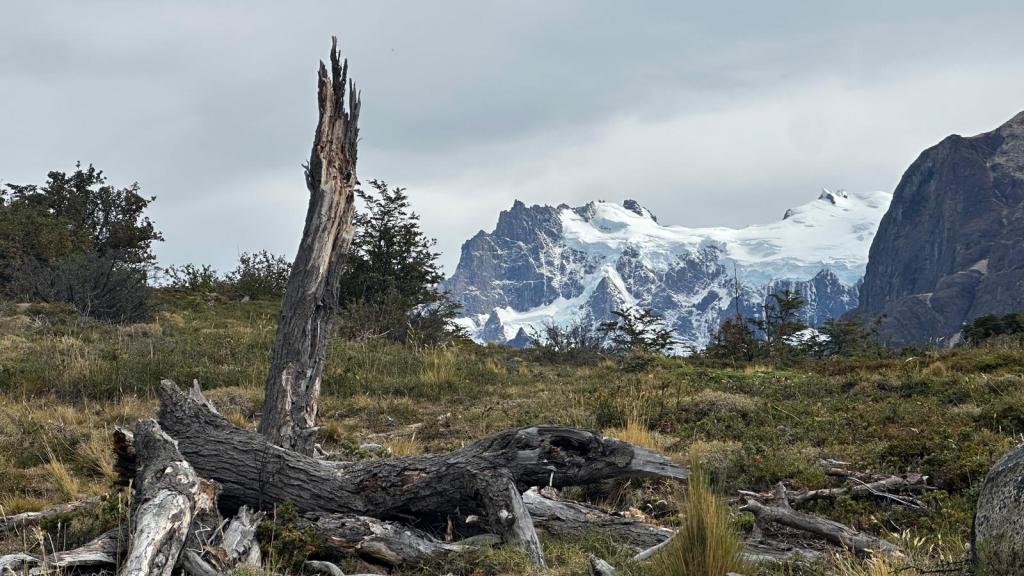
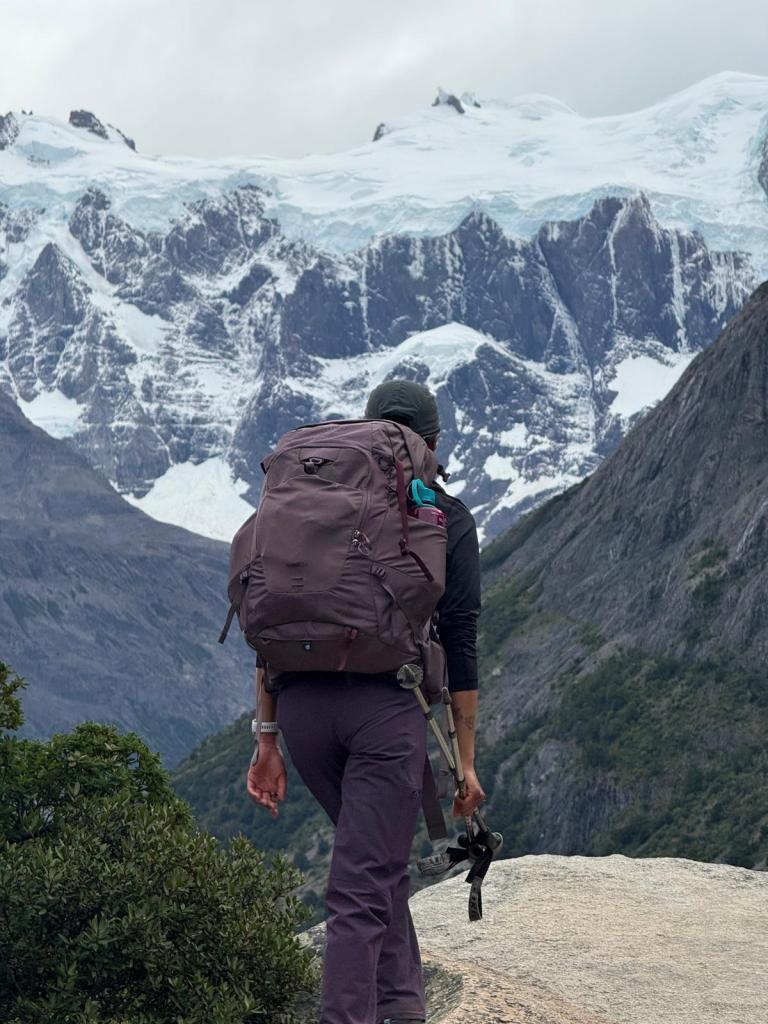
The morning began with crisp blue skies as we skirted the base of Almirante Nieto Mountain. The trail was well-marked, ascending about 200 meters as we navigated the rugged terrain. The scale of the landscape here was staggering—to our right, the massive granite walls of the mountain; to our left, the endless, milky-turquoise expanse of Lake Nordenskjöld.
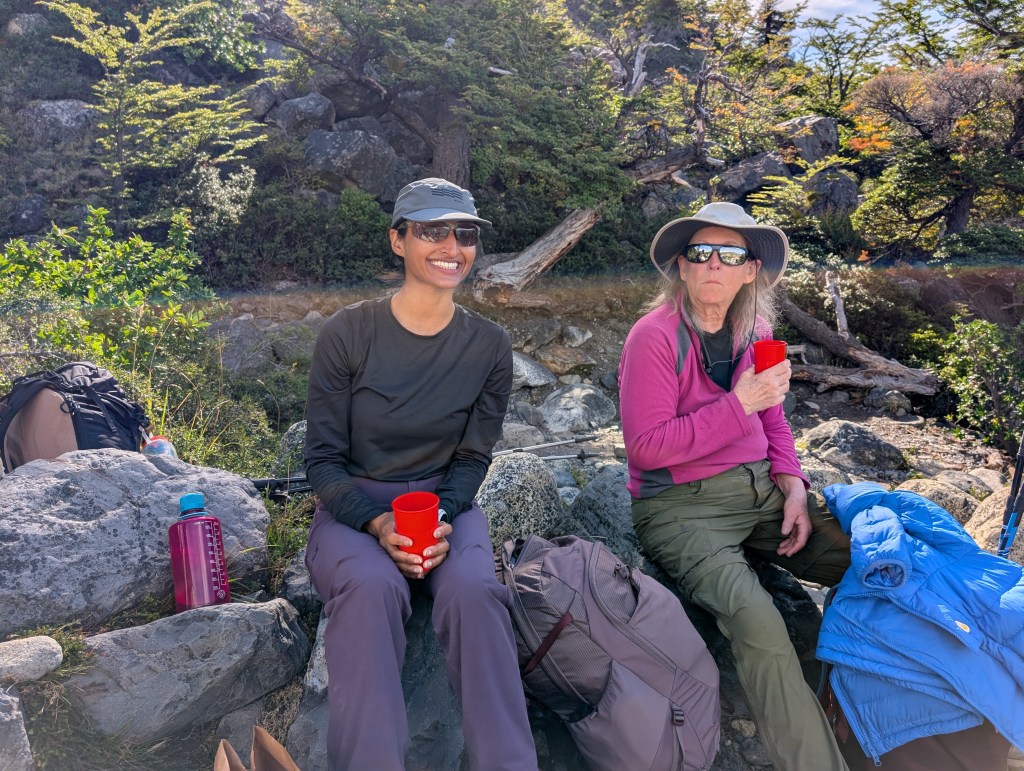
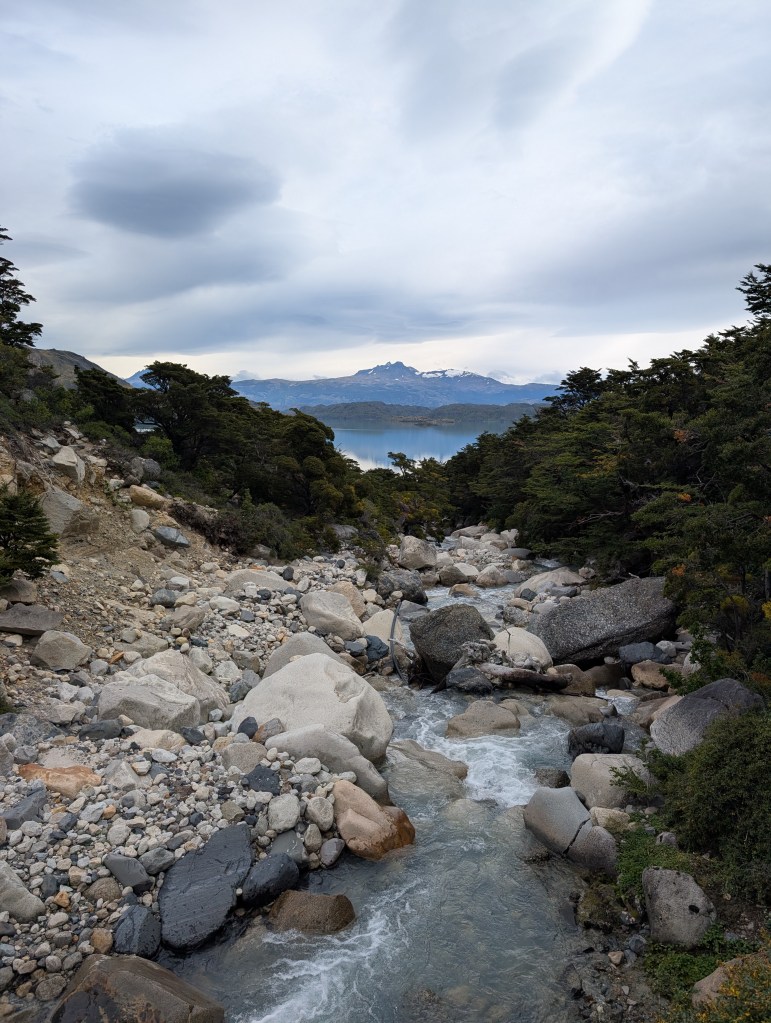
One of the highlights of the day was our lunch break. Every day, the team provided us with packed lunches, and today we found the perfect “dining room”: a spot right next to a rushing glacial waterfall.
As we ate, we shared stories with fellow hikers. One of the best parts of the W Trek was the community; we were surrounded by people from all over the world, all drawn together by this singular wilderness. Whether we were sharing trail mix or just a “Buen camino,” the sense of camaraderie was everywhere.
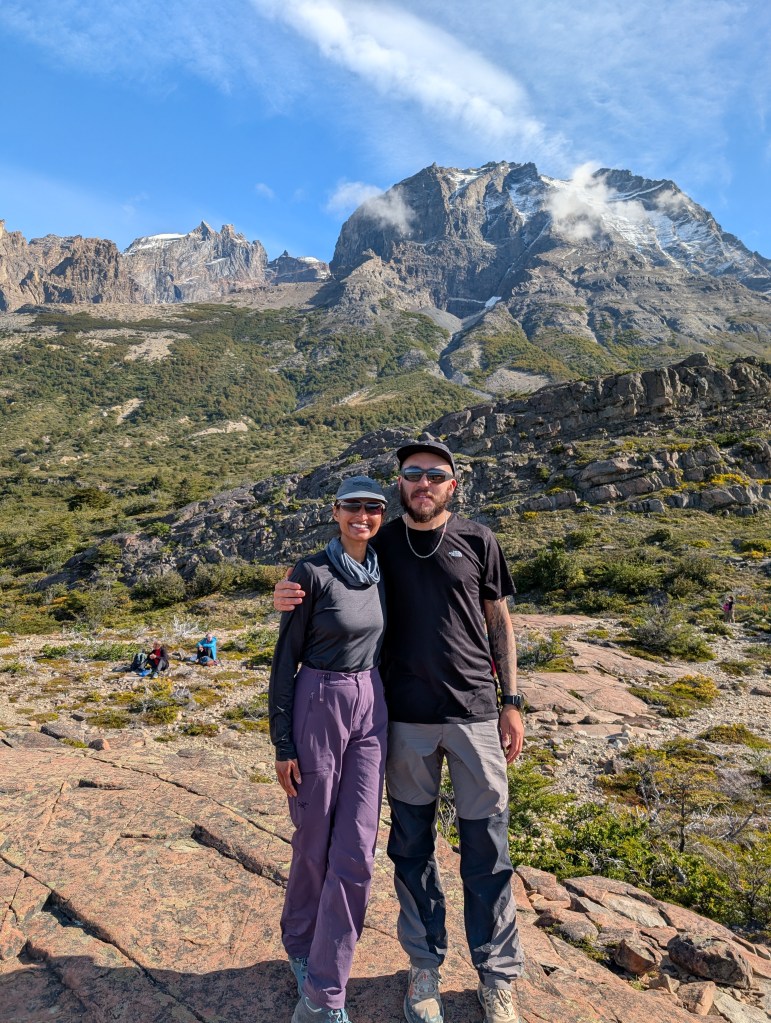
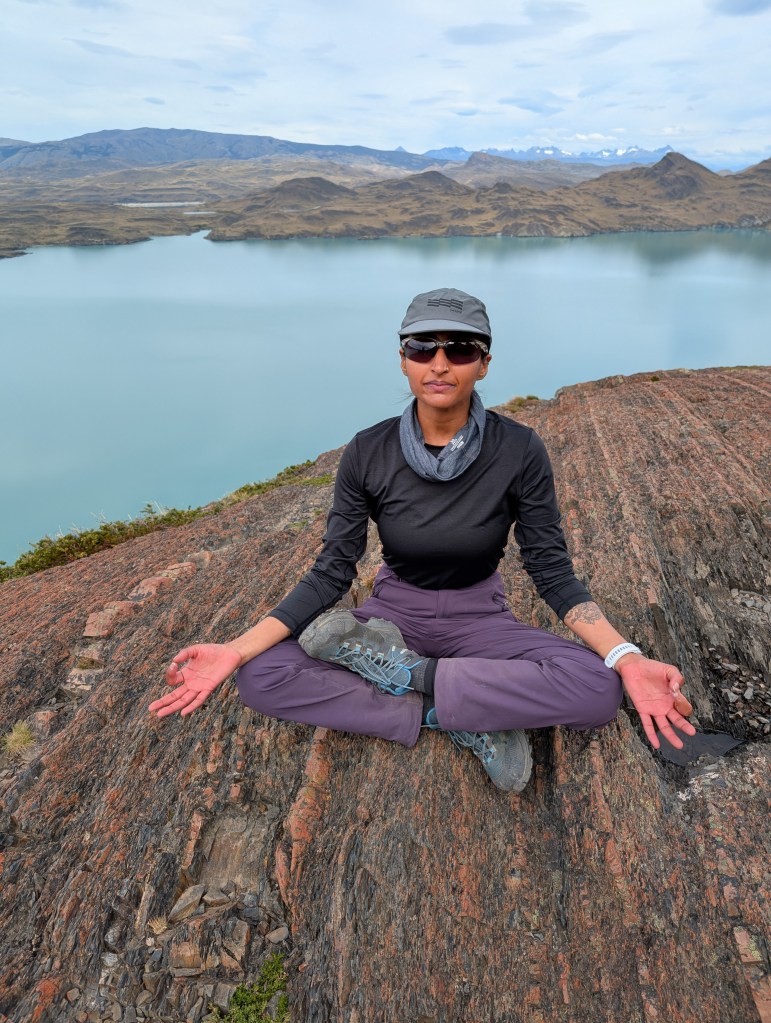
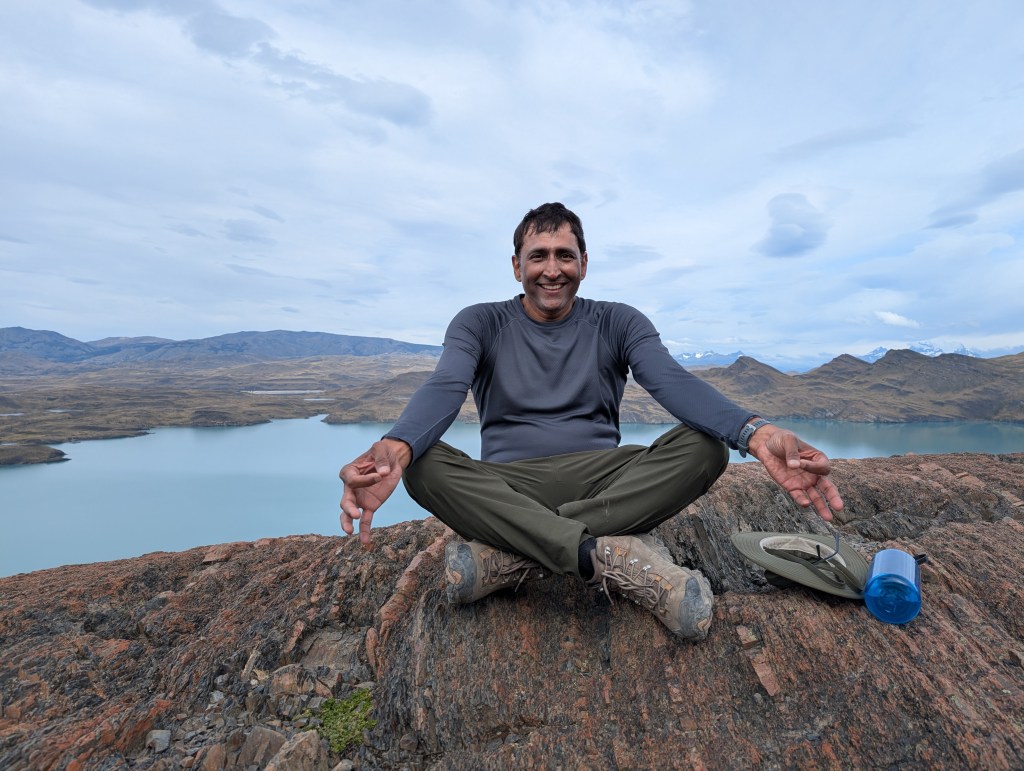
As we continued the traverse, the trail led us across the Bader River. The views of the lake were so arresting that we couldn’t help but stop and take it all in. We found a rocky outcrop overlooking the water that felt like the edge of the world. Anika and I even took a moment to practice some “trail yoga”—a bit of meditation to match the stillness of the lake before we pushed on to our final destination.
Arrival at Los Cuernos
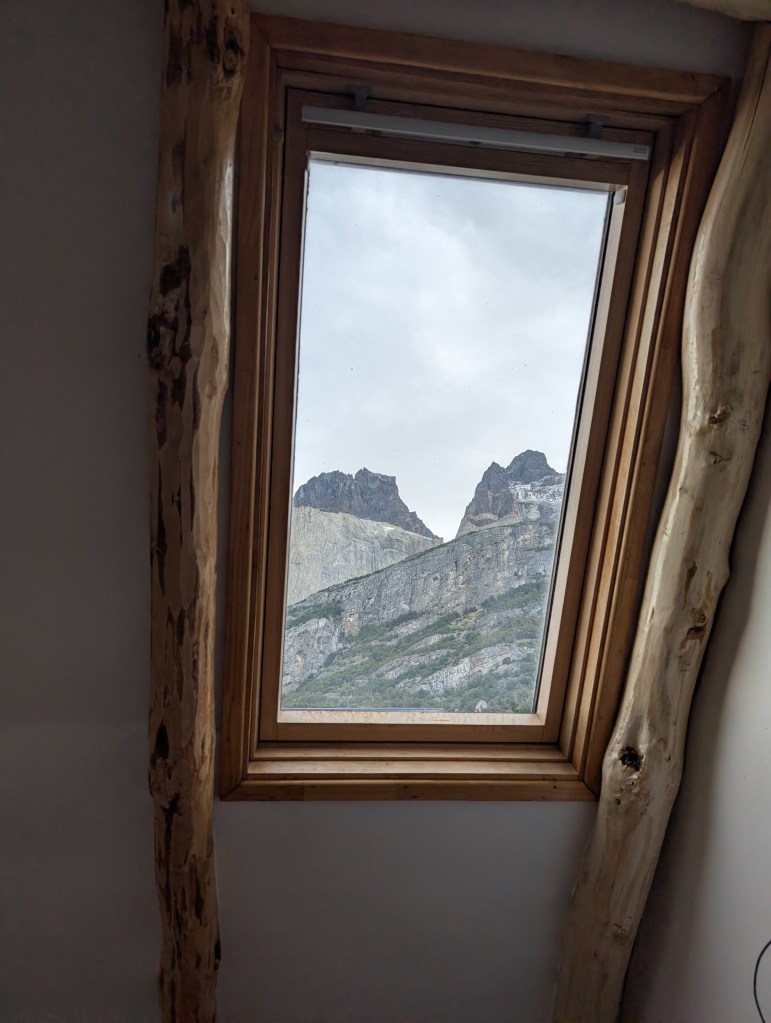
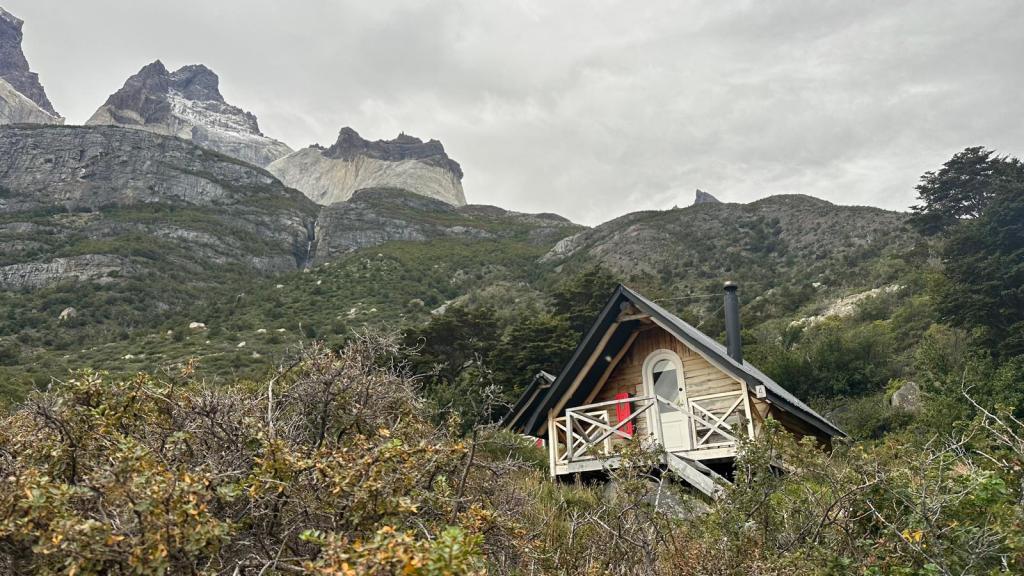
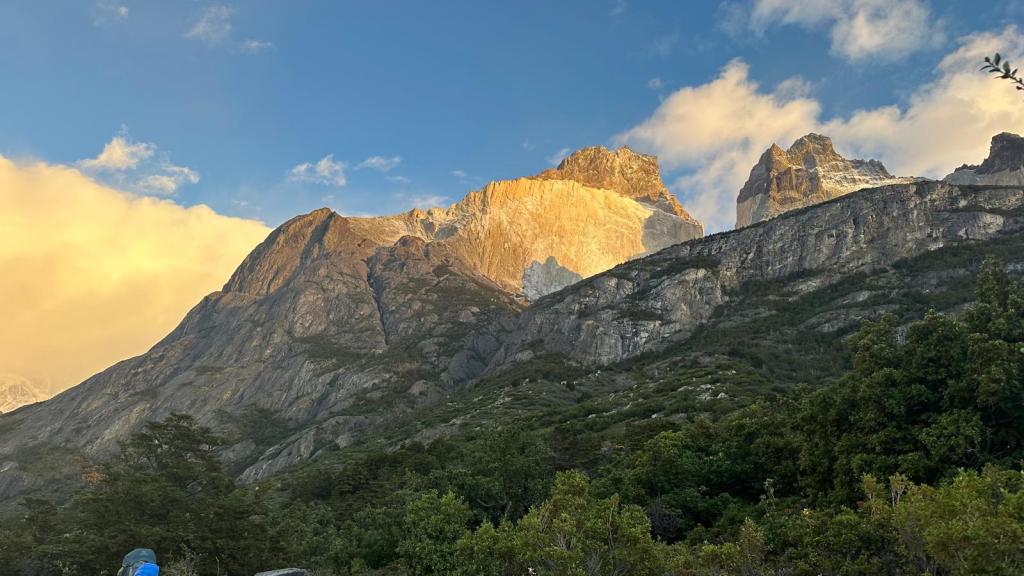
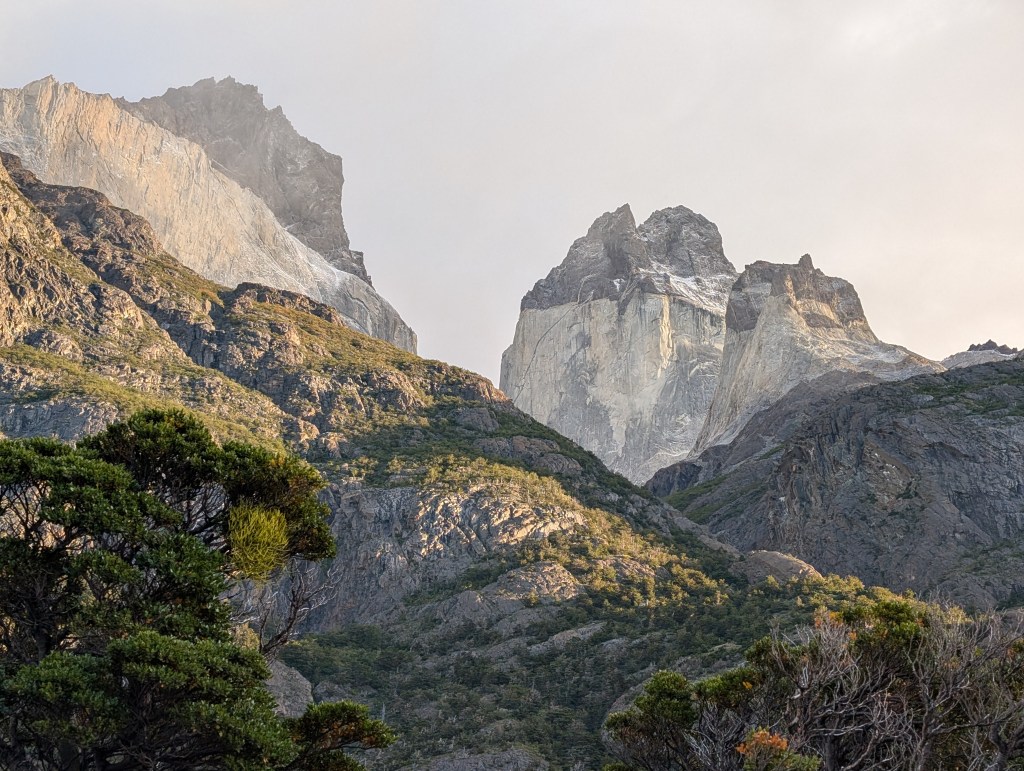
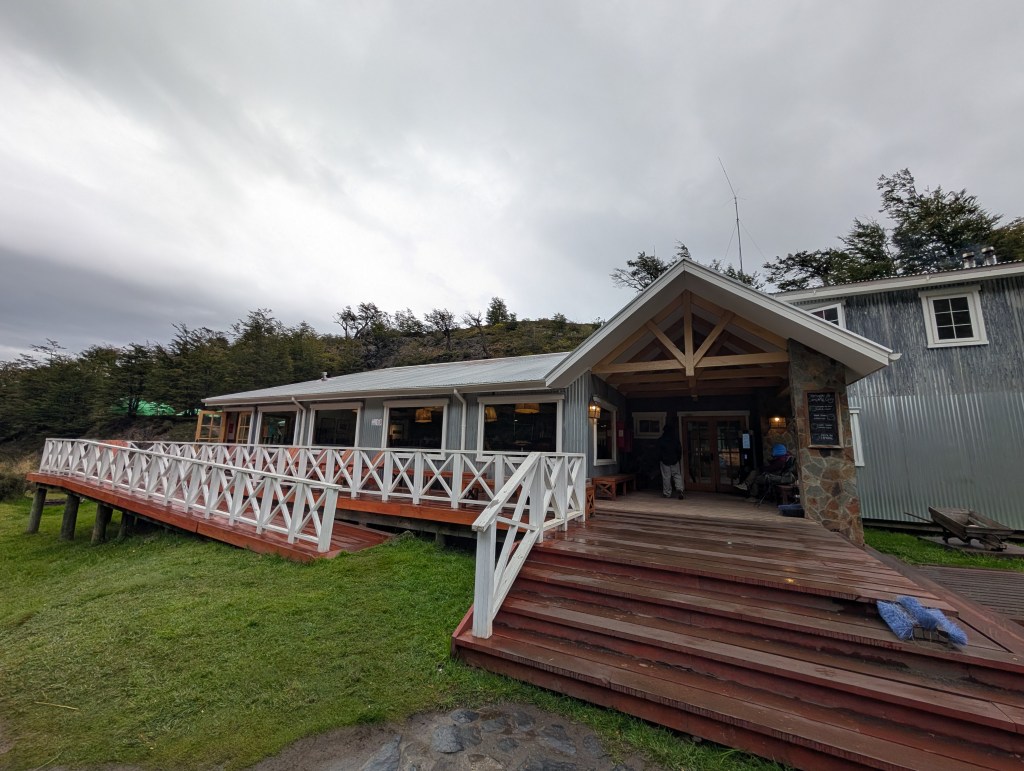
As the afternoon wore on, the “Horns” (Los Cuernos) finally came into full view, their dark sedimentary caps contrasting sharply against the grey granite below. We reached Refugio Los Cuernos feeling tired but deeply inspired. We settled into the cozy, A-frame cabins tucked into the hillside—a perfect, rustic end to a day dominated by water and wind.
Day Stats:
- Total Time: 5 hours and 30 minutes
- Distance: 7.9 miles
- Total Ascent: 1,129 feet
Day 5: The Heart of the “W” – The French Valley
We woke up at Los Cuernos to a sight that made the early start easy: the “Horns” were bathed in a soft, golden morning light. Staying in a private cabin there was a great treat, giving us just enough extra comfort to tackle the big miles ahead.
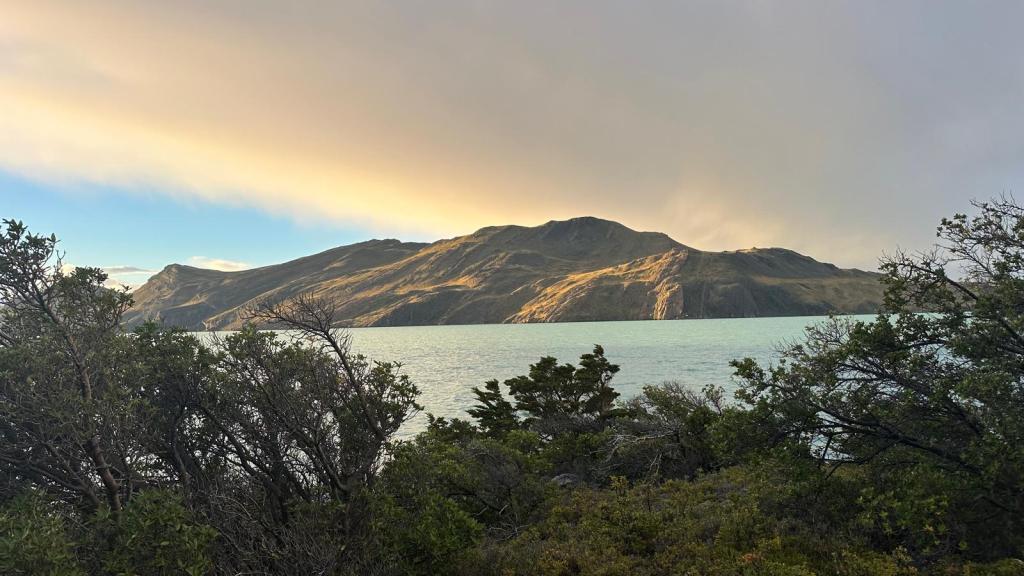
The first leg of the journey was a winding path that hugged the shoreline of the lake. The water was restless, and at one point, Patagonia even treated us to a spectacular rainbow stretching across the turquoise expanse—a lucky omen for the climb to come.
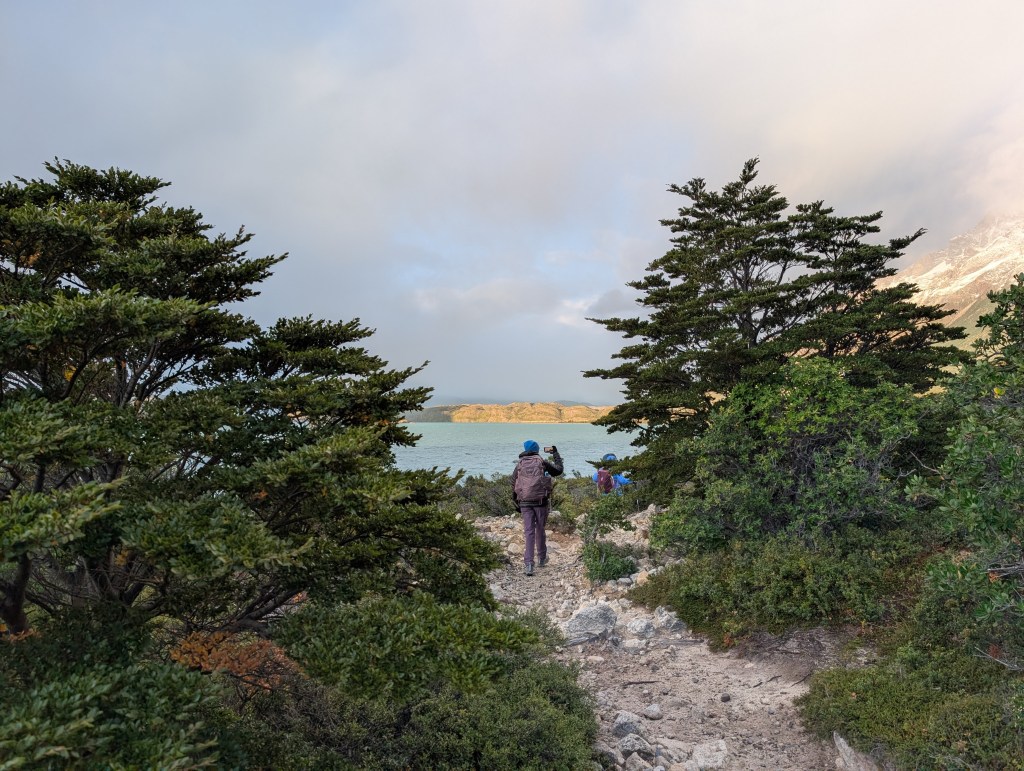
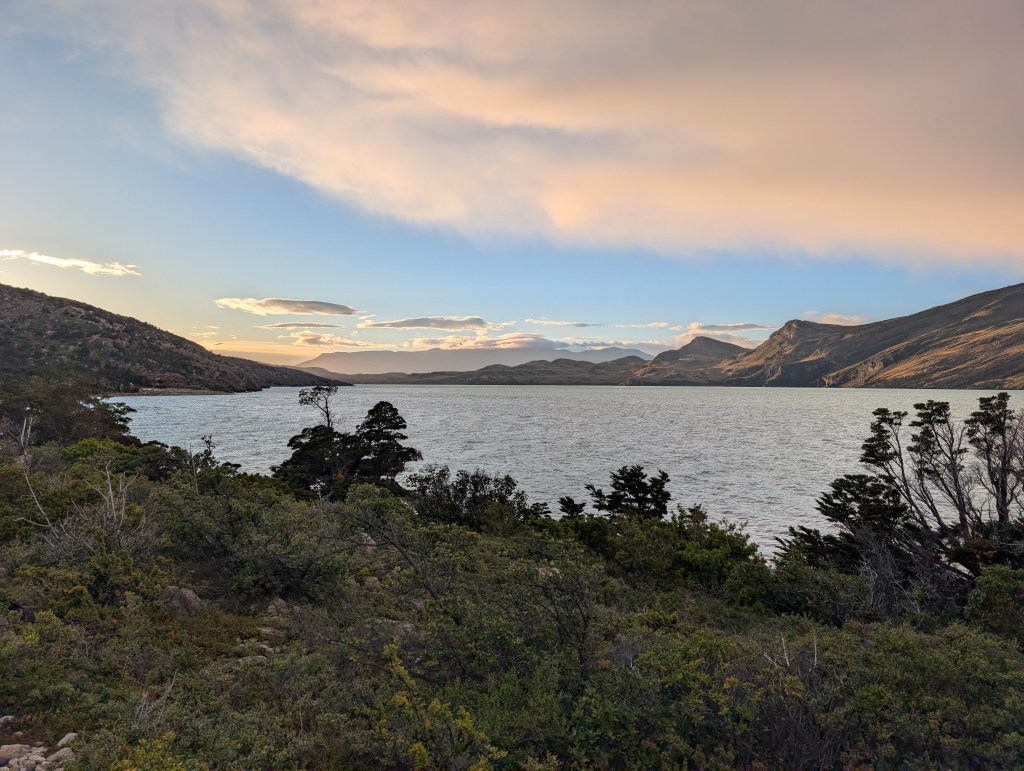
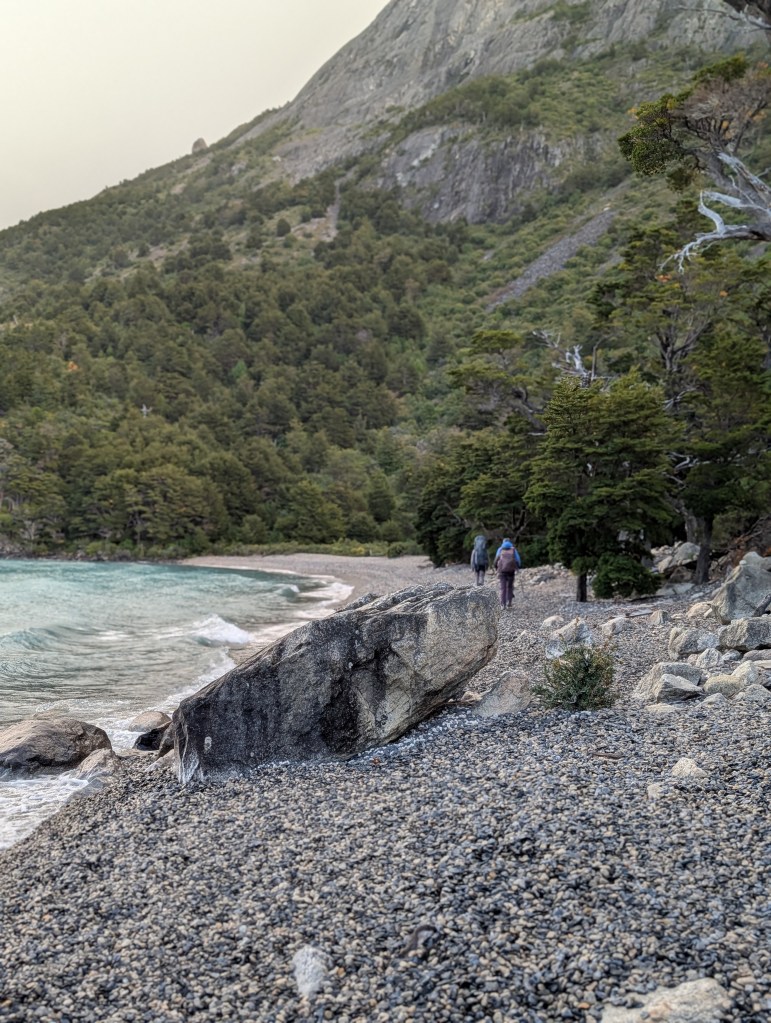
After about two hours of hiking along the lake, we reached the French River. This marked the entrance to the French Valley, a massive glacial moraine that required us to scramble over huge boulders and navigate rugged terrain.
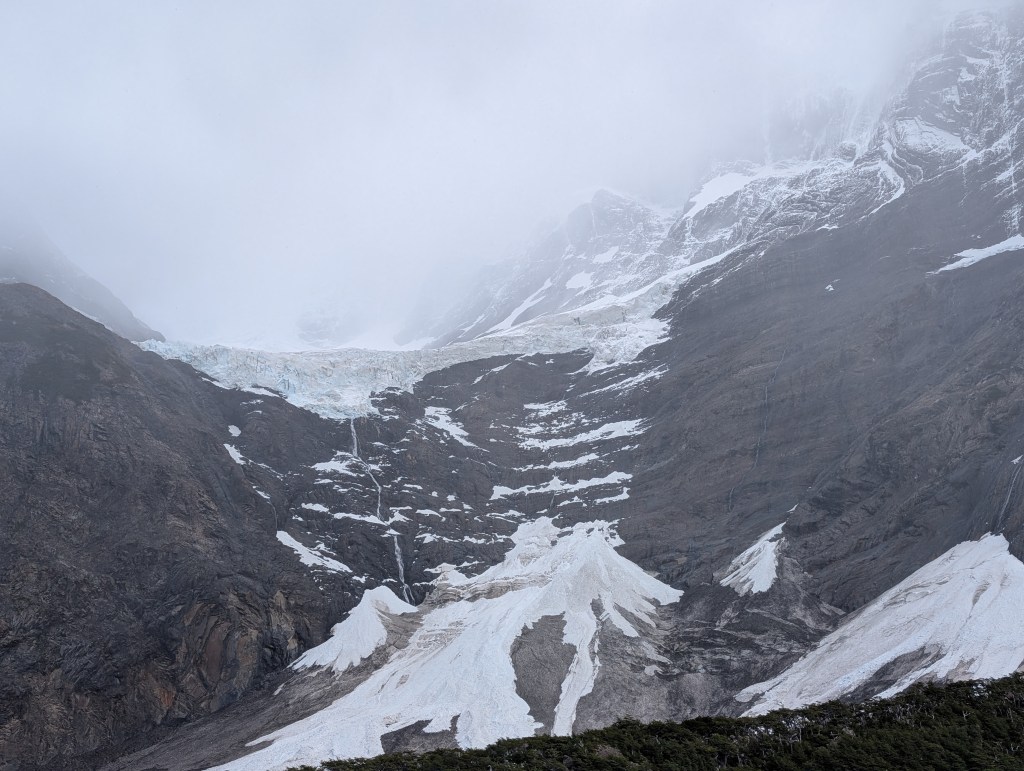
As we gained elevation, the first major reward appeared: the hanging glacier atop the valley. We stood in awe of the massive wall of blue-tinted ice clinging to the mountainside. The scale was staggering, and the silence of the valley was occasionally punctured by the thunderous crack of ice shifting above us.
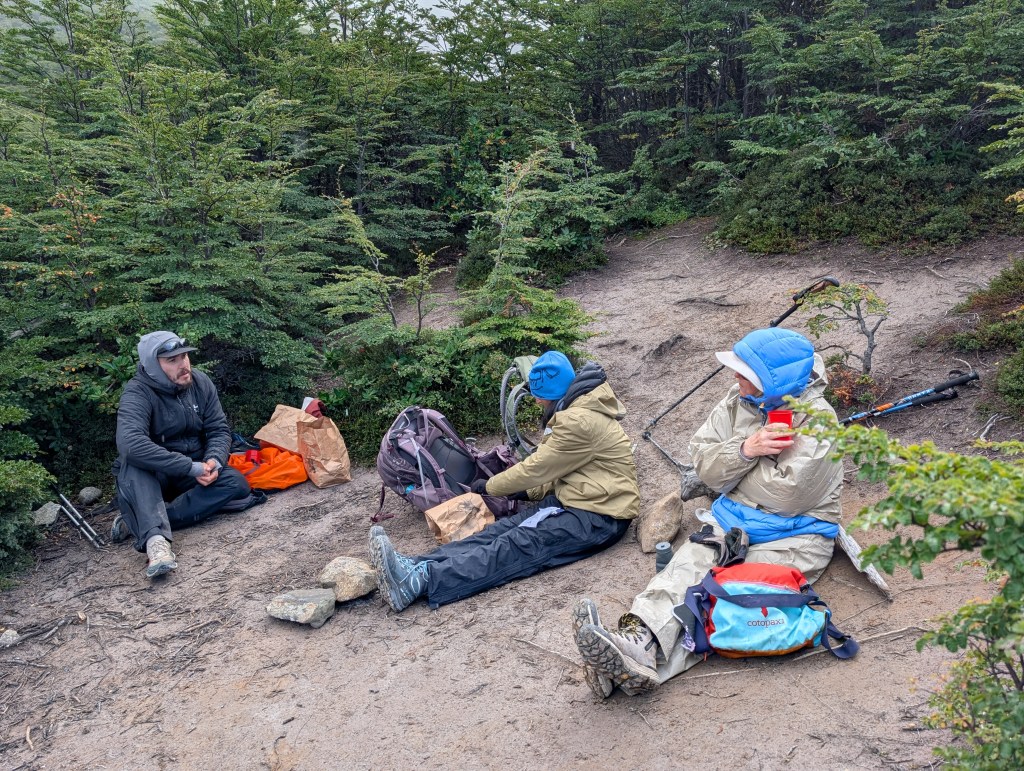
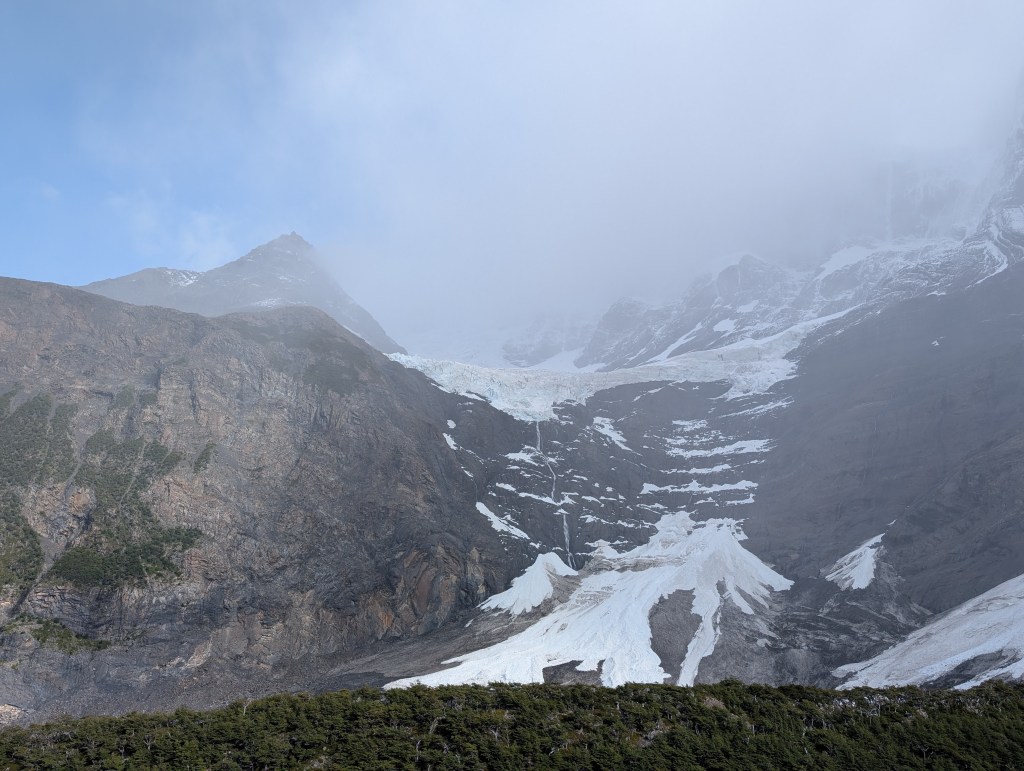
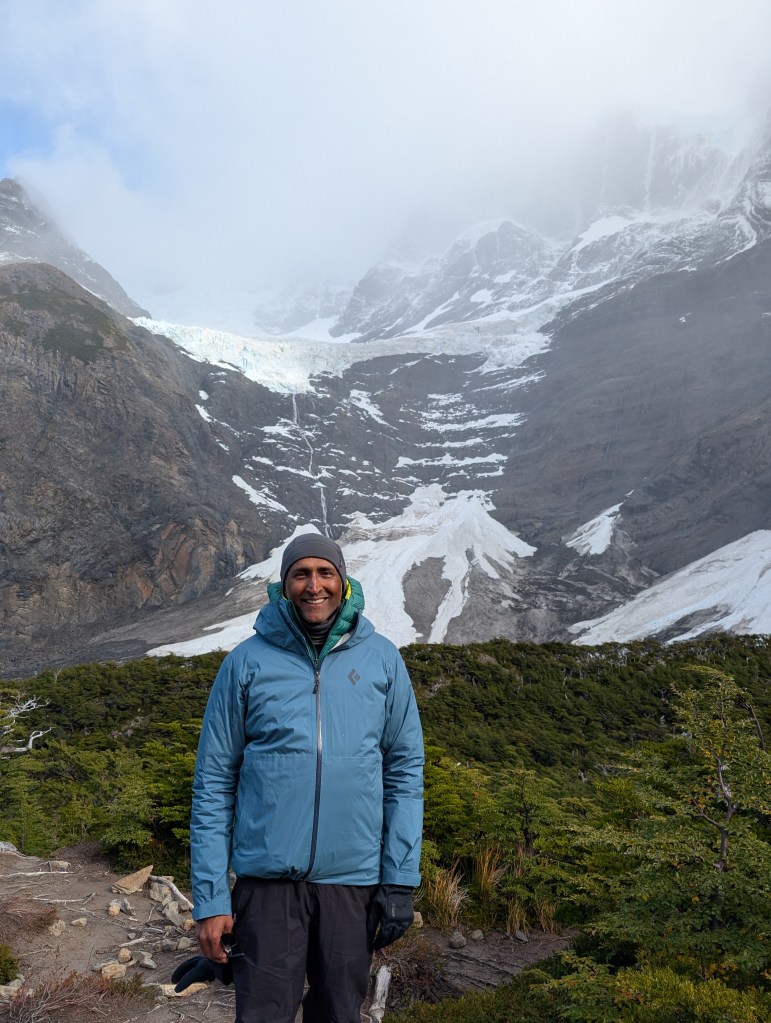
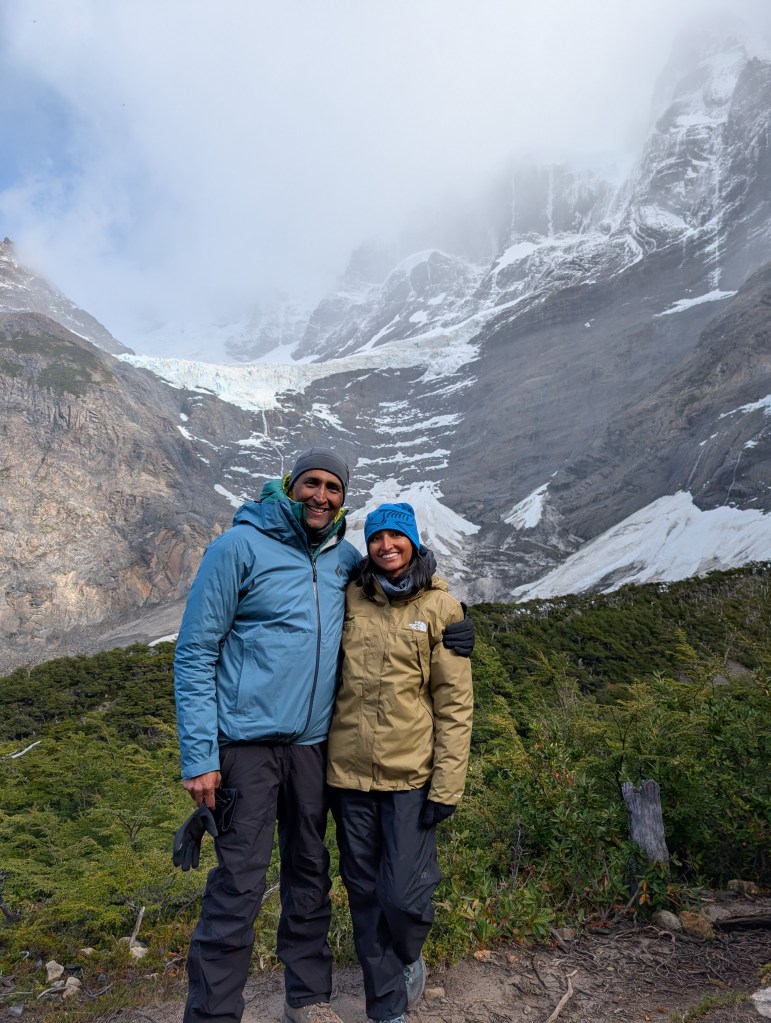
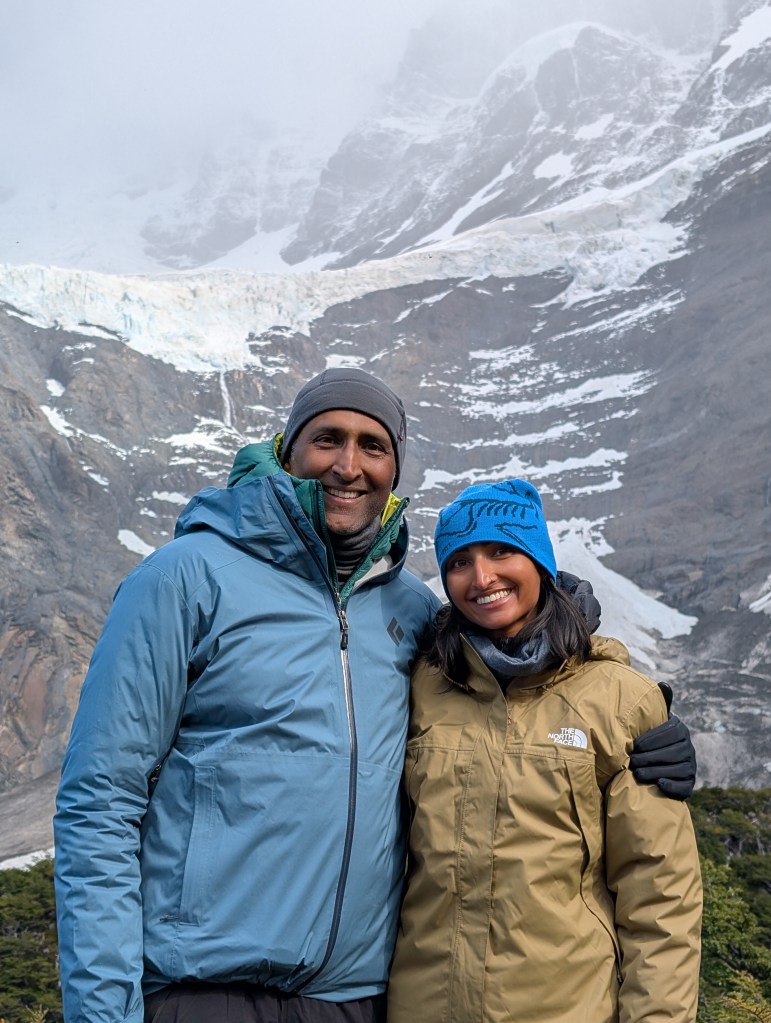
The climb continued further into the valley, where even more granite pinnacles began to pierce the skyline. We found a perfect viewpoint to stop and have our packed lunches. Surrounded by imposing peaks and open, shifting skies, we sat on the dirt and rocks, resting our legs and soaking in the 360-degree views of the amphitheater.
The Push to Paine Grande
The descent took us back down the same path until we reached the valley entrance. From there, we turned toward the southwest side of Paine Grande, the highest peak in the entire park. The trail led us along a pebbly shoreline where the wind really began to pick up, a classic Patagonian reminder of who is really in charge out here.
We finally pulled into Refugio Paine Grande just in time for dinner. It was a difficult, grueling day of hiking, but the weather remained on our side and the views were worth every single step.
Day Stats:
- Distance: 11.64 miles
- Total Ascent: 2,733 feet
- Total Time: 8 hours and 20 minutes
Day 6: The Ice Giants and the Hanging Bridges
Day 6 was, without question, one of the hardest and most fulfilling days of our entire journey. We set out early from Paine Grande, beginning with a steady 200-meter ascent through a winding path that eventually opened up to the serene Laguna Los Patos.
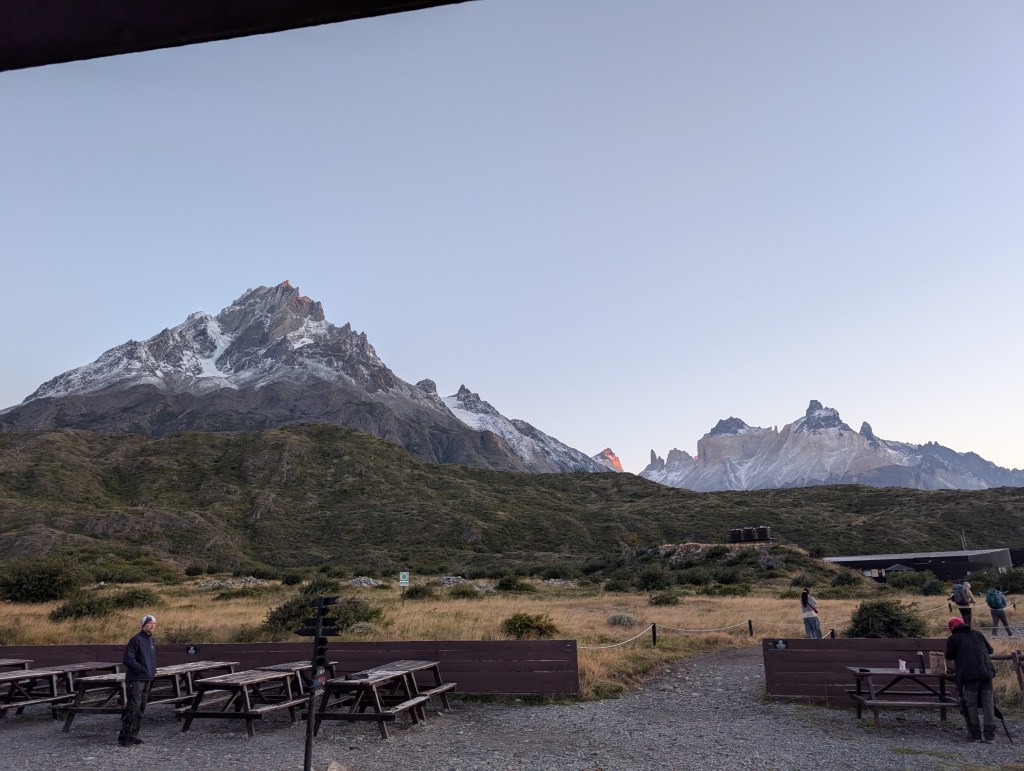
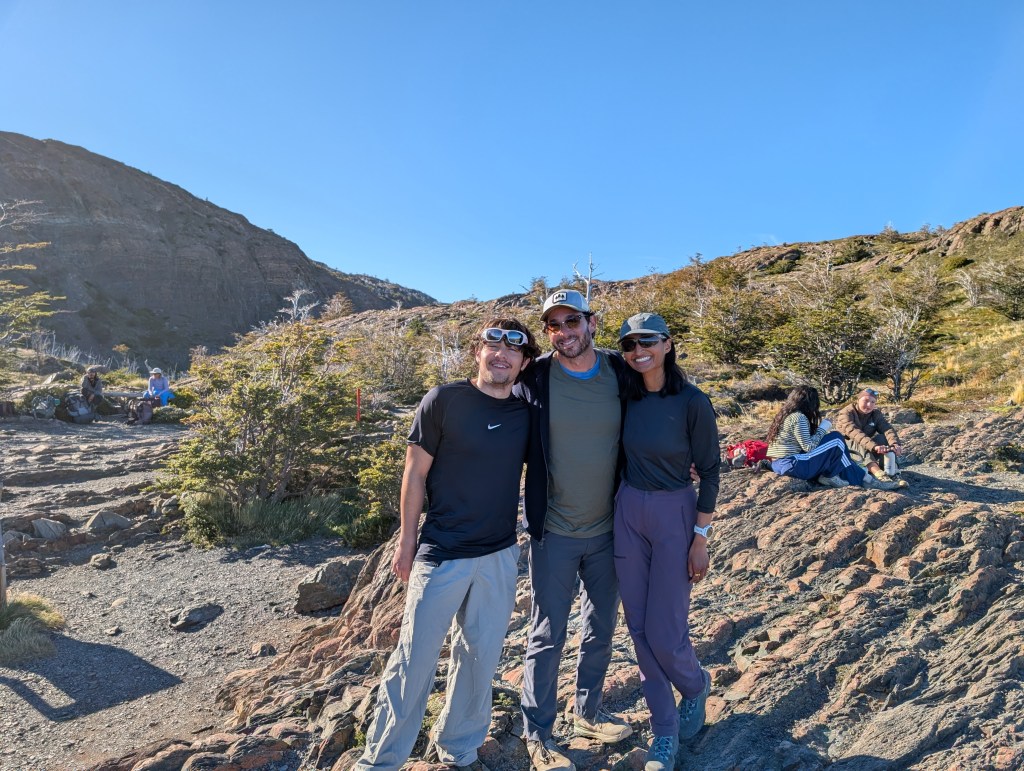
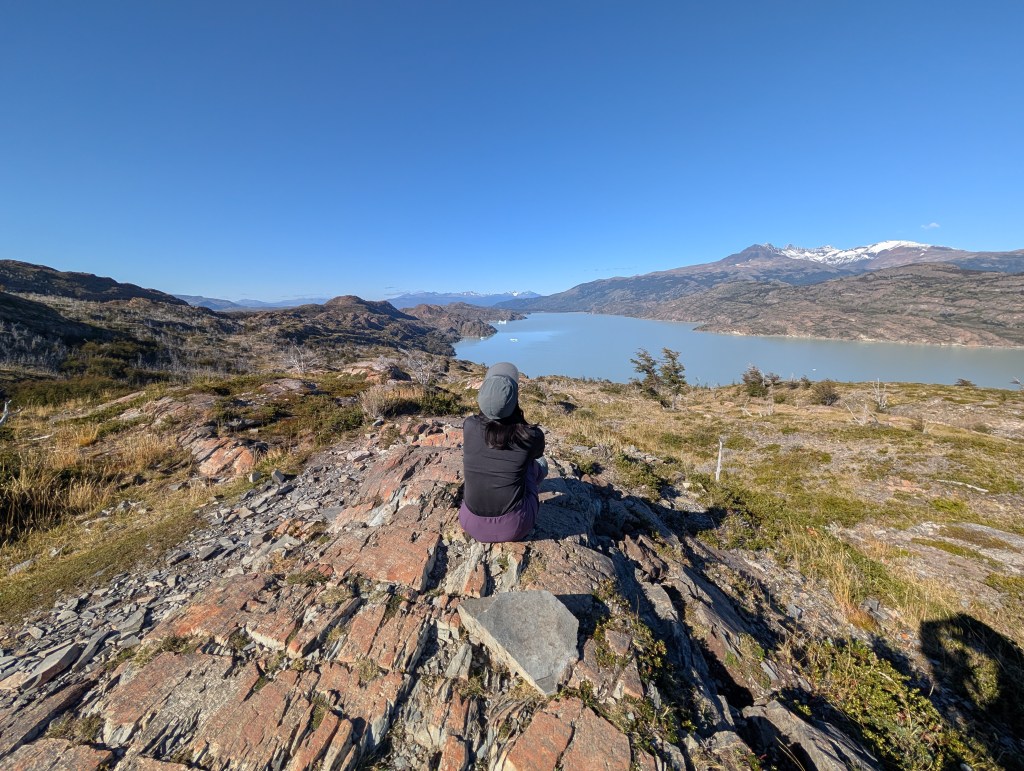
As we continued, the landscape began to shift. The greenery fell away, replaced by rocky ridges and the first glimpses of Grey Lake. We reached the first lookout point for Grey Glacier just in time for lunch. Sitting there with that mammoth wall of ice practically at our feet was a humbling experience—a true “edge of the world” moment.
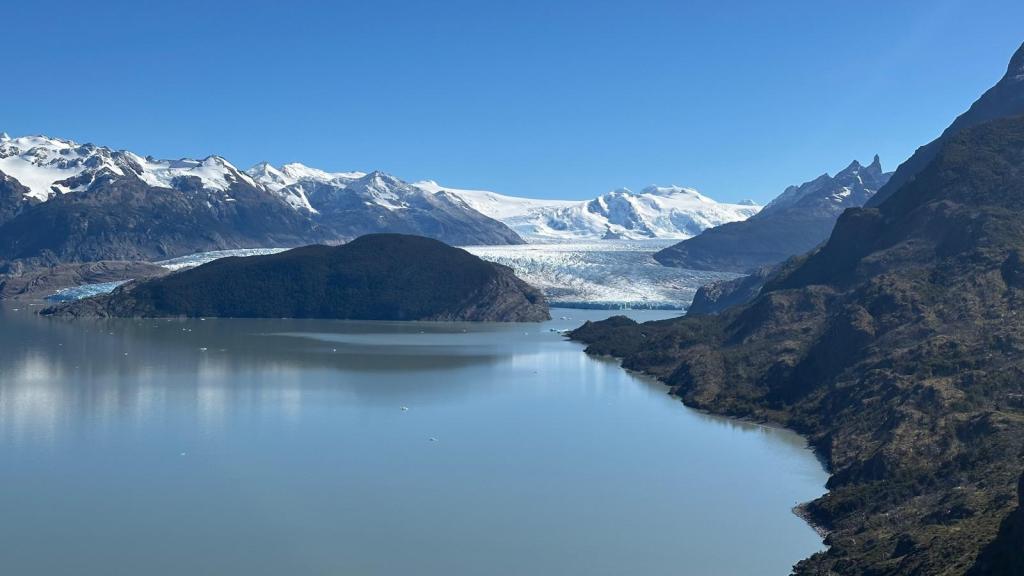
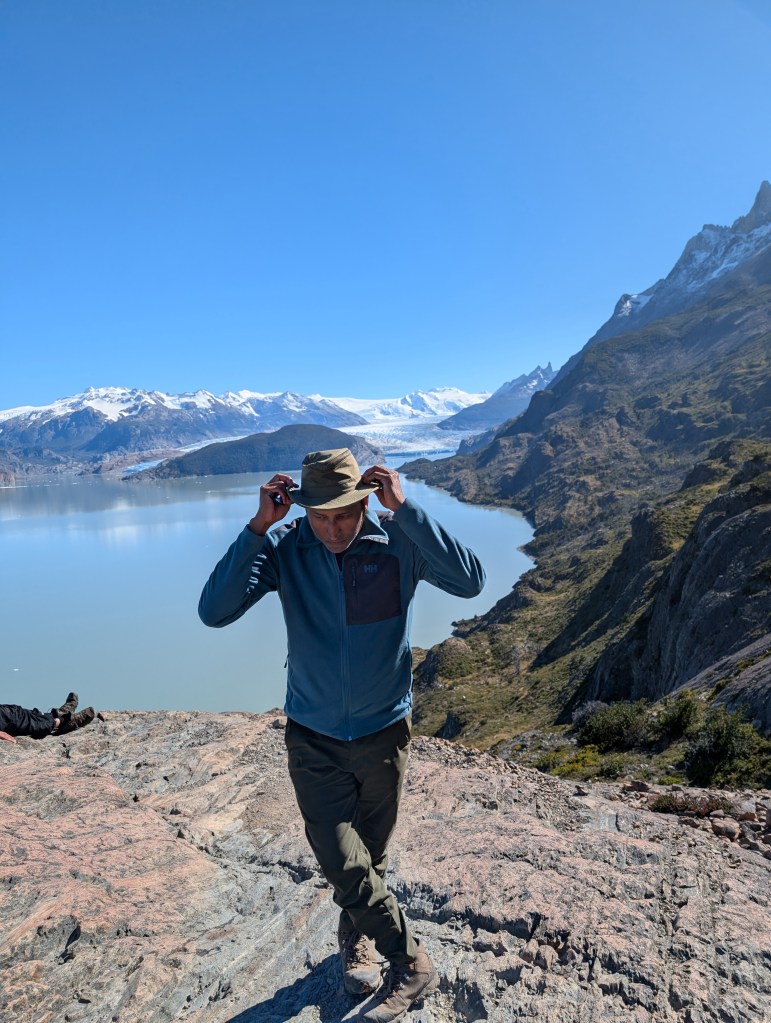
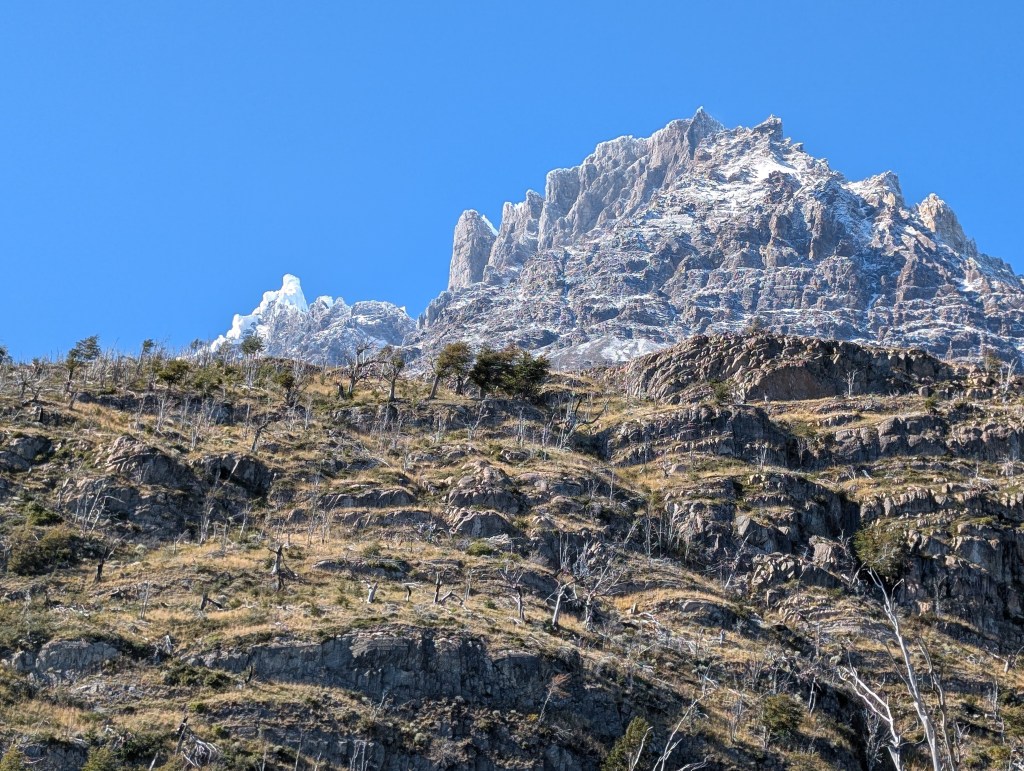
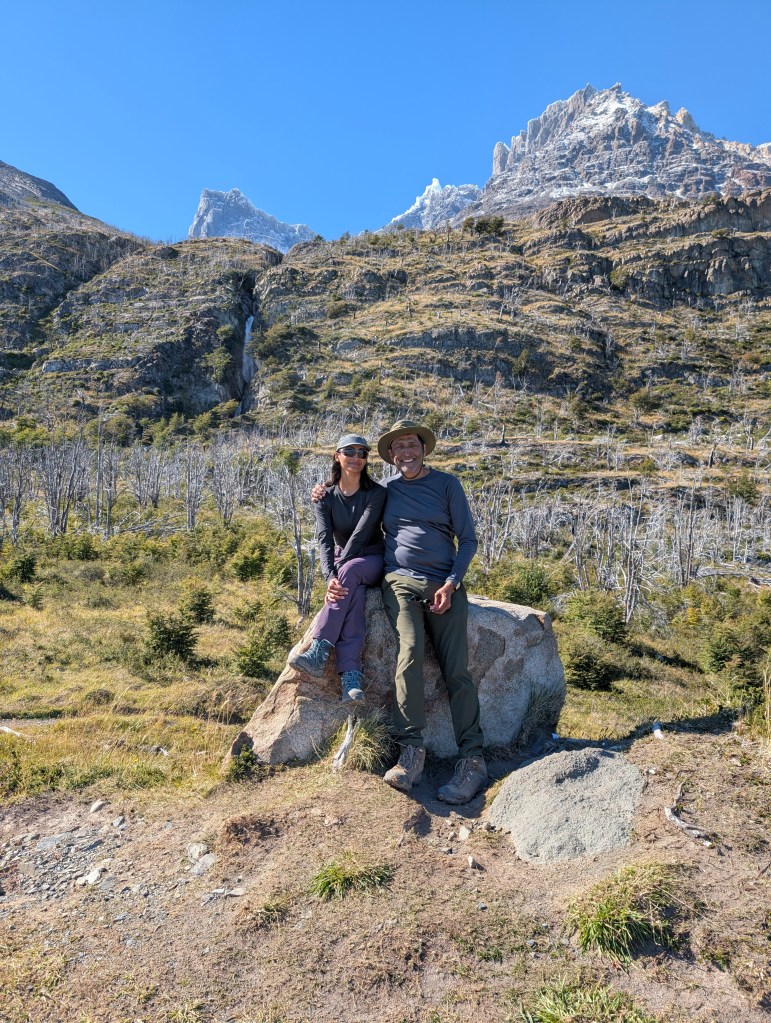
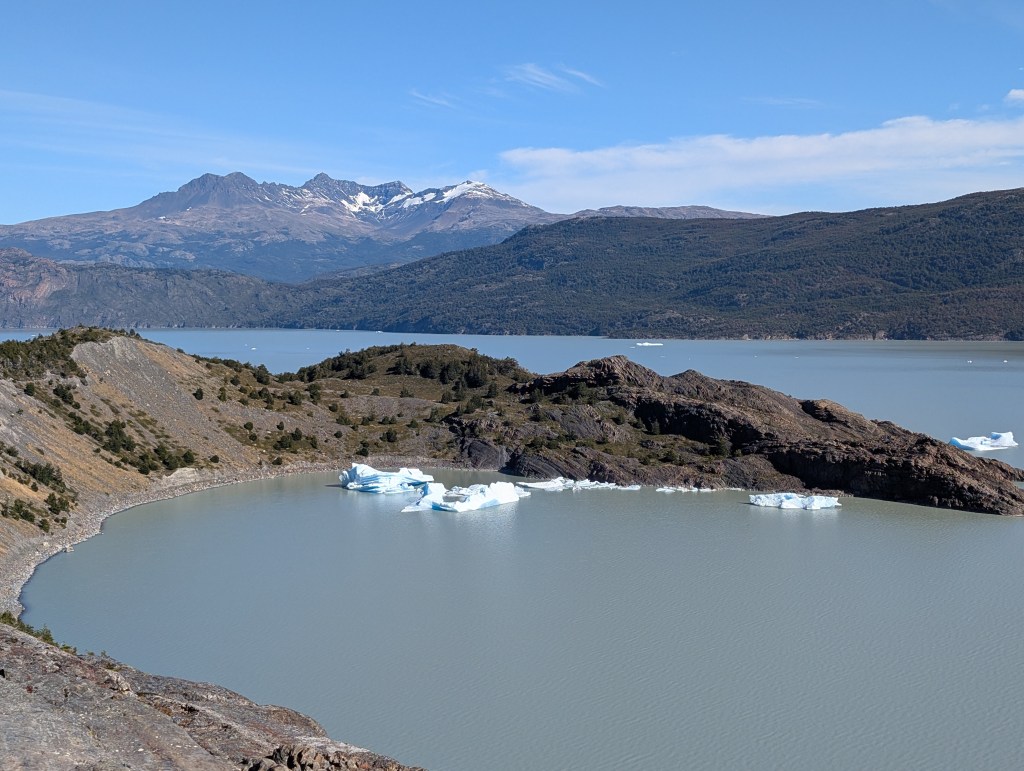
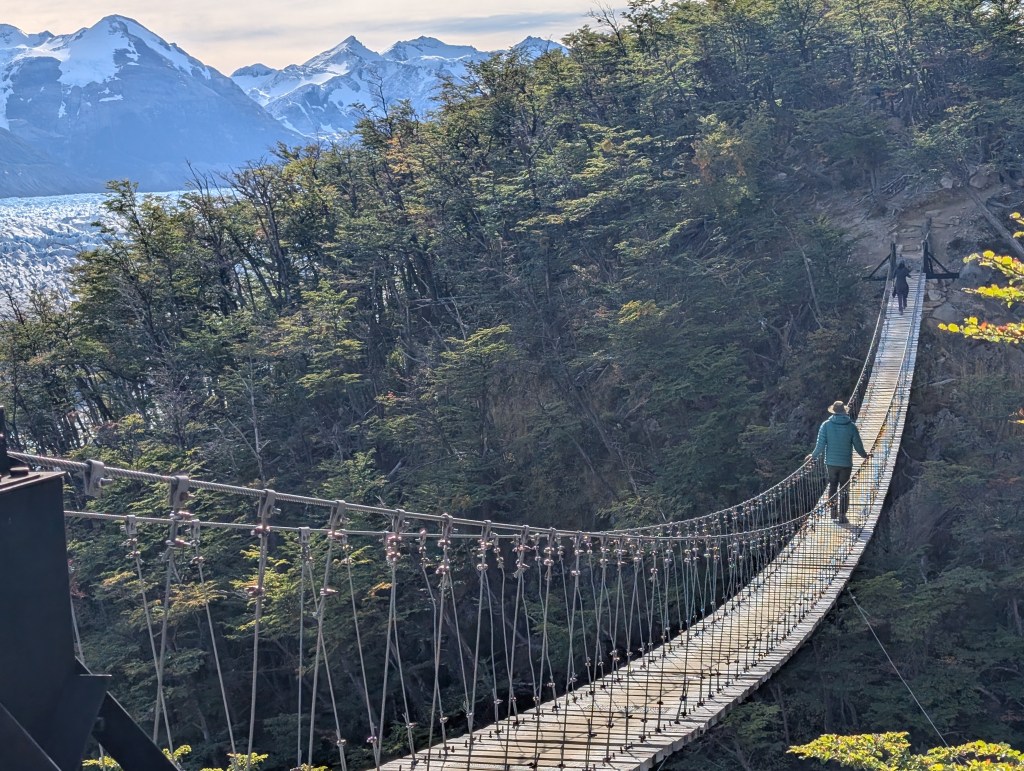
After lunch, we reached Refugio Grey. While many hikers stop here, we decided we weren’t quite done. We dropped our heavy packs at the refugio and committed to a four-hour round trip to reach the second hanging bridge and the ultimate lookout point.
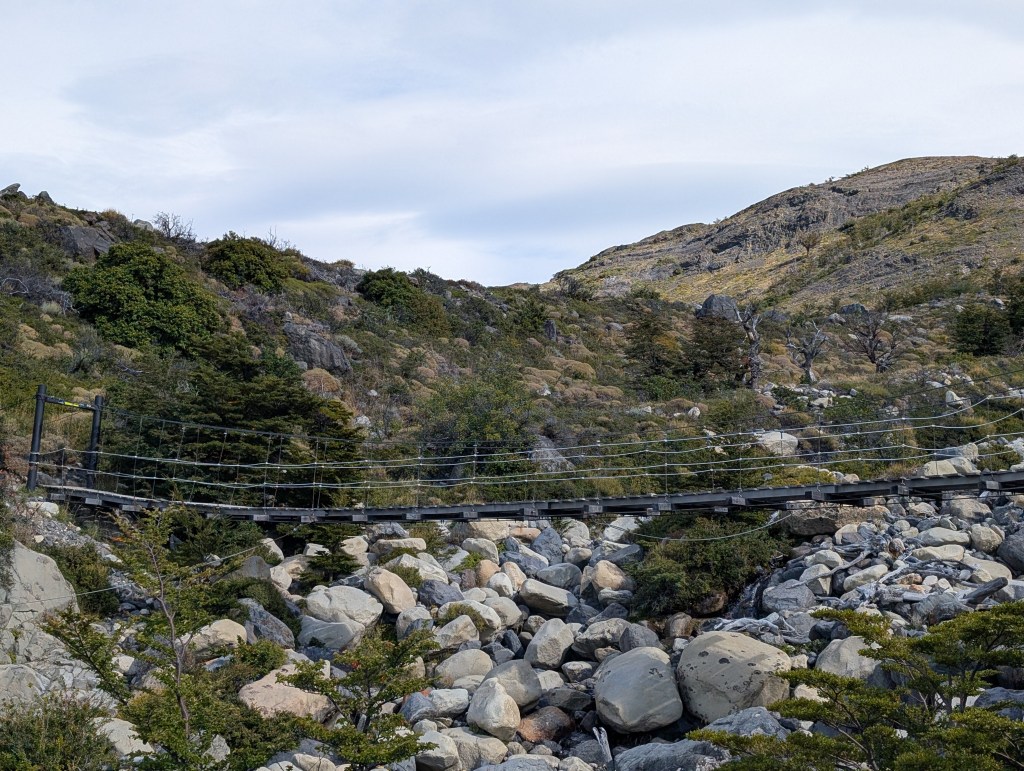
Being unencumbered by the 23-pound packs made our steps lighter, but the terrain was still rugged. The hanging bridges were an experience in themselves—suspended high above deep ravines with the wind whistling through the cables. Walking across them required a bit of a steady stomach, but the perspective they offered of the glacier’s face was unmatched.
The Ultimate Lookout
We finally reached the final lookout point. From here, the Grey Glacier looked like a frozen ocean, its deep blue crevasses and towering ice walls stretching back toward the horizon. We spent a long time here, just taking it in. We took our customary group photos, feeling a deep sense of shared achievement. Looking back at the peaks we had traversed over the last several days, it was hard to believe how far we had come.
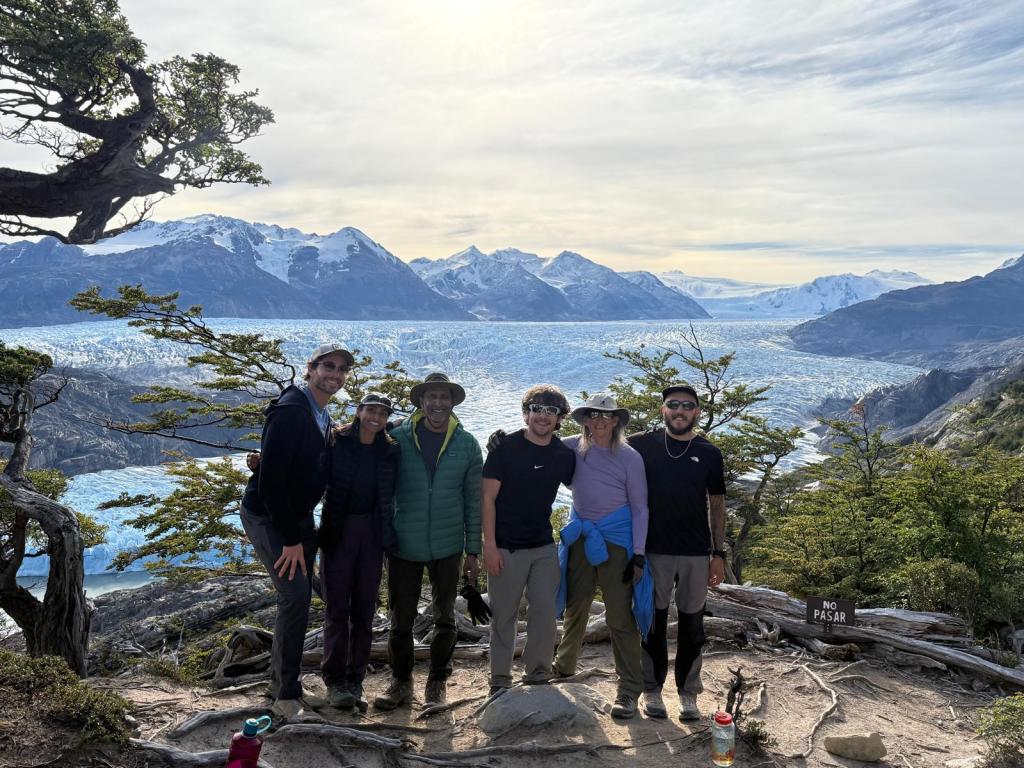
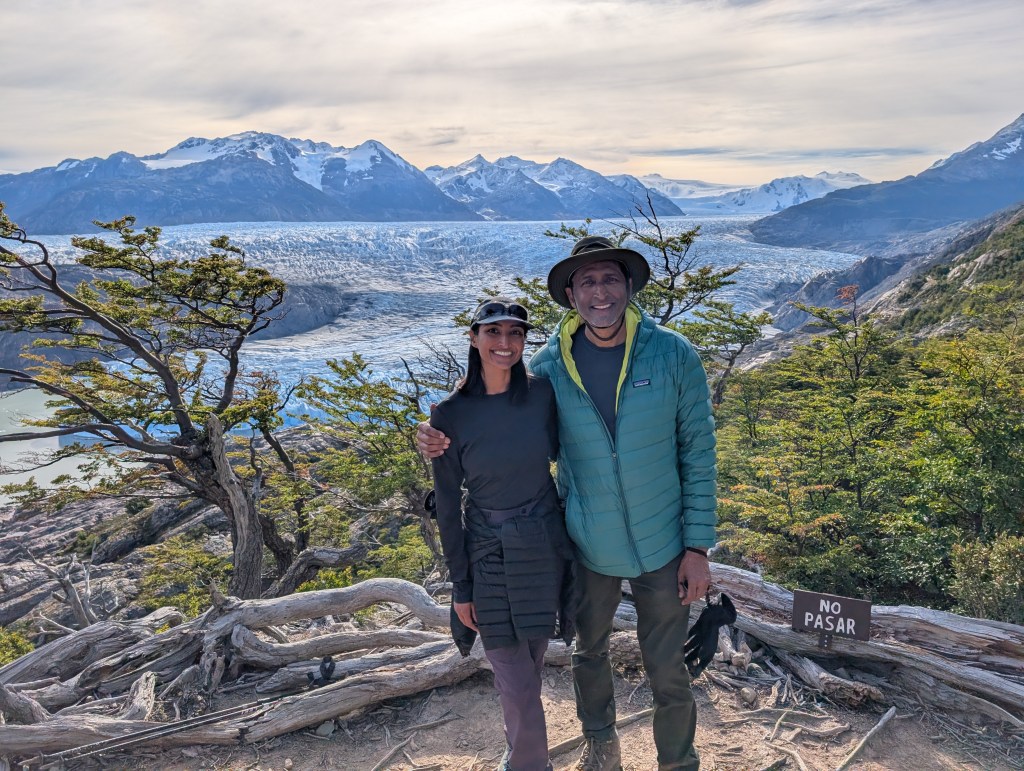
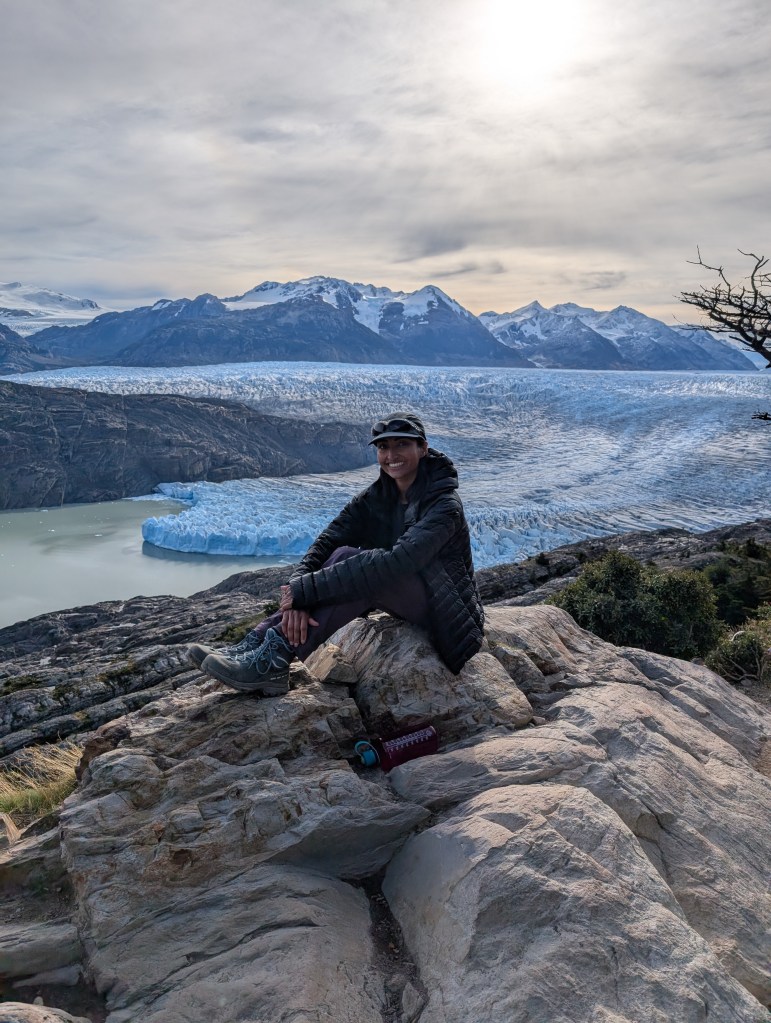
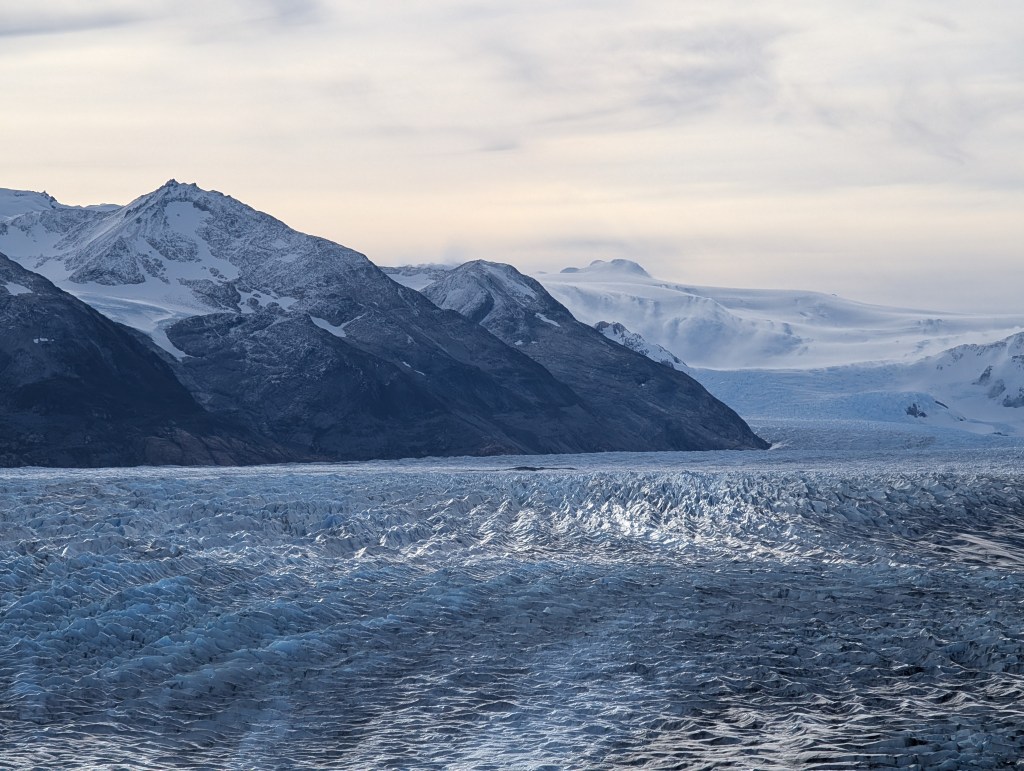
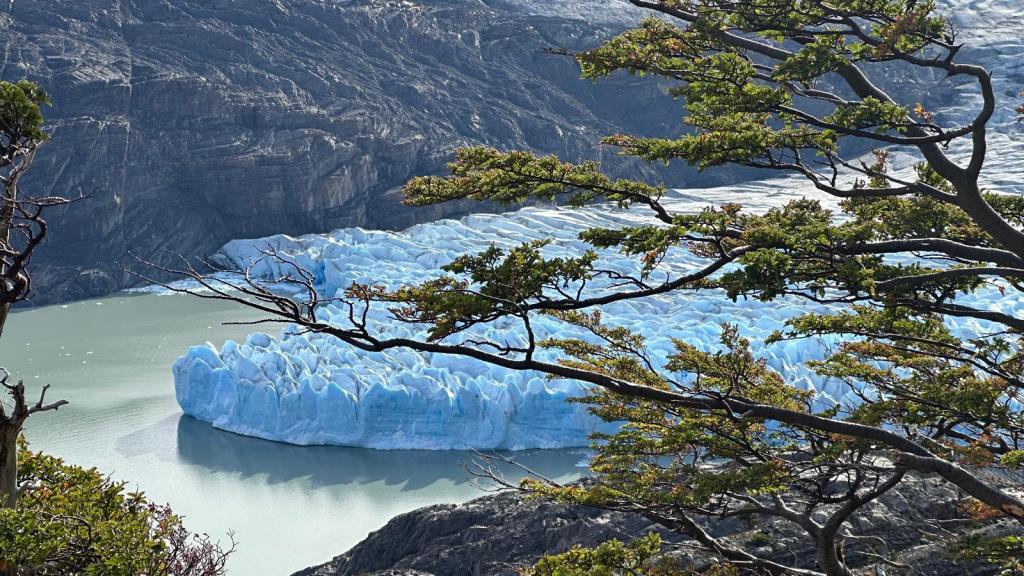
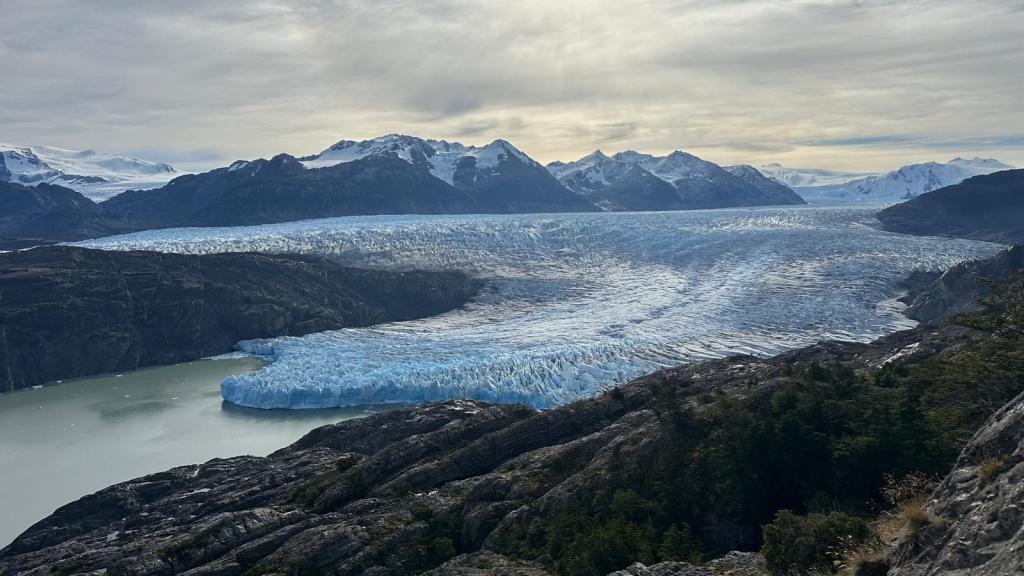
We eventually made our way back to Refugio Grey for a very well-deserved rest. As we sat down for dinner, there was a collective sigh of relief: we were officially done with the hardest climbing of the W Trek.
Day Stats:
- Distance: 12.45 miles
- Total Ascent: 2,923 feet
- Total Time: 8 hours and 7 minutes (Paine Grande to Hanging Bridges via Refugio Grey)
Day 7: The Blue Farewell
On our final morning, the weather finally shifted into “classic” Patagonia mode—which is to say, the wind picked up and the rain began to settle in. Fortunately, we had already completed every mile of hiking we had planned (and then some). With the hard work behind us, we were more than happy to let the elements do their thing while we began our journey back to civilization.
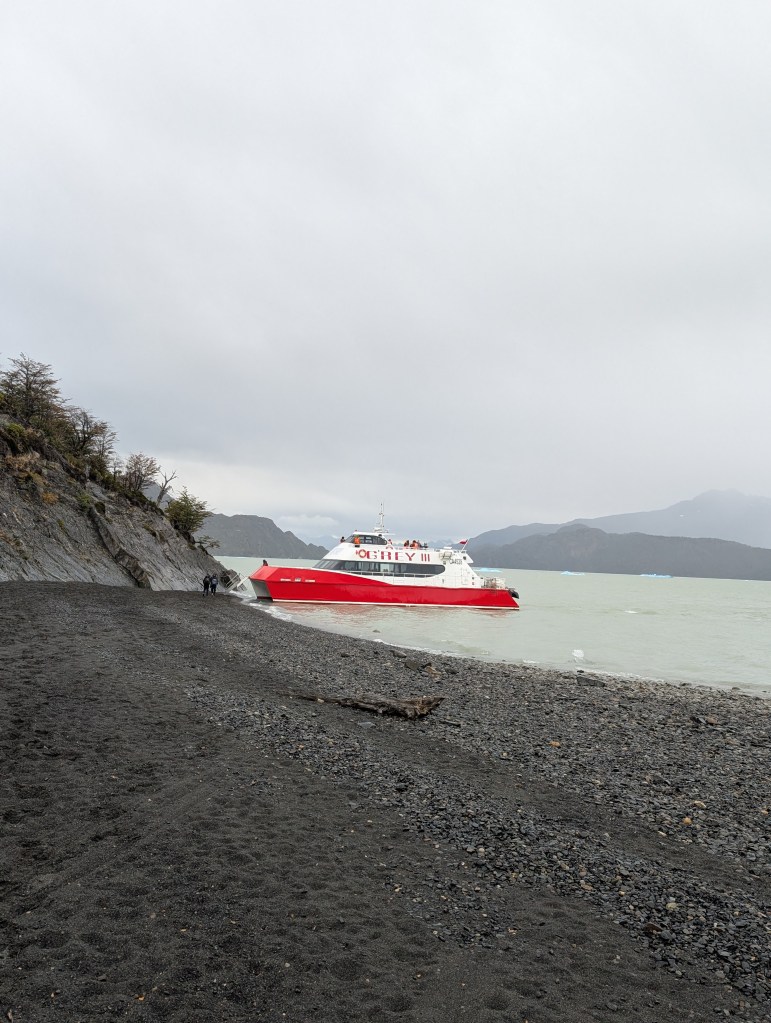
Our guide managed to secure us spots on an early boat, the Grey III, which picked us up near Refugio Grey.
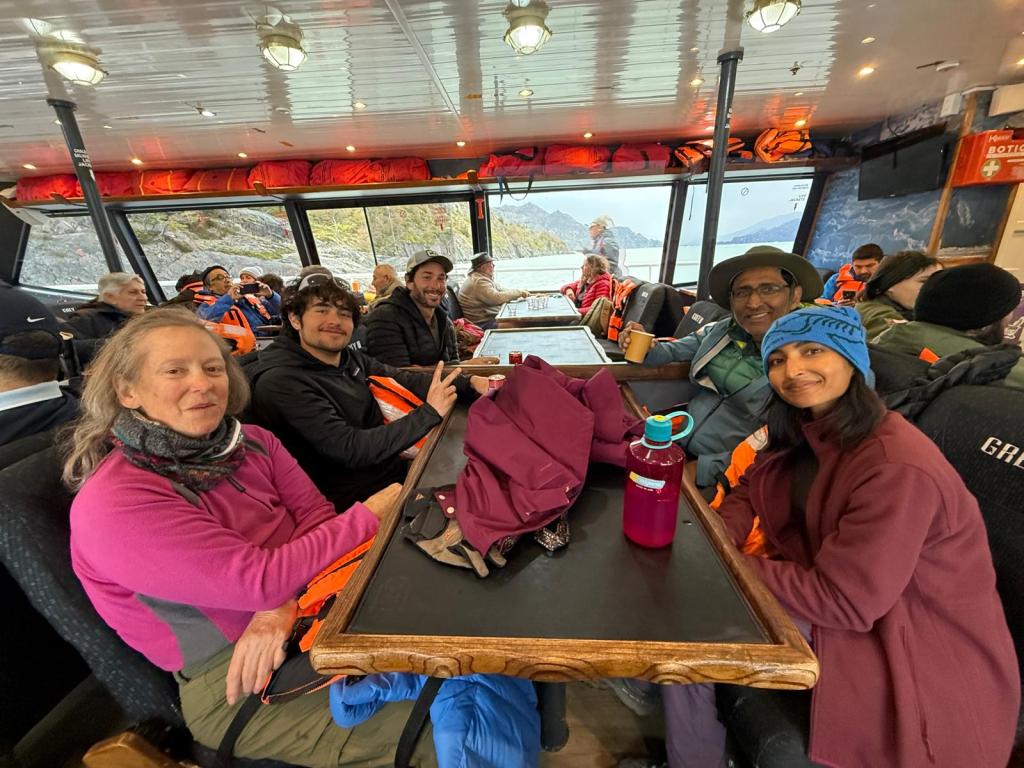
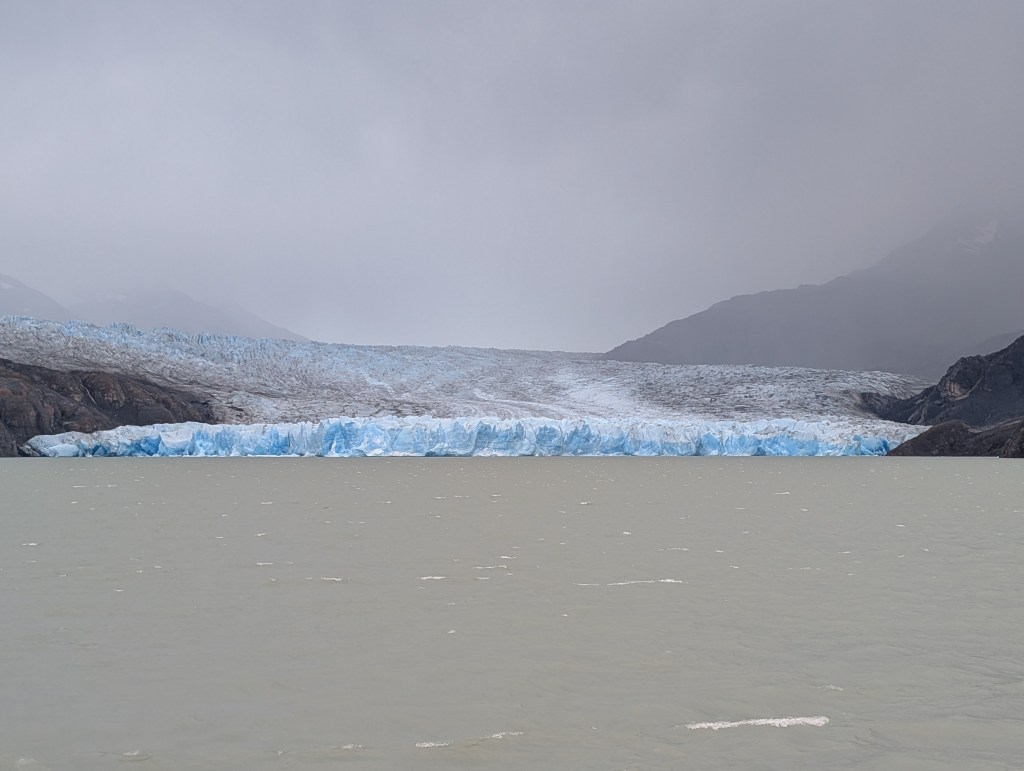
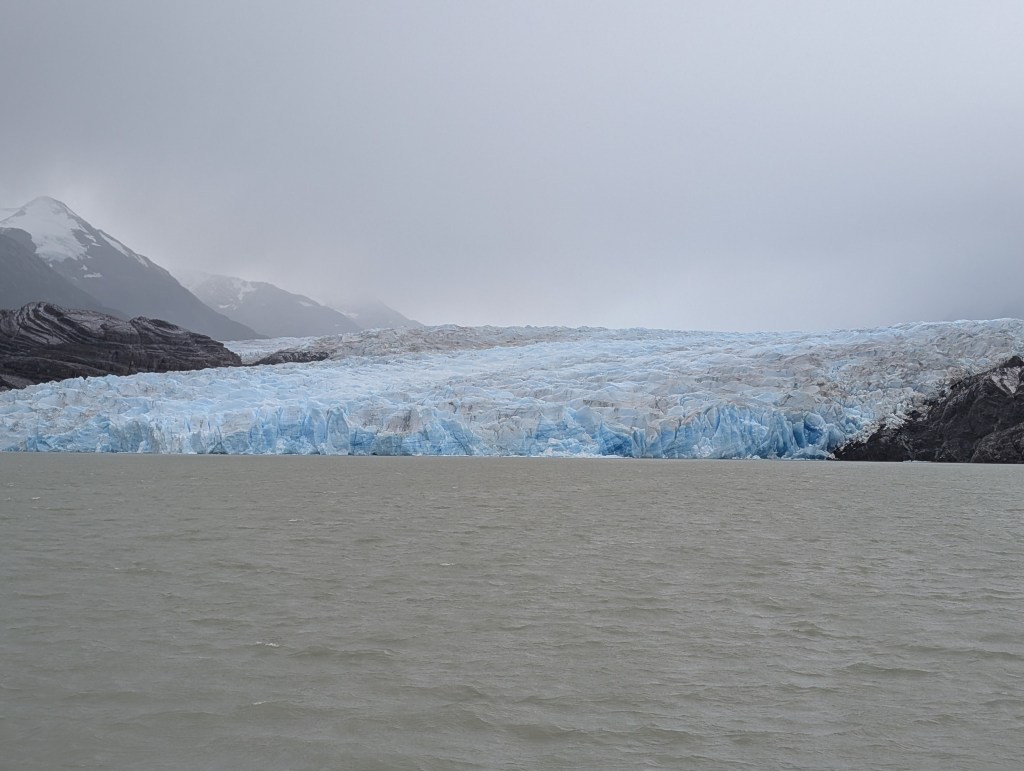
The boat ride was a revelation. We set off across the milky waters of Grey Lake, heading straight for the massive, jagged facade of the Grey Glacier. After days of viewing the ice from high ridges and hanging bridges, seeing it from water level was entirely different. The scale of the ice walls—towering, translucent blue, and ancient—was absolutely awe-inspiring.
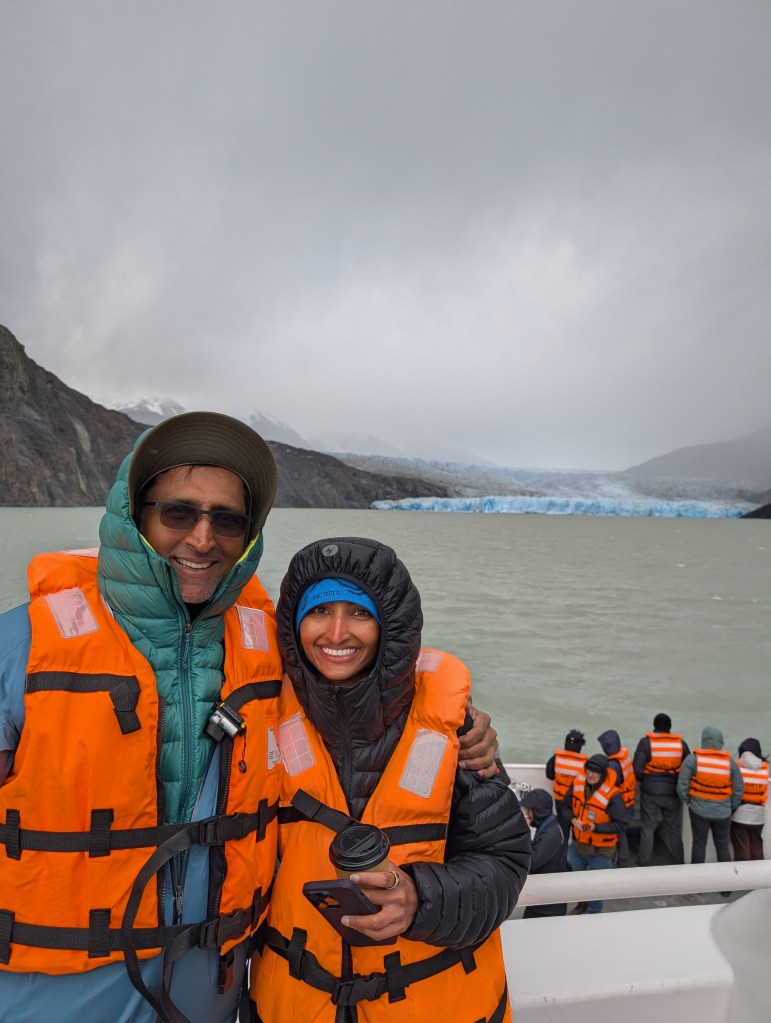
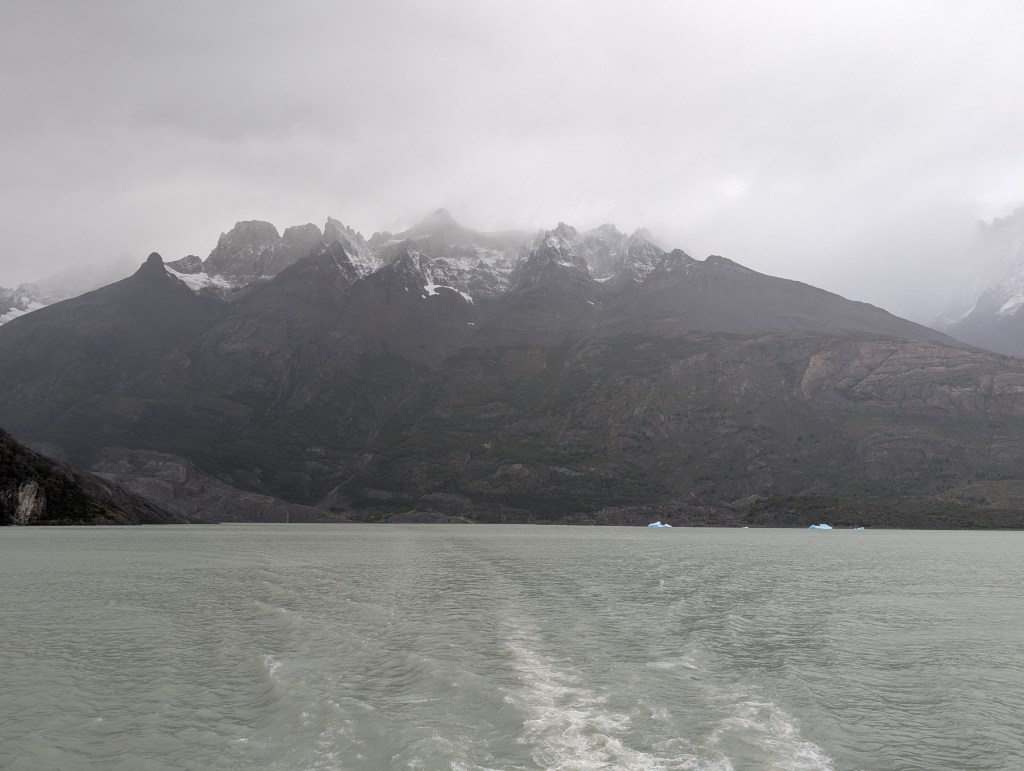
As the boat turned toward the far shore, we sat in the cabin with hot drinks, watching the peaks of the Paine Massif drift in and out of the clouds. It was incredibly serene to look back at the terrain we had spent the last week traversing. From this distance, the trails looked like tiny threads against the massive granite walls, a humbling reminder of the ground we had covered.
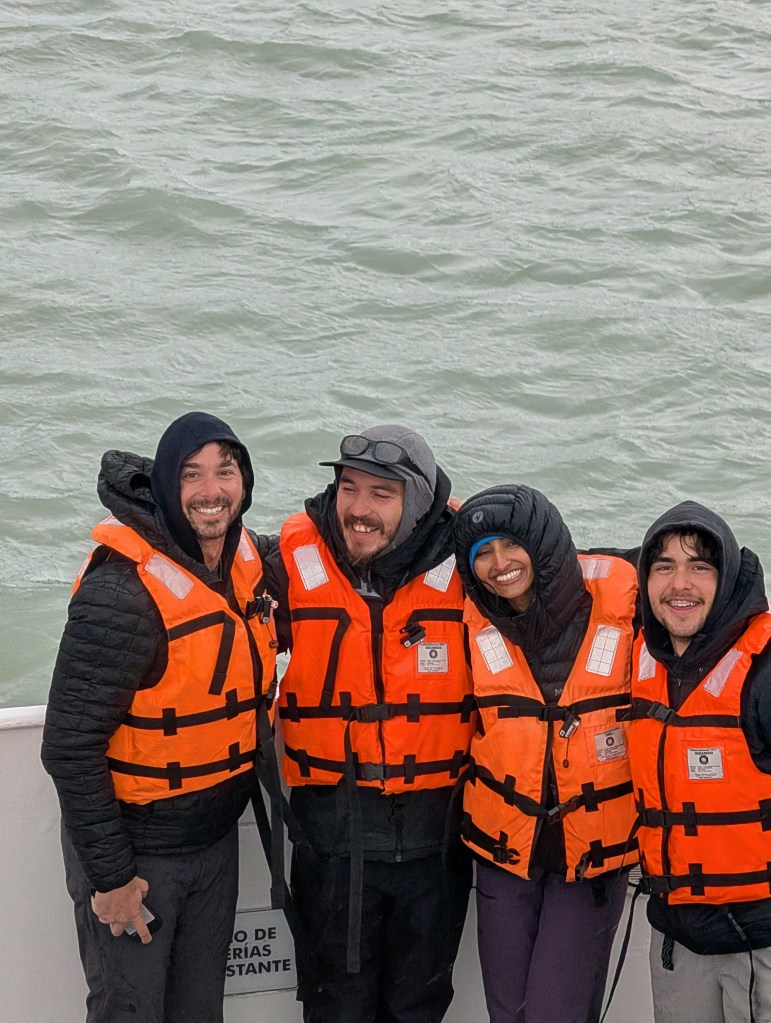
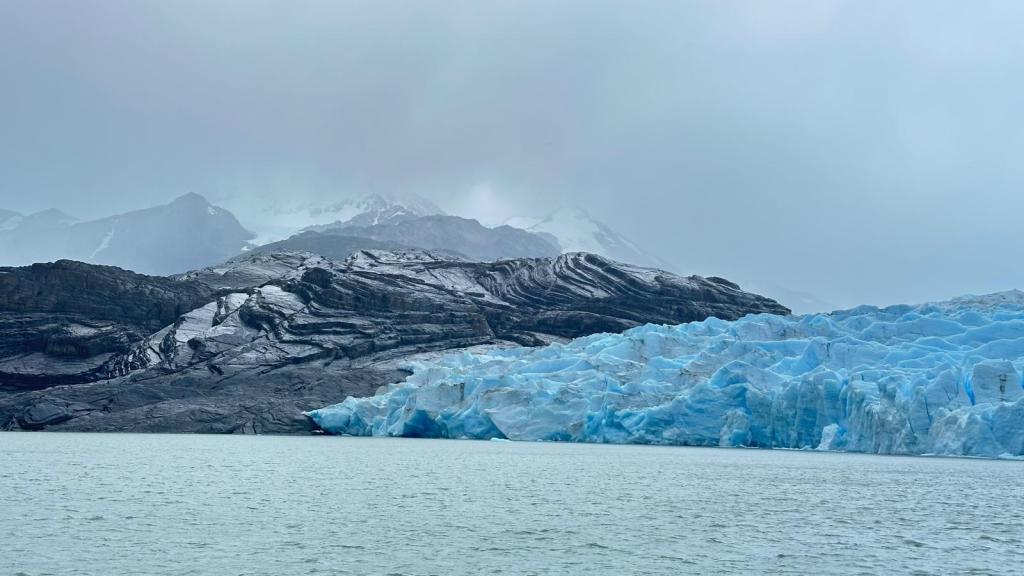
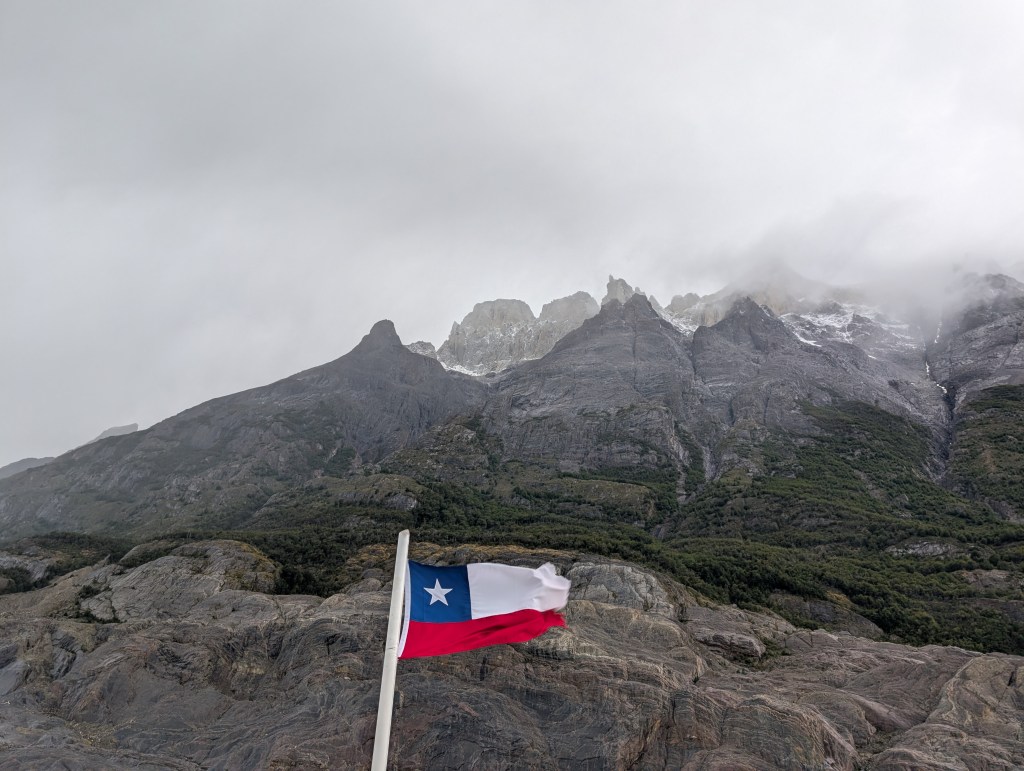
Once we hit dry land on the far side of the lake, we had one last 20-minute walk along Grey Beach. With the Chilean flag whipping in the wind above us, we made our way to the private transfer that would take us back to Puerto Natales.
This was, without a doubt, one of the most wonderful adventures I have ever been on. I have done quite a few major hikes in my life, but the Torres del Paine W Trek has jumped straight to the top of that list. Sharing the physical challenge, the “trail zen,” and the sheer wonder of this landscape with Anika made the experience twice as special.
Final thoughts
As I look back on our seven days in Patagonia, it’s hard to pick a single “best” moment. Was it the golden glow on the Base of the Towers? The thunder of the hanging glaciers in the French Valley? Or the silent, icy majesty of Grey Glacier?
The Original W Trek is more than just a trail; it is a masterclass in the raw power of nature. We faced 23-pound packs, steep moraines, and the legendary Patagonian winds, but we were rewarded with views that most people only see in dreams.
More importantly, this trip was a milestone for Anika and me. There is a specific kind of bond that forms when you’re miles from the nearest road, sharing a trail lunch on a rocky ridge or celebrating a hard-earned summit. We leave Patagonia with tired legs, but with hearts full of memories and a shared achievement that will last a lifetime.
If you’re looking for a trek that will test your limits and broaden your soul, look no further than the bottom of the world. Buen Camino!

 VaraWorld
Leave a comment